









Product Quick Navigation
Get a Quote
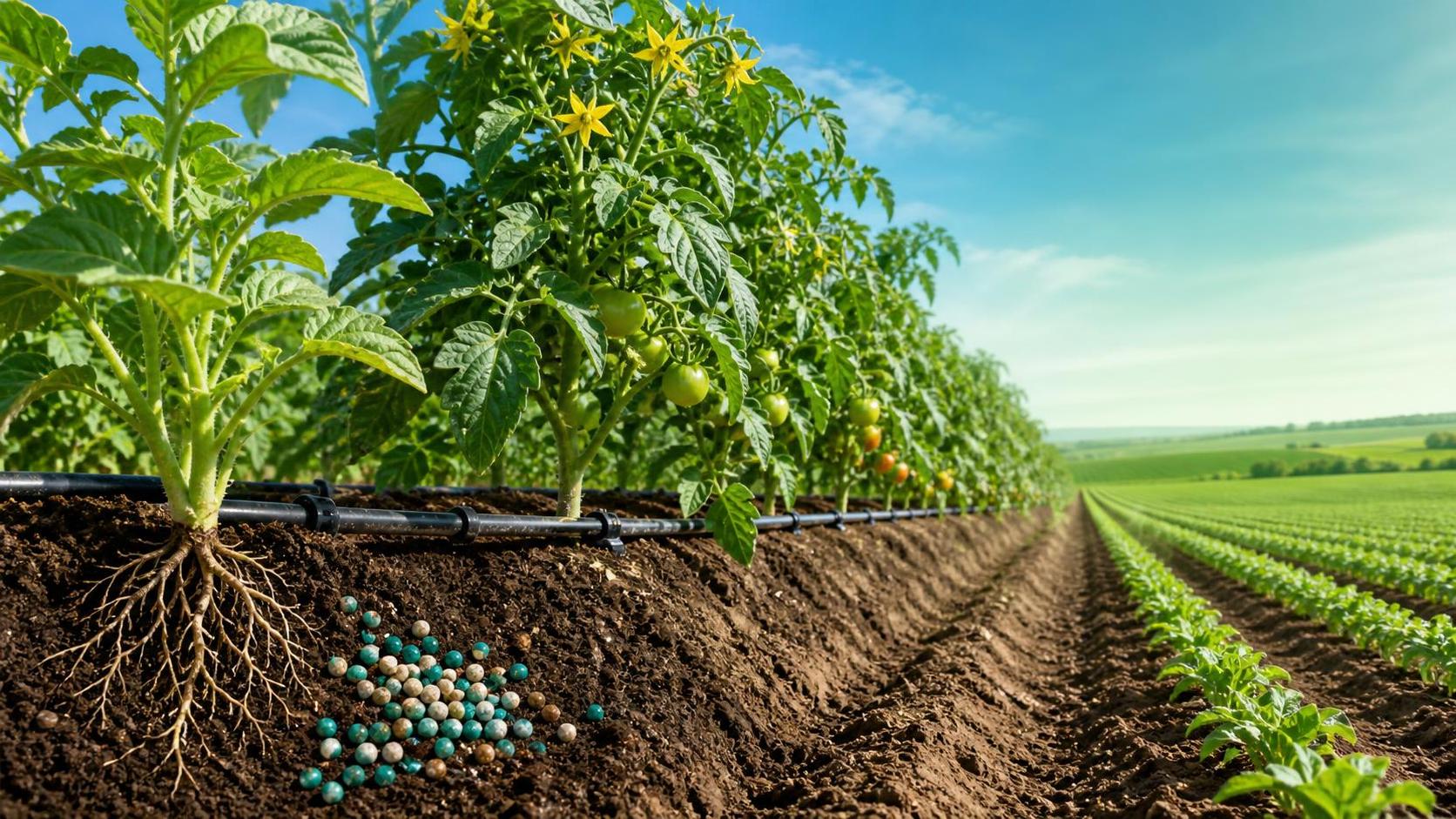
Effective crop nutrition begins with a simple principle that is often difficult to apply in the field: feed the crop that is growing now, not the crop that was growing two weeks ago or the crop expected at harvest. Nitrogen Phosphorus Potassium Fertilizers provide the three primary nutrients behind root development, canopy formation, flowering, fruit set, and quality. Yet no single NPK ratio is “best” for an entire season. The right balance shifts as the crop moves from establishment to active growth and then toward reproductive development.
For operators, this is more than a fertilizer-selection question. A mismatch between nutrient ratio, crop stage, soil condition, and application method can mean weak early roots, excessive vegetative growth, poor flowering, uneven maturity, or nutrient losses that reduce both efficiency and field confidence. A stage-based approach makes fertilizer decisions easier to explain, monitor, and adjust.
Read the NPK grade before choosing the product
An NPK grade such as 15-15-15 or 20-10-10 expresses the percentage by weight of nitrogen (N), phosphorus expressed as phosphate equivalent (P2O5), and potassium expressed as potash equivalent (K2O). The numbers do not automatically determine whether a product is suitable. They indicate the nutrient balance, while suitability depends on the crop’s stage, the soil test, expected yield, irrigation practice, and nutrient sources already present in the field.
It is tempting to treat a balanced formula as a universal answer. In reality, 15-15-15 may be a practical maintenance or starter option in some situations, but it can be inefficient where phosphorus is already adequate and nitrogen demand is rising, or where potassium removal by a fruit, tuber, or fiber crop is high. The fertilizer label is the start of the decision, not the decision itself.
At establishment, phosphorus usually deserves attention
During germination and early establishment, the plant has a small root system and limited ability to explore the soil. Phosphorus is especially important because it supports root growth and energy transfer. In cool, wet, compacted, or high-pH conditions, the phosphorus present in the soil may not be readily available even when laboratory values appear moderate. That is why starter programs commonly use a formula with relatively stronger phosphorus, placed carefully near rather than directly on the seed where crop sensitivity is a concern.
Nitrogen is still needed, but large early doses are not always beneficial. Excessive readily available N can encourage rapid top growth before roots are established, particularly in vegetables and cereals. It can also increase loss risk if heavy rain arrives before the crop has taken up the nutrient. Potassium needs vary by crop and soil reserve, but adequate early K supports water regulation and seedling resilience.
For many row crops, a phosphorus-forward or balanced starter can be appropriate when confirmed by soil testing. For transplant crops, the priority is often gentle, accessible nutrition that supports root recovery rather than forcing fast leaf expansion. Operators should verify band placement, fertilizer salt index, soil moisture, and distance from seed or transplant roots. A technically sound ratio can still cause problems if placed incorrectly.
When the canopy expands, nitrogen becomes the pacing nutrient
Once the crop enters active vegetative growth, nitrogen demand often rises sharply. Leaves are the crop’s solar panels, and sufficient N supports chlorophyll production, leaf expansion, and the biomass needed to support later yield. This is the period when many programs shift toward N-dominant Nitrogen Phosphorus Potassium Fertilizers, especially if early phosphorus was already applied and soil testing shows no major P shortage.
However, “more nitrogen” is not the same as “better growth.” An overfed canopy can shade lower leaves, remain wet longer after irrigation, become more attractive to certain pests and diseases, and delay the transition to flowering or ripening. In cereals, too much late or poorly timed N may contribute to lodging. In fruiting vegetables, it may produce impressive foliage while reducing reproductive balance.
A practical field check is to compare crop color, canopy density, growth rate, irrigation records, and weather conditions with the crop’s expected development stage. Tissue testing can be useful where high-value crops show unclear symptoms. Soil testing remains valuable, but it does not replace in-season observation because root activity, temperature, and moisture determine whether nutrients can actually be accessed.
Split application reduces timing risk
Where nitrogen demand is high or rainfall and irrigation are difficult to predict, splitting N applications is often more reliable than applying the entire amount early. Smaller, timed doses can better match uptake, reduce leaching potential in light soils, and allow the operator to correct course if growth is stronger or weaker than expected. Fertigation can make this adjustment particularly precise, provided water quality, injector calibration, solution compatibility, and irrigation uniformity are checked.
Do not assume that a crop with dark green leaves needs more nitrogen. Dark color can reflect variety, low light, water stress, or previous nutrient accumulation. Apply only after assessing the whole field pattern and, where possible, confirming the diagnosis with testing.
Flowering and fruit set require balance, not a sudden nutrient switch
At flowering, the crop is managing a major transition. It must maintain enough leaf area to capture energy while directing carbohydrates and nutrients toward flowers, pods, fruit, or grain. Nitrogen remains necessary, but uncontrolled N supply can push the crop back toward vegetative growth. Potassium commonly becomes more important because of its role in sugar transport, water balance, enzyme activation, and the movement of assimilates to developing reproductive organs.
The exact ratio depends heavily on crop type. A leafy vegetable may continue to need comparatively high nitrogen until harvest. Tomato, pepper, melon, potato, grape, citrus, and many other quality-focused crops often require careful potassium management during reproductive stages. Grain crops may need a measured N strategy to support yield and protein goals without increasing lodging or maturity concerns. There is no substitute for crop-specific recommendations informed by local conditions.
Phosphorus should not be forgotten at flowering. Although the largest early-season emphasis may have passed, P remains involved in energy transfer and reproductive processes. The key is avoiding routine additions that ignore the soil phosphorus status. Repeated overapplication can create agronomic waste and environmental concerns, especially where runoff reaches surface water.
During filling and maturation, potassium often protects quality
As fruit enlarges, tubers bulk, fiber develops, or grain fills, potassium demand can be substantial. Potassium supports movement of sugars and helps plants manage water stress. In crops where appearance, firmness, storage life, dry matter, sugar concentration, or uniform size matter, insufficient K may reduce marketable performance even if the crop looks acceptable from a distance.
Late nitrogen should be handled with caution. A small corrective dose may be justified in some crops and production systems, but heavy late N can delay maturity, reduce storage quality, or stimulate tender growth that does not fit the harvest plan. The best approach is to work backward from the expected harvest window: consider nutrient removal, soil supply, irrigation scheduling, and the desired maturity profile before deciding whether a late-season application is warranted.
Foliar feeding can be useful for rapid, limited correction of specific deficiencies, but it should not be treated as a replacement for a well-managed root-zone fertility program. Spray concentration, water volume, weather, leaf age, and tank compatibility all affect performance. Always follow the product label and conduct a small compatibility check before mixing unfamiliar materials.
Micronutrients can change how well an NPK program performs
NPK is the foundation, but a crop cannot use that foundation efficiently when a required micronutrient is limiting. Molybdenum is a good example. It is needed in very small amounts, yet it supports enzymes involved in nitrogen metabolism. In legumes, molybdenum has particular relevance because effective nitrogen fixation depends on healthy rhizobial activity and functioning nitrogen-conversion processes.
Where a molybdenum deficiency is confirmed or local agronomy identifies a clear risk, an input such as Ammonium Molybdate CAS#13106-76-8 may be considered as a molybdenum source for agricultural formulations or targeted treatment programs. It is not an NPK replacement and should not be applied by guesswork. Its water solubility makes it suitable for controlled formulation use, but operators should use appropriate handling procedures, observe applicable exposure guidance, and follow local regulations for agricultural inputs.
The same principle applies to boron, zinc, iron, manganese, sulfur, calcium, and magnesium: a visible crop problem is not automatically an NPK problem. Confirming the deficiency prevents unnecessary applications and helps avoid antagonisms caused by excess nutrients.
A field decision sequence that avoids common mistakes
- Start with soil information. Review pH, organic matter, electrical conductivity where relevant, and available nutrient levels. Soil pH strongly influences phosphorus and micronutrient availability.
- Identify the actual crop stage. Use growth-stage markers, not only calendar dates. Weather can speed up or slow down crop development.
- Check the crop’s demand curve. Know whether the crop is building roots, canopy, flowers, fruit, tubers, or grain. This determines the likely N-P-K emphasis.
- Account for nutrients already supplied. Include manure, compost, crop residues, irrigation water, previous fertilizers, and residual soil fertility.
- Choose both ratio and delivery method. Broadcasting, banding, side-dressing, fertigation, and foliar application place nutrients in very different positions and at different times.
- Reassess after application. Monitor crop response, rainfall, irrigation, and field variability. Keep records that link fertilizer rate, ratio, date, and growth stage.
Calibration is frequently overlooked. Whether using a spinner spreader, planter attachment, venturi injector, or boom sprayer, confirm the actual output before treating the entire field. Uneven distribution can look like a nutrient deficiency, pest issue, or irrigation problem later in the season. Correct storage also matters: keep fertilizers dry, clearly labeled, separated according to compatibility requirements, and protected from contamination.
Supply quality and compliance matter in nutrient planning
For farms, distributors, and formulation operations, nutrient management does not end with selecting an NPK grade. Reliable supply, consistent specifications, traceable documentation, packaging integrity, and transport compliance all influence whether the planned application can happen safely and on time. This becomes more important when products move across borders or when operators need specialty nutrient materials alongside bulk fertilizers.
Working with chemical export suppliers that understand product documentation, handling expectations, and responsive coordination can reduce avoidable delays. Shandong Huafeng Chemical supports overseas chemical supply needs through a broad product portfolio and foreign-trade capabilities, helping customers evaluate materials within practical application, regulatory, and logistics requirements. Final fertilizer recommendations should still be aligned with local agronomic guidance and the rules governing the destination market.
The useful target is nutrient timing, not a “perfect” formula
A successful NPK program rarely comes from choosing one popular grade and repeating it across every field and growth stage. It comes from matching nutrient ratios to crop demand: adequate phosphorus for establishment, well-timed nitrogen for productive canopy growth, sufficient potassium for stress management and yield quality, and targeted micronutrients only where they are needed.
When operators combine soil and tissue data with careful crop observation, calibrated application equipment, and realistic weather planning, Nitrogen Phosphorus Potassium Fertilizers become more than a routine input. They become a controlled tool for guiding crop development from the first roots to the final harvest.
Send Us Your Inquiry Today
