









Product Quick Navigation
Get a Quote
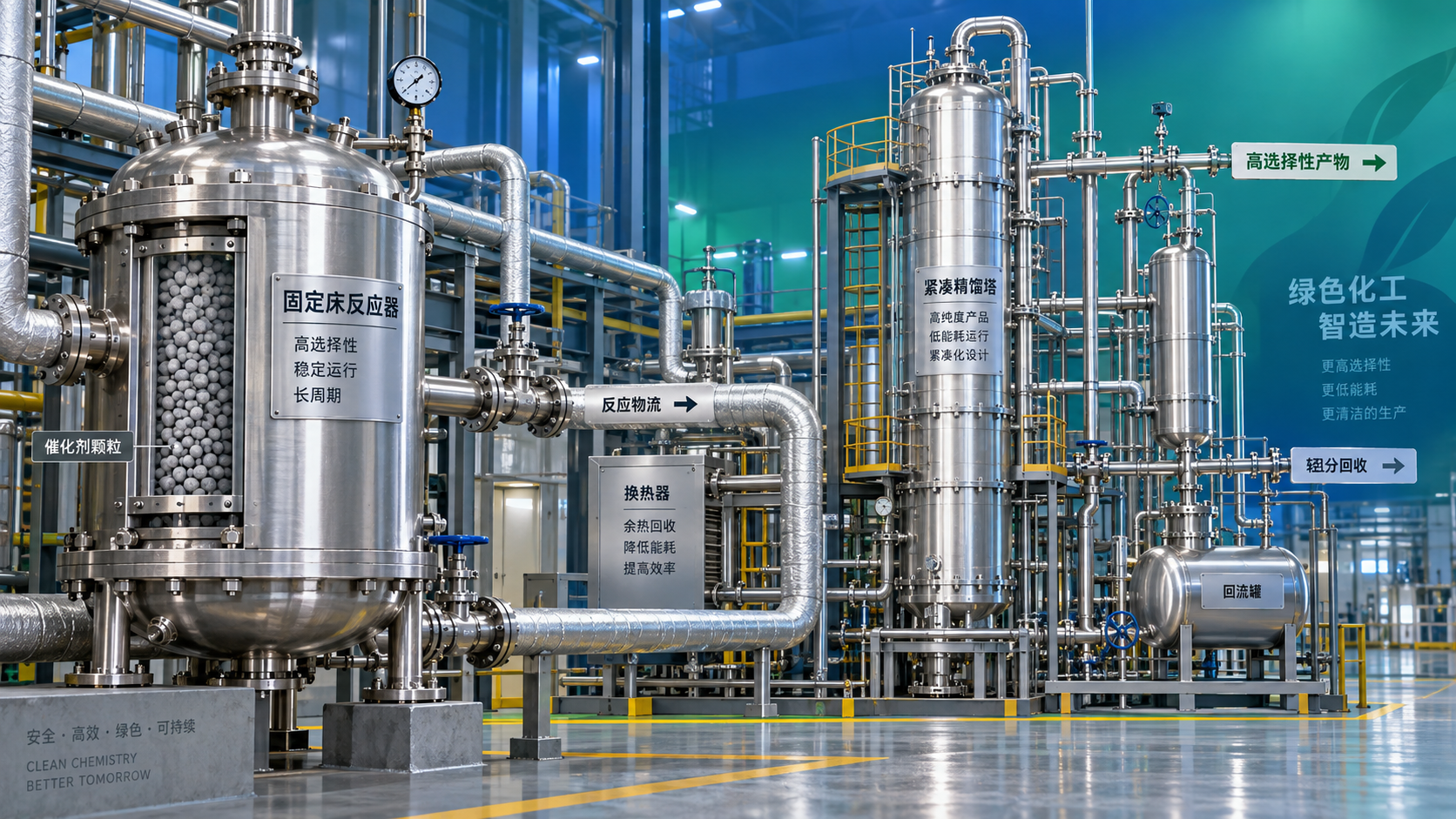
A catalyst should not be judged by conversion alone. In production, the most useful chemical catalysts are those that deliver the desired product at a stable rate, suppress unwanted chemistry, and do so without moving the plant toward excessive temperature, pressure, separation duty, or unplanned downtime. A highly active material can still be a poor choice if it creates difficult impurities, deactivates quickly, or only performs well with an unusually clean feed.
Yield, selectivity, and energy use are linked, but they are not the same measure. A catalyst may increase reaction rate without improving final yield. It may also enable a lower-temperature route while increasing the formation of by-products that consume more energy in downstream purification. The right assessment therefore starts with the complete process, not a single activity value from a laboratory data sheet.
Yield is a process result, not simply a catalyst result
Yield describes how much desired product is obtained relative to the theoretical amount available from the feedstock. Catalysts influence yield by making the preferred reaction pathway faster than competing pathways, but the final number also depends on conversion, recycle strategy, separation losses, feed impurities, and catalyst life.
Consider a reaction in which the catalyst converts most of the limiting reactant, but also promotes cracking, polymerization, decomposition, or over-reaction. Conversion may look strong, while isolated product yield falls because part of the feed has become a low-value by-product. In continuous processes, this distinction becomes more important: even a modest shift in by-product formation can increase purge requirements, contaminate recycle streams, or overload distillation and recovery systems.
The useful question is not, “Which catalyst has the highest activity?” It is, “Which catalyst provides the highest sustained yield under the intended feed composition and operating window?” Sustained performance includes startup, normal operation, feed variation, regeneration cycles where applicable, and the period before replacement.
Catalyst formulation affects yield through several mechanisms:
- Active-site accessibility: Reactants must reach active sites efficiently. Pore structure, particle size, mixing, and diffusion limitations can prevent a highly active formulation from performing as expected at plant scale.
- Reaction-path control: Acidic, basic, metallic, enzymatic, and supported catalyst systems favor different intermediate species and reaction routes.
- Resistance to poisons: Sulfur compounds, halides, water, metals, oxygenates, or particulate matter can block or alter active sites, depending on the catalyst and process.
- Thermal and mechanical stability: Sintering, attrition, phase changes, and loss of surface area can gradually reduce conversion or shift the product distribution.
A catalyst selection process should distinguish between fresh-catalyst data and aged-catalyst behavior. Fresh activity is useful for screening, but it rarely predicts the full operating cost. A material that maintains a narrower performance range over time may offer better plant economics than one that starts with higher activity and declines rapidly.
Selectivity often determines whether higher conversion is actually valuable
Selectivity is the catalyst’s preference for producing the desired molecule rather than competing products. In many chemical processes, selectivity has greater economic significance than a small increase in conversion because unwanted products must be separated, recycled, treated, or discarded. Some impurities also create quality risks in later synthesis steps.
Reaction temperature is one of the most common reasons selectivity changes unexpectedly. Raising temperature often increases reaction rate, but it can accelerate thermal decomposition, secondary reactions, or reactions at less selective sites. The result may be a faster reactor with a worse product slate. Higher temperature can also change adsorption behavior on the catalyst surface, so the route that dominated at one operating condition may no longer dominate at another.
Residence time matters for the same reason. If the desired product remains in contact with an active catalyst for too long, it may be converted further into an undesired product. This is common in consecutive reactions, where the desired compound is an intermediate rather than the final thermodynamic endpoint. Reactor configuration, catalyst loading, feed rate, and quench strategy can be as important as catalyst chemistry in controlling this outcome.
Do not assume that a catalyst described as “selective” will be selective in every system. Selectivity depends on the substrate, solvent or reaction medium, concentration, water content, pressure, heat transfer, and impurities. A suitable catalyst must be evaluated against the real feed specification, including the normal variation around that specification.
Lower energy use comes from more than lower reaction temperature
Chemical catalysts reduce energy demand when they lower the activation barrier enough to achieve the required reaction rate at milder conditions. This can reduce heating, compression, cooling, or high-pressure equipment requirements. However, energy performance must be measured across the process rather than at the reactor alone.
A catalyst that allows a lower reactor temperature can still raise total energy consumption if it produces a wider boiling-range mixture, increases solvent use, creates a larger recycle stream, or requires more purification steps. Conversely, a catalyst requiring somewhat higher reactor temperature may reduce total plant energy if it produces a cleaner product stream that is easier to separate.
The main energy mechanisms to evaluate are practical:
- Reaction severity: Required temperature, pressure, heating rate, and cooling load.
- Separation burden: The quantity and type of by-products, unreacted feed, solvent, and water entering downstream units.
- Hydrogen, air, steam, or inert demand: The catalyst may change the need for additional process gases or stripping media.
- Pressure drop and circulation: Catalyst particle form and bed condition can influence pumping or compression work.
- Lifecycle requirements: Regeneration, washing, activation, disposal, and replacement may all have energy and operational implications.
For exothermic reactions, higher catalyst activity also requires careful heat-management design. Faster reaction is beneficial only while the heat can be removed evenly. Local hot spots can reduce selectivity, accelerate deactivation, and create thermal-control concerns. A catalyst screening programme should therefore include temperature sensitivity rather than relying only on an average reactor temperature.
Feedstock quality can change catalyst behavior before the reaction begins
In commercial production, feedstocks are rarely chemically identical from one delivery to the next. Trace contaminants may have little effect on bulk assay while having a substantial effect on catalyst performance. Moisture can alter acid-base equilibria, hydrolyze sensitive components, or change adsorption. Metals and particulates may foul fixed beds. Reactive contaminants may compete for active sites or generate deposits.
This is why catalyst selection and raw-material specification should be treated as one decision. A process may be able to use a less expensive feedstock only if pretreatment protects the catalyst. The apparent savings can disappear when filtration, drying, guard beds, more frequent replacement, yield losses, or additional downtime are included.
Acetic acid chemistry provides a useful example. In esterification or acetylation systems, water balance affects equilibrium as well as catalyst behavior. When evaluating glacial-grade acetic acid as a reactant or reaction medium, its water content and trace impurity profile can matter alongside acid assay because both can influence reaction equilibrium, corrosion considerations, and the consistency of catalyst performance. For chemical, pharmaceutical, coatings, ink, or manufacturing applications that need an anhydrous acid input, Acetic acid CAS#64-19-7 can be assessed as part of the feed specification, not as a substitute for catalyst selection.
The same principle applies when acetic acid is used to make vinyl acetate, acetic anhydride, acetate salts, or cellulose acetate intermediates. The catalyst must be compatible with the actual acid grade, co-reactants, water level, and materials of construction. Its strong acidity, volatility, and corrosive handling requirements also need to be reflected in storage, transfer, ventilation, and process-safety design.
A practical way to compare catalyst options
A meaningful comparison begins by defining the constraint that limits the process today. It may be product purity, reactor capacity, utility use, catalyst replacement frequency, emissions treatment, or inability to tolerate variable feedstock. Without this step, a comparison tends to overvalue the most visible metric, usually initial activity.
- Set the required product outcome. Define acceptable conversion, product purity, impurity limits, and recovery expectations. Include downstream specifications, not only reactor outlet composition.
- Map the real operating envelope. Use expected ranges for feed composition, temperature, pressure, water content, throughput, and startup or shutdown conditions.
- Review selectivity across that envelope. Identify by-products and determine whether they are easily recycled, difficult to remove, corrosive, hazardous, or harmful to later steps.
- Test durability and recoverability. Examine deactivation pathways, expected regeneration options, sensitivity to contaminants, mechanical integrity, and disposal requirements.
- Calculate total process impact. Include utilities, separation load, productivity, waste treatment, maintenance, inventory, and supply continuity rather than comparing purchase price alone.
- Define incoming controls. Specify the documents, lot identification, analytical checks, packaging condition, and change-notification process needed to keep performance reproducible.
Pilot work is most valuable when it challenges the catalyst with realistic feed variation and representative operating periods. A short trial using exceptionally pure feed and tightly controlled conditions can confirm feasibility, but it may not reveal fouling, heat-transfer effects, or impurity sensitivity that emerge in routine production.
Supply consistency is part of catalyst performance
A technically suitable catalyst cannot protect a process from inconsistent raw materials, delayed replacement inventory, incomplete documentation, or changes in delivered specifications. This is particularly relevant where catalysts, specialty reagents, and bulk feedstocks move across borders. The purchasing decision should examine traceability, packaging compatibility, shipment responsiveness, quality documentation, and the supplier’s ability to communicate changes before they reach production.
For producers sourcing from international markets, Huafeng Chemical’s export-oriented portfolio can be relevant where dependable supply of industrial chemicals and responsive trade coordination are required. The practical value is not a broad product catalogue by itself; it is the ability to align product documentation, logistics, and specification control with the operating needs of a chemical process.
The best catalyst decision is therefore rarely a choice between “more active” and “less active.” It is a choice between complete process outcomes. Select the material and feed specification that preserve desired yield, maintain selectivity through normal operating variation, reduce total energy and separation burden, and can be supplied with the consistency the plant needs to run predictably.
Send Us Your Inquiry Today
