









Product Quick Navigation
Get a Quote
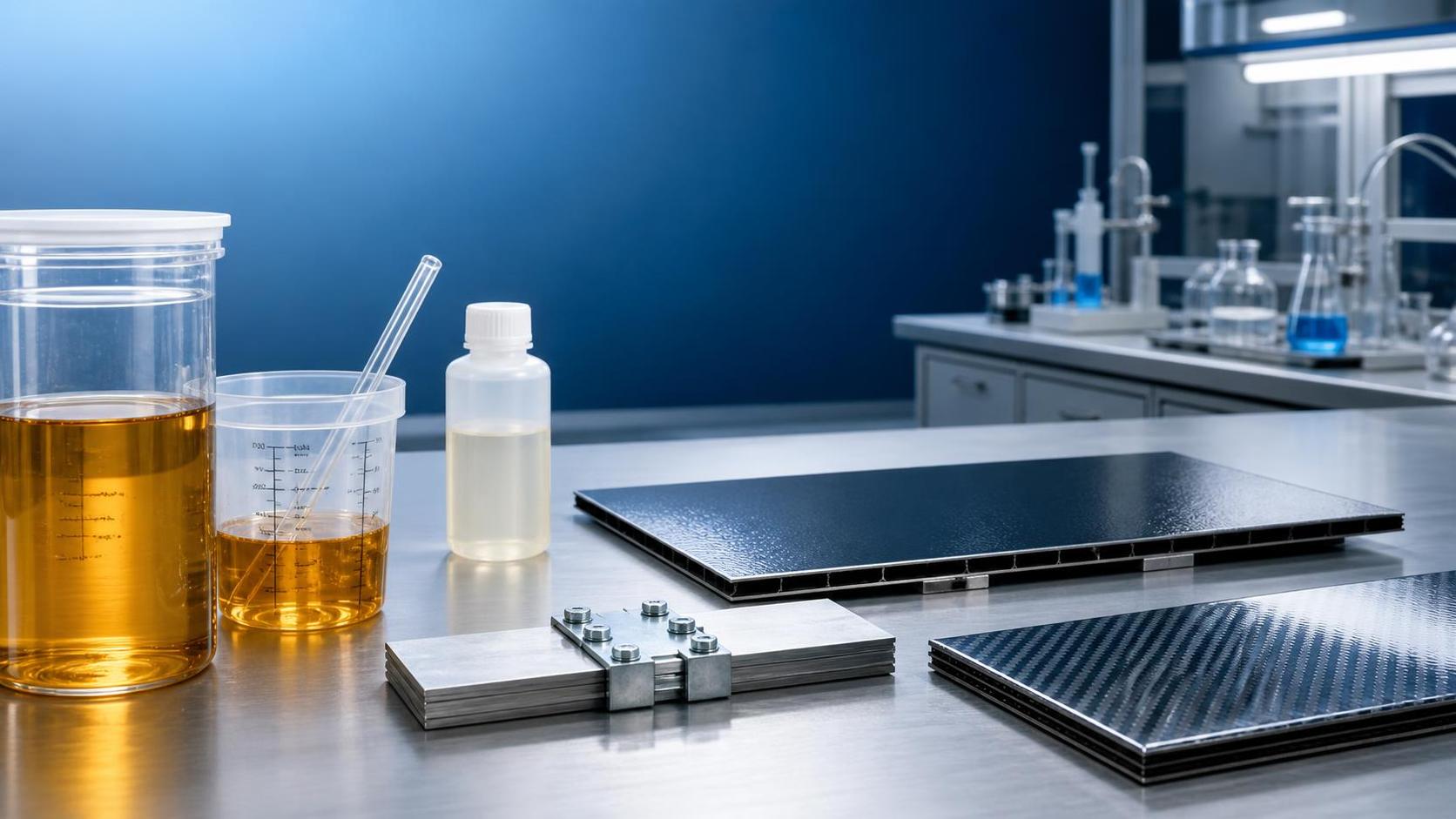
Start With the Failure Mode, Not the Resin Grade
In coatings, adhesives, and composites, an epoxy system is rarely selected because a base resin looks strong on a technical data sheet. It is selected because the complete formulation can survive a specific combination of substrate condition, cure schedule, service environment, application method, and regulatory requirement. For technical evaluators, that distinction matters: the same epoxy resin can deliver excellent adhesion in a dry indoor assembly and fail prematurely on a damp steel structure, a flexible bonded joint, or a thick composite laminate.
The useful question is therefore not simply, “Which Epoxy Resin should we buy?” It is, “What failure are we trying to prevent, under what processing constraints, and with what evidence?” Once the decision is framed this way, resin selection becomes a system-matching exercise involving the resin backbone, curing agent, modifiers, fillers, solvents or reactive diluents, surface preparation, and manufacturing controls.
This is also why lowest-cost sourcing can become expensive. A formulation may appear equivalent in epoxy equivalent weight or viscosity, yet behave differently because of batch-to-batch variation, residual impurities, moisture sensitivity, incomplete technical documentation, or a curing-agent substitution made without revalidation. For export-oriented chemical supply chains, material consistency, document readiness, packaging integrity, and response speed are part of the technical solution rather than separate commercial concerns.
Map the End-Use Conditions Before Comparing Chemistries
Most epoxy selection errors begin with an incomplete application brief. “Corrosion-resistant coating,” “structural adhesive,” or “composite resin” is not enough to establish a workable system. The evaluator needs to turn the broad application into measurable operating conditions.
- What substrate is being coated or bonded: carbon steel, aluminum, galvanized steel, concrete, glass, carbon fiber, wood, or a low-surface-energy plastic?
- Will the material be applied in a controlled plant environment, at a construction site, or under variable temperature and humidity?
- What is the required working time, film build, bondline thickness, or laminate thickness?
- Will service involve water immersion, salt spray, chemical splash, thermal cycling, abrasion, ultraviolet exposure, or sustained mechanical loading?
- Are low VOC, food-contact, potable-water, flame-retardancy, electrical, or regional chemical-compliance requirements involved?
- What happens if curing is incomplete, delayed, or performed below the target temperature?
These questions narrow the field quickly. A bisphenol A-based liquid epoxy may be a practical starting point for many general-purpose coatings and adhesives. However, a system expected to resist elevated temperatures, aggressive solvents, repeated thermal cycling, or demanding electrical service may require a different resin architecture, a higher-functionality resin, a novolac epoxy, a cycloaliphatic system, or a carefully designed blend. The curing agent and cure profile can change the final network as much as the resin itself.
Technical teams should also separate “exposure” from “occasional contact.” A floor coating that sees intermittent oil drips has different requirements from a tank lining exposed continuously to a defined chemical concentration at elevated temperature. Likewise, a composite component that carries static load is not automatically suitable for fatigue loading, impact loading, or long-term moisture exposure.
Coatings: Balance Film Formation, Cure Latitude, and Barrier Performance
For protective coatings, epoxy chemistry is valued for adhesion, chemical resistance, and barrier properties. But those benefits depend on the coating becoming a continuous, adequately cured film over a properly prepared surface. The most chemically resistant resin cannot compensate for weak surface preparation, trapped moisture, contamination, excessive film thickness, or poor intercoat adhesion.
In ambient-cure industrial coatings, amine-cured epoxy systems are common because they can cure without a high-temperature bake. Their practical limitation is sensitivity to temperature and humidity. Low-temperature conditions can slow cure, extend recoating windows, and leave a film vulnerable to early chemical exposure. High humidity can contribute to surface effects such as amine blush, which may interfere with subsequent coats or reduce appearance. A supplier’s stated cure time should be treated as a starting point, not as proof of field performance.
For steel protection, the evaluation should connect coating choice to the corrosion-control system: blast profile or mechanical preparation, primer compatibility, dry-film thickness, edge retention, curing conditions, and expected maintenance access. A high-build epoxy may improve barrier protection, but excessive thickness or poor solvent release can create internal stress, pinholing, or incomplete cure. In many cases, a moderate-build system applied consistently performs better than an ambitious specification that is difficult to execute on site.
Where exterior weathering is critical, epoxy should not automatically be positioned as the final exposed layer. Many epoxies chalk under ultraviolet exposure even when their underlying protective performance remains sound. A common approach is to use epoxy for adhesion and corrosion resistance, then use an appropriate weatherable topcoat where color and gloss retention matter. The right answer depends on the service environment, not on a generic claim that epoxy is “weather resistant.”
For chemical linings, test panels should reflect the real duty as closely as possible: target chemical, concentration, temperature, immersion duration, and substrate. Chemical resistance tables are useful screening tools, but they may not capture mixed chemicals, temperature excursions, permeation over time, or stresses introduced by the substrate. When the cost of failure is high, immersion testing and post-exposure adhesion assessment are more meaningful than a single published resistance rating.
Adhesives: Adhesion Is a Joint Design Problem
Epoxy adhesives are often selected for high bond strength, low shrinkage, and the ability to bond dissimilar materials. Yet adhesive performance is not determined by tensile strength alone. A bonded joint transfers stress through geometry, bondline thickness, cure state, and the condition of the adherend surface. A high-modulus adhesive can be excellent in a rigid lap joint and poorly suited to an assembly exposed to peel, impact, vibration, or differential thermal expansion.
The first choice is usually between a rigid, high-strength network and a tougher, more flexible one. Toughened epoxy systems use modifiers such as elastomeric particles, thermoplastics, or core-shell structures to improve resistance to crack propagation. This can be valuable in transportation, electronics housings, wind-energy components, and metal-to-composite assemblies. The tradeoff may include altered viscosity, reduced heat resistance, slower cure, or different long-term chemical resistance.
Substrate preparation remains decisive. Metals may require degreasing, abrasion, conversion treatment, or a compatible primer. Composite surfaces can contain mold-release residues or weak boundary layers. Plastics may demand flame, plasma, corona, or chemical surface treatment. A supplier should be able to discuss the surface condition used for its bond-strength data. Results obtained on freshly abraded laboratory coupons may not translate to production parts exposed to handling oils, storage humidity, or inconsistent pretreatment.
Cure schedule deserves equal attention. A two-part room-temperature adhesive may reach handling strength quickly but require several days to develop full properties. A heat post-cure can raise glass-transition temperature and improve chemical resistance, but it may also distort heat-sensitive assemblies or create residual stress. Evaluators should specify what “cured” means for their process: fixture release, machining, shipment, proof testing, or full end-use exposure.
Do Not Overread a Single Strength Number
Lap-shear strength, peel strength, tensile strength, and impact resistance describe different behaviors. A formulation with impressive lap-shear results can still fail in peel or fatigue. For critical assemblies, the test plan should include relevant failure modes, conditioned specimens, and representative bondline geometry. The goal is not to create the highest laboratory number; it is to establish a repeatable process window with acceptable failure behavior.
Composites: Processing Window Often Controls Final Properties
In composite manufacturing, epoxy selection is inseparable from the reinforcement format and process route. Hand lay-up, vacuum infusion, resin transfer molding, filament winding, prepreg processing, and pultrusion impose different requirements on viscosity, wet-out, pot life, cure speed, and exotherm control.
A low-viscosity infusion resin may appear attractive because it penetrates dry fiber efficiently. But viscosity must remain low long enough to fill the entire part, including difficult flow paths, without premature gelation. Resin flow through reinforcement is also affected by fiber architecture, permeability, vacuum quality, temperature, and the presence of flow media. A resin that works on a small demonstrator may not fill a large laminate consistently.
Thick sections require particular caution. Epoxy curing is exothermic, and heat generated in the interior of a large casting or laminate can accelerate the reaction further. The result may be excessive peak temperature, shrinkage stress, discoloration, voids, cracking, or a cured network that differs from the intended profile. Scale-up should therefore include temperature monitoring at representative thicknesses, not only room-temperature gel-time measurements.
For structural composites, mechanical data should be reviewed in the context of fiber volume fraction, fiber type, lay-up, void content, cure cycle, and specimen orientation. Resin-dominated properties such as interlaminar toughness, matrix cracking resistance, moisture uptake, and compression-after-impact performance may be more informative than neat-resin tensile data. A formulation intended for glass fiber may also require adjustment when used with carbon fiber or when electrical isolation is required.
Moisture management is another recurring issue. Hygroscopic raw materials, damp reinforcement, and humid processing conditions can introduce defects or change cure behavior. This is not limited to epoxy ingredients. For example, water-soluble materials used elsewhere in a plant should be segregated and controlled according to their own handling needs. Copper(II) sulfate CAS#7758-98-7 is a hygroscopic inorganic chemical supplied for applications such as liquid filtration and photographic processing; its storage requirement and hazardous-goods classification illustrate why chemical inventory control cannot be reduced to a single generic warehouse rule. Technical teams should ensure that epoxy raw materials, curing agents, fillers, pigments, and unrelated process chemicals each follow compatible storage, labeling, and spill-response procedures.
Curing Agents Define More Than Cure Speed
It is tempting to describe curing agents only by whether they are “fast” or “slow.” In practice, the hardener selection influences crosslink density, flexibility, heat resistance, chemical resistance, color stability, application tolerance, and health-and-safety controls.
Aliphatic amines are often useful where ambient cure and rapid property development are needed. Cycloaliphatic amines can offer a different balance of reactivity and performance. Polyamides are commonly chosen where flexibility and surface tolerance are valuable, while anhydrides and certain aromatic systems are associated with higher-temperature cure regimes and specialized electrical or composite uses. These are broad tendencies, not substitution rules. The stoichiometry, accelerator package, resin blend, and cure schedule can materially change the outcome.
The mixed ratio must be controlled by the supplier’s stated basis, whether by weight or volume. Field adjustments made to “slow down” or “speed up” a mix are a common source of under-cure and performance drift. If pot life is too short for the operation, the correct response is to redesign the system or process window, not to alter the ratio without validation.
Build a Qualification Package That Supports Purchasing Decisions
A technical evaluation should produce documents that procurement, quality, operations, and compliance teams can use. This avoids a common handoff problem: the laboratory approves a sample, but purchasing later sources a nominally similar grade that has not been evaluated under the same conditions.
At minimum, the qualification package should identify the exact resin grade, curing agent, mix ratio, acceptable viscosity range, storage conditions, shelf life, recommended cure schedule, and packaging format. It should also define incoming checks. Depending on the application, these may include epoxy equivalent weight, amine value, viscosity at a defined temperature, moisture content, color, nonvolatile content, gel time, particle contamination, and certificate-of-analysis requirements.
For a coating, the package may include adhesion, hardness, impact resistance, dry-film thickness, solvent resistance, and corrosion or immersion testing. For an adhesive, it may include lap shear, peel, failure mode, thermal cycling, and aging after humidity or chemical exposure. For composites, it should address cure exotherm, glass-transition temperature, void content, wet-out behavior, and laminate-level mechanical testing where appropriate.
Change control is essential. A change in raw-material source, manufacturing location, stabilizer package, packaging, or cure recommendation may not be visible in a commercial product name. Technical evaluators should require notification procedures for meaningful changes and determine whether requalification is necessary. This is particularly important where material is shipped across borders and lead times make rapid corrective action difficult.
Supply Stability and Compliance Belong in the Technical Review
For global buyers, an epoxy formulation is only viable when it can be supplied repeatedly with consistent quality and complete documentation. The review should cover batch traceability, specification control, packaging suitable for the transport route, shelf-life remaining at delivery, and the supplier’s ability to provide current safety and regulatory documents for destination markets. Requirements may include safety data sheets, transport classification, substance inventories, and customer-specific restricted-substance declarations. Applicable obligations should be confirmed for the relevant country and end use rather than assumed from a general statement.
Shandong Huafeng Chemical’s role as an export-oriented chemical service provider is relevant in this context because technical sourcing often involves more than arranging product availability. Buyers need clarity on documentation, packaging coordination, communication across time zones, and the ability to address deviations without losing production time. Those capabilities do not replace formulation testing, but they reduce the operational risk surrounding an approved material.
The final selection should be made against a defined operating envelope: expected substrate variation, allowable application temperature, cure schedule, service exposure, inspection method, and supply constraints. A robust epoxy system is not necessarily the one with the highest individual property. It is the one that delivers the required performance repeatedly when real production conditions, real logistics, and real maintenance constraints are taken into account.
Send Us Your Inquiry Today
