









Product Quick Navigation
Get a Quote
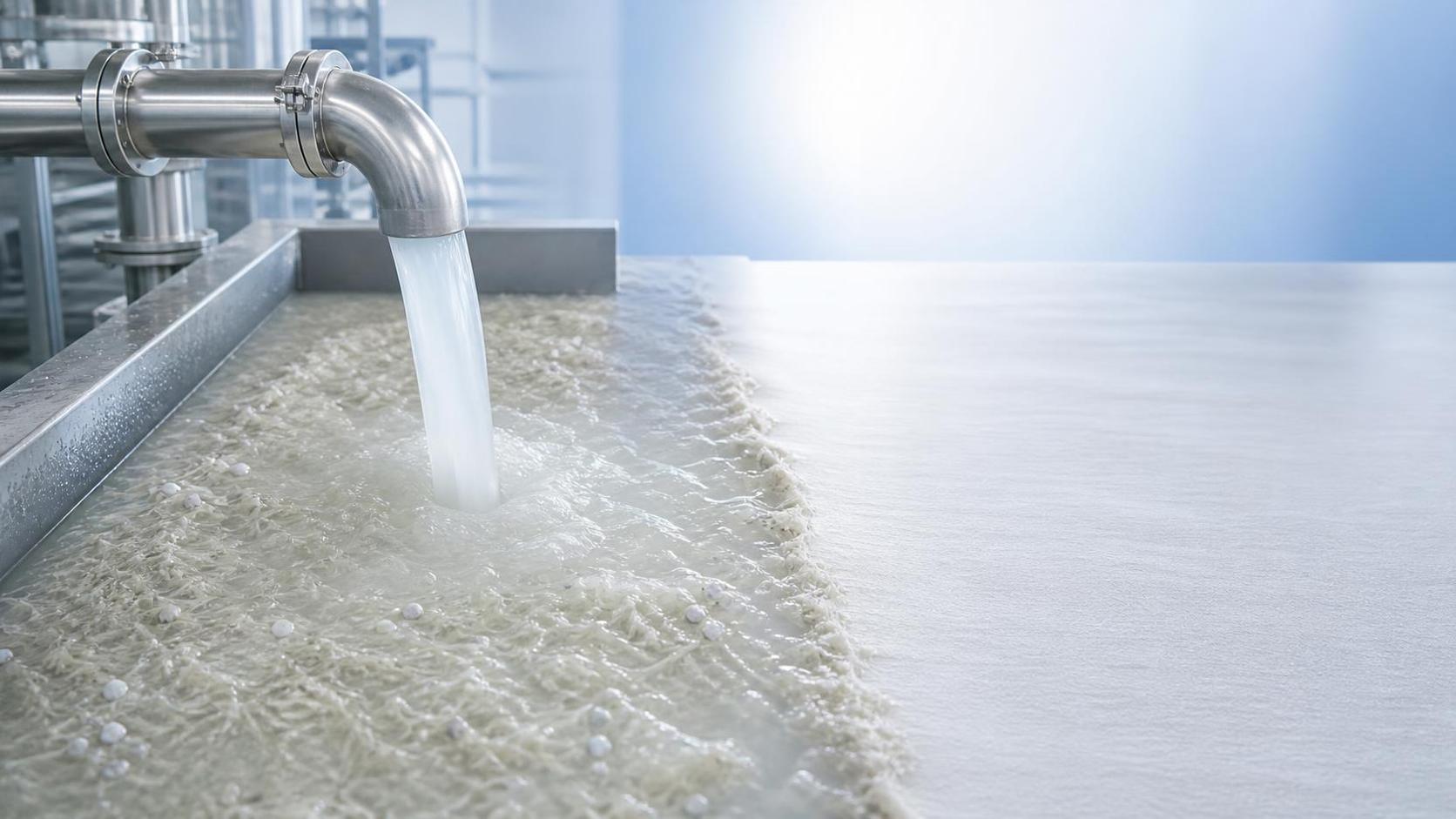
Modified starch is a functional part of the paper system, not simply a dry-strength additive. Its performance depends on the starch chemistry, point of addition, furnish charge, shear history, filler level, drainage conditions, and the drying profile after sheet formation. When these variables are aligned, Modified Starch for Paper Industry applications can increase fiber-to-fiber bonding, retain more fine material in the web, and form a more uniform surface for printing, coating, converting, or barrier treatment.
The technical objective is to place a hydrated, appropriately charged polymer where it can contribute to the sheet without disrupting drainage or upsetting the wet-end chemical balance. A starch grade that performs well in a low-ash packaging sheet may behave differently in a highly filled fine paper or a recycled furnish containing dissolved and colloidal substances. Grade selection therefore starts with the machine conditions and finished-paper specification rather than a single dosage target.
Bond Formation Begins at the Fiber Surface
Cellulosic fibers develop paper strength primarily through hydrogen bonding during consolidation and drying. Refining expands fiber surface area and creates fibrils that support bonding, but excessive refining can increase drainage resistance and energy demand. Modified starch supplies an additional bonding mechanism by depositing on fibers and fines, increasing the available contact area in the dried sheet.
Cationic starch is commonly applied at the wet end because its positive charge promotes adsorption onto the generally anionic surfaces of pulp fibers, mineral fillers, and fines. The degree of substitution and molecular size influence adsorption speed, retention behavior, and sensitivity to anionic contaminants. A grade with insufficient charge may remain in white water instead of attaching efficiently. An excessively strong or poorly balanced cationic demand can interfere with other treatment chemicals or create localized flocculation.
Once adsorbed, the starch can bridge adjacent fiber surfaces and reinforce the contact points that develop as water leaves the web. The resulting improvement may appear as higher tensile strength, internal bond, burst resistance, stiffness, or compression-related performance, depending on furnish composition and sheet structure. These properties should be evaluated individually. A formulation that raises tensile strength does not automatically produce the same change in ring crush, Scott bond, or fold endurance.
Oxidized, amphoteric, and other modified starch types may be selected when a different balance of viscosity, charge response, film formation, or application behavior is required. The useful distinction is not the product name alone; it is whether the polymer remains sufficiently dispersed, adsorbs at the intended location, and survives the mechanical and chemical conditions between preparation and the headbox.
Retention Is a System Response
Fine fibers, calcium carbonate, clay, titanium dioxide, and other particulate materials strongly affect opacity, smoothness, bulk, print response, and cost structure. Loss of these components to the white-water system can reduce yield and destabilize the wet end. Modified starch can support retention by attaching fines and filler particles to fibers or by contributing to controlled microfloc formation with the retention program.
The word controlled matters. Large, durable flocs can raise first-pass retention while causing uneven formation, visible defects, poor coat weight uniformity, or variable strength across the sheet. Fine dispersion may improve formation but allow excessive valuable solids to leave the wire. An appropriate starch program supports a floc size distribution that is stable enough for retention yet responsive enough to disperse under headbox shear.
Retention should therefore be interpreted together with ash profile, formation, drainage, white-water solids, and press-section solids. A single retention measurement can be misleading when the furnish has changed, when broke content varies, or when dissolved anionic material accumulates. Sampling points need to be consistent, and test periods should be long enough to distinguish a chemical response from normal machine variation.
Where synthetic retention aids are already used, starch compatibility deserves laboratory confirmation. Cationic starch, cationic polyacrylamide, colloidal silica, bentonite, and microparticle systems can interact constructively or competitively depending on addition sequence and charge balance. Adding all components at a single location may produce immediate flocculation before sufficient mixing occurs. Separate addition points and controlled residence time often produce a more repeatable result.
Surface Quality Depends on Distribution, Not Only Strength
Starch used at the size press, film press, or coating kitchen has a different task from wet-end starch. At the surface, it can fill shallow irregularities, bind loose fibers, reduce surface porosity, and improve the anchoring of subsequent coating layers. Surface starch may also improve resistance to picking and linting during printing or converting, provided the film is continuous and sufficiently dried.
Viscosity control is central to this application. High viscosity can prevent uniform metering, cause streaking, and increase the risk of deposits. Very low viscosity may penetrate deeply into a porous base sheet rather than remain near the surface, reducing the desired film-building effect. Solids content, temperature, shear, pH, and the presence of crosslinkers, lubricants, pigments, optical brighteners, or defoamers can all alter the applied film.
Surface quality should be judged with the end use in view. A print-grade sheet may require uniform ink holdout, surface strength, and controlled absorbency. Packaging grades may prioritize glueability, abrasion resistance, dimensional stability, or compatibility with downstream coating and lamination. A smoother surface is not automatically preferable if it is achieved by excessive densification that compromises stiffness, permeability, or converting behavior.
Preparation Conditions Often Determine the Outcome
Native and modified starches require correct cooking or hydration to develop usable performance. Incomplete gelatinization leaves ungelatinized granules that can reduce available bonding, create filtration problems, or form deposits. Overcooking, prolonged high-temperature holding, excessive shear, or contamination can reduce viscosity and alter application consistency.
A typical preparation sequence begins with controlled slurry make-down, followed by heating to the specified cooking condition, holding long enough for complete development, dilution to the required solids, and cooling or transfer under conditions that limit microbial growth and viscosity drift. Actual temperatures and residence times must follow the grade specification and the mill's equipment design. Steam quality, pressure stability, sensor calibration, and agitation pattern are practical factors that can change the result even when the nominal recipe remains unchanged.
- Dry powder should enter the make-down system at a rate the mixer can wet out completely. Rapid dumping can create fish-eyes that resist later cooking.
- Water hardness and pH can affect dispersion and interactions with downstream chemistry. A shift in process water quality may require adjustment before changing starch dosage.
- Transfer piping should avoid dead legs where cooked starch can age, cool, or support deposits. Recirculation must be balanced against shear exposure and residence time.
- At the point of use, confirm actual solids and viscosity rather than relying only on batch records. Small deviations can be significant at a size press or film press.
Starch viscosity is also a process control variable rather than a universal indicator of quality. Two grades with similar apparent viscosity may differ in charge density, molecular distribution, film strength, and interaction with filler. Conversely, a viscosity decline in a prepared batch may originate from enzyme contamination, shear degradation, excessive holding temperature, dilution error, or a change in measurement method. Troubleshooting should identify the cause before selecting a higher-viscosity grade or increasing addition rate.
Matching the Grade to the Paper System
For wet-end use, the initial questions concern furnish type, filler level, conductivity, pH, white-water closure, existing retention chemistry, and the strength property that limits the grade. Recycled fiber systems often require particular attention because contaminants, residual wet-strength resins, coating binders, and anionic trash can reduce the availability of cationic sites. Charge demand testing and dynamic drainage measurements can reveal whether poor performance is caused by insufficient adsorption, poor mixing, or an incompatible retention sequence.
For surface applications, the base-sheet porosity, target pickup, dryer capacity, and final converting operation should guide selection. A starch that produces a strong film may need a different cooking profile or application solids than one selected mainly for pore sealing. When pigments or latex are included in the formulation, compatibility testing should cover storage stability, foam behavior, rheology under circulation, and dried-film properties.
Some chemical thickeners and gelling agents are evaluated in adjacent formulation work because they influence water management and suspension. For example, GELLAN GUM CAS#71010-52-1 is a water-soluble gelling material whose response can be sensitive to ions, particularly calcium. That behavior is distinct from a paper starch program, but it illustrates why ionic composition must be considered whenever a formulation relies on polymer hydration, viscosity development, or suspension stability. Substituting one material for another solely because both thicken aqueous systems would not be technically justified.
Trials Need Defined Boundaries
A mill trial is most useful when the intended mechanism and measurement window are defined before chemical addition begins. Change one primary variable at a time where possible: starch grade, dosage, addition point, cooking condition, or retention-aid sequence. Simultaneous changes to refining, filler loading, drainage chemicals, and starch program make it difficult to assign the observed result to any one cause.
Relevant measurements may include starch solids and viscosity, charge demand, first-pass retention, ash at multiple sheet locations, Canadian Standard Freeness or other drainage indicators, headbox consistency, moisture profile, tensile and internal bond, surface strength, roughness, Cobb value, and print or converting observations. The selected set should match the technical objective. A lightweight coated grade and a linerboard furnish do not require the same evaluation criteria.
Records should include pulp source, broke level, filler source, water temperature, conductivity, pH, machine speed, and chemical addition rates during each evaluation period. These conditions often explain inconsistent results that appear, at first, to be a starch-quality issue. Retained samples of dry starch and prepared solution can support later investigation when a result cannot be reproduced.
Supply, Storage, and Change Control
Modified starch is usually delivered as a dry powder, so moisture protection and lot traceability are basic controls. Storage areas should remain dry, clean, and protected from conditions that cause caking or contamination. Pneumatic transfer and bulk handling systems need dust-control measures, appropriate grounding, and inspection of filters, rotary valves, and conveying lines. A material that has bridged in a hopper can disrupt feed consistency long before the issue becomes visible in the sheet.
Incoming documentation should identify the grade, lot, net weight, storage guidance, and relevant quality parameters agreed for the application. Before introducing a new lot or alternate source, a bench comparison can review slurry behavior, cooked viscosity, charge response, and compatibility with the current wet-end or surface formulation. This is especially relevant when the paper machine operates close to a drainage, retention, or surface-strength limit.
Changes in packaging, shipment duration, warehouse conditions, or lot sequence should be communicated through the same production-change process used for other functional additives. The practical goal is stable material behavior at the make-down system and predictable sheet response at the reel, rather than relying on nominal product identity alone.
Modified starch produces its best results when treated as part of the paper machine's chemical architecture. Fiber bonding, fine-particle retention, drainage, surface film formation, and final converting performance are connected. A disciplined approach to starch selection, preparation, addition sequence, and verification can expose the actual limiting condition and support a stable operating window.
Send Us Your Inquiry Today
