









Product Quick Navigation
Get a Quote
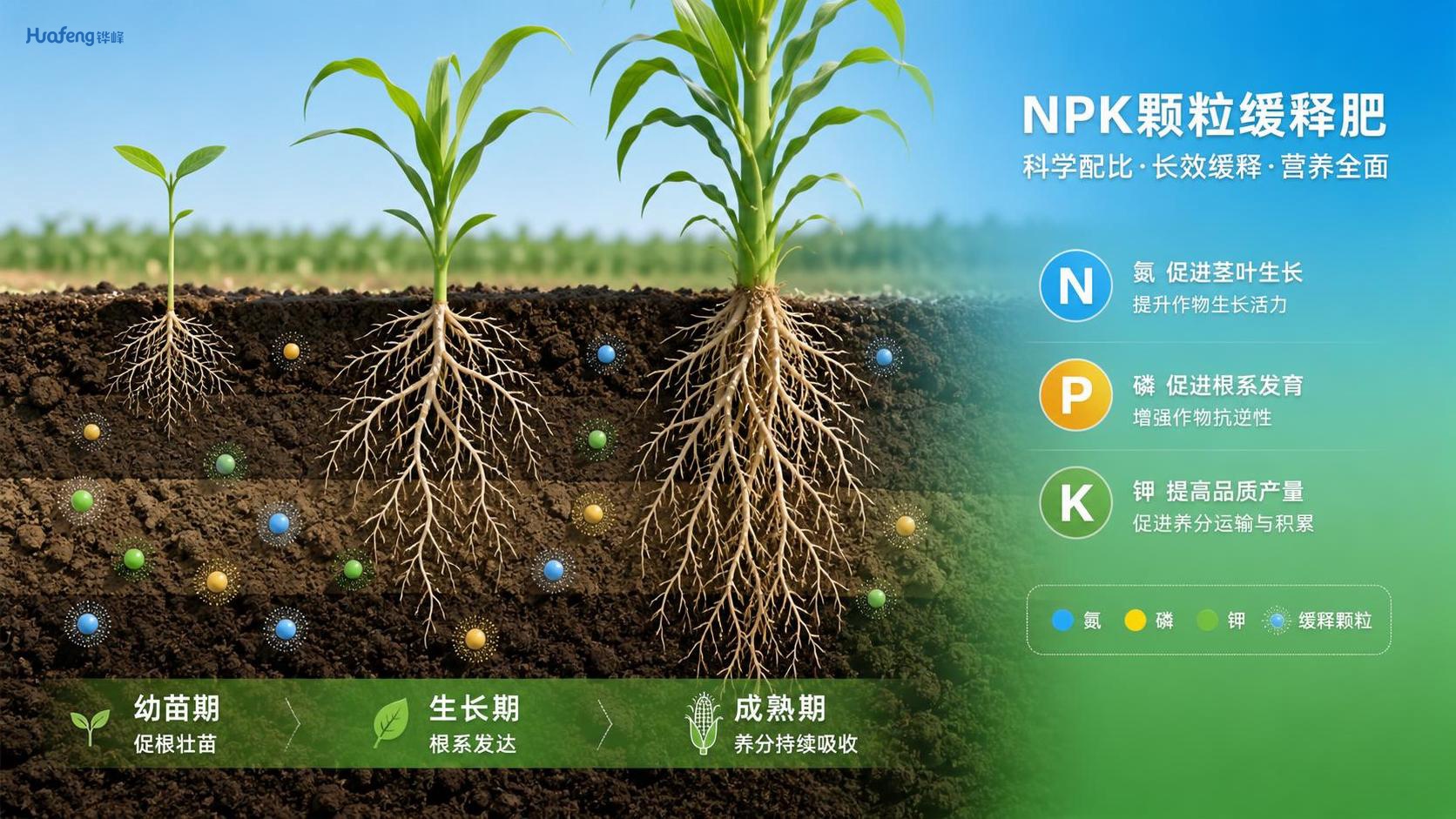
Nitrogen Phosphorus Potassium Fertilizers are often discussed as if they influence crop performance in a uniform way throughout the season. In practice, root response is highly stage-dependent. The same NPK ratio that supports rapid early root establishment can become inefficient, or even counterproductive, later when the plant shifts resources toward canopy expansion, flowering, and grain or fruit filling. For information researchers trying to understand fertilizer performance rather than just product labels, this stage-specific view is much more useful.
Root growth is not simply a matter of “more fertilizer, more roots.” Root architecture changes over time: early roots focus on establishment and exploration, mid-stage roots support high nutrient and water demand, and late-stage roots often shift toward maintenance rather than aggressive expansion. Because nitrogen, phosphorus, and potassium play different physiological roles, the balance among them affects not only root mass but also root depth, branching intensity, root hair formation, stress tolerance, and nutrient uptake efficiency.
Why crop stage matters more than the headline NPK number
In fertilizer markets, NPK grades are often compared by their nutrient percentages. That is useful for purchasing and logistics, but it says little about biological timing. A 15-15-15 product and a phosphorus-forward starter fertilizer may both contain the three primary nutrients, yet their effects on roots can differ sharply depending on whether the crop is just emerging, entering vegetative acceleration, or approaching reproductive development.
At each growth stage, plants allocate carbon differently. Young seedlings invest in survival and soil anchoring. Established plants aim to balance shoot growth with root uptake capacity. Reproductive plants prioritize flowers, pods, grains, tubers, or fruits. Fertilizer decisions that ignore these shifts often lead to visible field problems: shallow rooting, excessive vegetative growth, weak drought resilience, nutrient lockout symptoms, or disappointing yield despite high fertilizer input.
Early establishment: phosphorus usually has the strongest visible root effect
During germination and early seedling establishment, phosphorus is typically the most decisive nutrient for root development. It supports energy transfer through ATP-related processes and is closely tied to early cell division and root meristem activity. When phosphorus availability is adequate, crops tend to show faster root elongation, stronger lateral root initiation, and quicker stand establishment.
This is especially important in cool soils, compacted fields, or soils with high fixation capacity, where phosphorus may be present in total quantity but poorly available. Under such conditions, seedlings often struggle not because the field lacks total P, but because the root system cannot access it fast enough during a narrow developmental window.
Nitrogen is still important at this stage, but its role needs restraint. Excess early nitrogen can stimulate top growth faster than root growth, producing visually impressive seedlings with relatively weak underground support. In practical terms, that can increase transplant shock, reduce drought tolerance, and create uneven nutrient uptake later. Potassium contributes by improving osmotic regulation and enzyme activation, but its direct effect on visible early root expansion is usually less pronounced than phosphorus unless the soil is K-deficient.
This is one reason starter fertilizers are often formulated with relatively higher available phosphorus. The logic is agronomic, not promotional: early root restriction is difficult to fully correct later in the season. Once a crop misses its root establishment window, recovery in shoot biomass does not always translate into the same yield potential.
Vegetative growth: nitrogen becomes more influential, but balance is critical
As crops move into active vegetative growth, root systems must support rapid leaf area expansion, rising transpiration, and greater nutrient demand. At this stage, nitrogen has a stronger influence on total plant growth, including the root-to-shoot relationship. Moderate nitrogen supply can stimulate root proliferation because the plant has enough metabolic capacity to expand both canopy and root network.
The common mistake is assuming that higher nitrogen automatically means a stronger root system. In reality, excessive nitrogen often shifts plant allocation toward shoot growth. Roots may become relatively shallower or less dense at depth, especially in irrigated systems or fertile topsoil where plants “learn” that resources are concentrated near the surface. This can create vulnerability when weather becomes dry or when nutrient demand peaks later.
Phosphorus remains relevant because active roots still need energy-intensive growth and nutrient transport. Potassium becomes increasingly important in this stage because it helps regulate stomatal function, carbohydrate movement, and stress response. In root terms, sufficient potassium often supports stronger root vigor under heat, salinity, or intermittent water stress, even when it does not dramatically increase root length on paper.
For field interpretation, researchers should be cautious with simple biomass comparisons. A larger root mass is not always a better root system. Distribution matters. A crop with moderate total root mass but better depth penetration and finer lateral branching may outperform a crop with heavier but more superficial roots.
Flowering and reproductive transition: root growth slows, root function becomes the priority
Once crops approach flowering or reproductive transition, many species reduce the rate of new root expansion. This does not mean roots stop mattering. On the contrary, root function becomes even more important because the plant is entering a period of high nutrient transfer and high sensitivity to stress. The fertilizer question changes from “How do we build roots?” to “How do we keep the existing root system active, efficient, and resilient?”
Nitrogen at this stage must be managed carefully. Too little can weaken overall plant function and limit nutrient uptake. Too much can prolong vegetative growth, delay maturity in some crops, and reduce allocation efficiency to reproductive organs. From a root perspective, excessive late nitrogen can also maintain a canopy demand pattern that the existing root system cannot support under stress conditions.
Phosphorus contributes to energy transfer and reproductive development, but its visible effect on adding new roots is usually smaller than earlier in the season. Potassium often becomes more strategically important because it supports water regulation, disease tolerance, assimilate transport, and stress buffering. In many crops, potassium helps the root system remain physiologically effective even when structural root expansion has slowed.
This distinction between root growth and root activity is often overlooked in market discussions. Buyers comparing fertilizer programs should not ask only which product “grows more roots,” but also which nutrient balance best supports root performance during the stage that most influences yield stability.
Late-season filling stages: maintaining uptake efficiency matters more than pushing new roots
During grain filling, fruit enlargement, or tuber bulking, the crop relies heavily on the root system already in place. New root formation is limited in many cropping systems, especially under heat stress, compaction, disease pressure, or aging tissues. At this stage, the most effective NPK strategy is usually one that preserves nutrient uptake continuity rather than trying to force fresh vegetative or root flushes.
Potassium is frequently associated with this period because of its role in translocation and water balance. Crops deficient in potassium late in the season may show weak filling performance even if earlier growth looked acceptable. Nitrogen requirements become more crop-specific. Some systems benefit from controlled late N to sustain protein formation or quality, while others suffer if late nitrogen delays maturity or encourages soft tissue growth.
Phosphorus deficiency late in the season is less common in well-managed systems, but when present it can still impair energy metabolism and reduce the effectiveness of root uptake under stress. The bigger agronomic point is that late-stage correction is inherently less efficient. Root architecture has already been shaped. Nutrient interventions now influence function more than structure.
How each nutrient changes root characteristics
Looking beyond crop stage, each nutrient tends to influence a different set of root traits.
Nitrogen affects overall growth intensity. Adequate nitrogen encourages root proliferation, but oversupply often reduces the root-to-shoot ratio. Roots may become less exploratory if nitrogen is concentrated in the topsoil. In nitrate-dominant systems, roots may elongate toward mobile N zones, while ammonium nutrition can create different local root responses depending on pH and soil conditions.
Phosphorus is strongly linked to early root elongation, lateral root formation, and seedling vigor. Because phosphorus mobility in soil is limited, placement and availability matter as much as total application rate. This is why localized starter applications often outperform broad assumptions based only on bulk soil analysis.
Potassium supports root robustness more than dramatic structural expansion. It improves turgor regulation, enzyme systems, and tolerance to drought, salinity, and some diseases. Under stress, potassium-fed roots often maintain function better, which can be more valuable commercially than marginal increases in root mass.
Why the same NPK program performs differently across soils and crops
Stage-based fertilizer interpretation only works when paired with soil and crop context. A phosphorus-rich program that improves maize rooting in a cold, alkaline soil may deliver little visible benefit in a warm soil with good P availability. A nitrogen-heavy vegetative program may be suitable for forage systems but risky for crops where reproductive balance is more sensitive.
Root response is shaped by several interacting factors:
- Soil texture and water-holding capacity
- Soil temperature during establishment
- pH and nutrient fixation behavior
- Irrigation frequency and placement
- Crop species and cultivar root architecture
- Planting density and expected yield target
- Salinity, compaction, and disease pressure
This is where researchers and procurement teams need to be careful with broad product claims. An NPK grade should be assessed as part of a cropping system, not as a universally superior input. In the broader chemical trade, this is similar to how buyers evaluate specialized compounds for end-use fit rather than just purity or headline composition. Even outside fertilizer markets, matching technical material to application context is crucial, whether discussing crop inputs or other chemical intermediates such as Alpha-Dihydroartemisinin CAS#81496-81-3.
Common misconceptions that distort fertilizer decisions
One common misconception is that high-phosphorus fertilizers are always best for roots. They are often valuable during establishment, but that does not mean phosphorus-dominant feeding remains optimal through all stages. Another is that visible top growth indicates a strong root system. In many fields, lush early foliage actually masks shallow rooting caused by nitrogen imbalance or irrigation patterns.
A third misconception is that root effects can be judged by fertilizer analysis alone. Form matters, placement matters, timing matters, and background soil fertility matters. Granular basal application, banded starter placement, fertigation, and foliar support each interact differently with crop stage and root behavior.
There is also a tendency to treat root growth as the sole target. In commercial production, root efficiency is often more valuable than root size. A root system that accesses water consistently and maintains uptake during stress is more relevant to yield stability than one that simply measures larger in a controlled comparison.
What information researchers should look for when evaluating NPK fertilizer performance
For readers comparing Nitrogen Phosphorus Potassium Fertilizers across suppliers, studies, or trade discussions, the most useful questions are not marketing questions. They are context questions.
- At which crop stage was the fertilizer applied?
- Was the reported benefit related to root length, root density, root depth, or nutrient uptake efficiency?
- What was the soil condition, especially pH, temperature, and moisture?
- Was the crop under stress, or in near-optimal conditions?
- Did the program improve final yield or only early vegetative appearance?
- Was the nutrient source and placement method disclosed?
These questions often separate meaningful technical evidence from generic product positioning. In cross-border sourcing and market research, they also help buyers judge whether a formulation is likely to translate across regions or whether results are too environment-specific to generalize.
The practical takeaway
NPK affects root growth differently because crops do not need the same kind of root system at every stage. Early growth is about rapid establishment, where phosphorus usually has outsized importance. Vegetative growth requires balanced nitrogen support without sacrificing root depth and resilience. Reproductive stages rely less on creating new roots and more on sustaining root activity, where potassium often plays a larger protective role. Late-stage fertilizer decisions rarely rebuild root architecture; they mainly preserve or compromise the function of the root system already formed.
For information researchers, that is the central lens worth keeping: the value of an NPK program lies not in its label alone, but in how well its nutrient balance matches the crop’s changing root priorities over time. Technical interpretation becomes far more accurate once root growth is viewed as a dynamic developmental process rather than a single fertilizer outcome.
Send Us Your Inquiry Today
