









Product Quick Navigation
Get a Quote
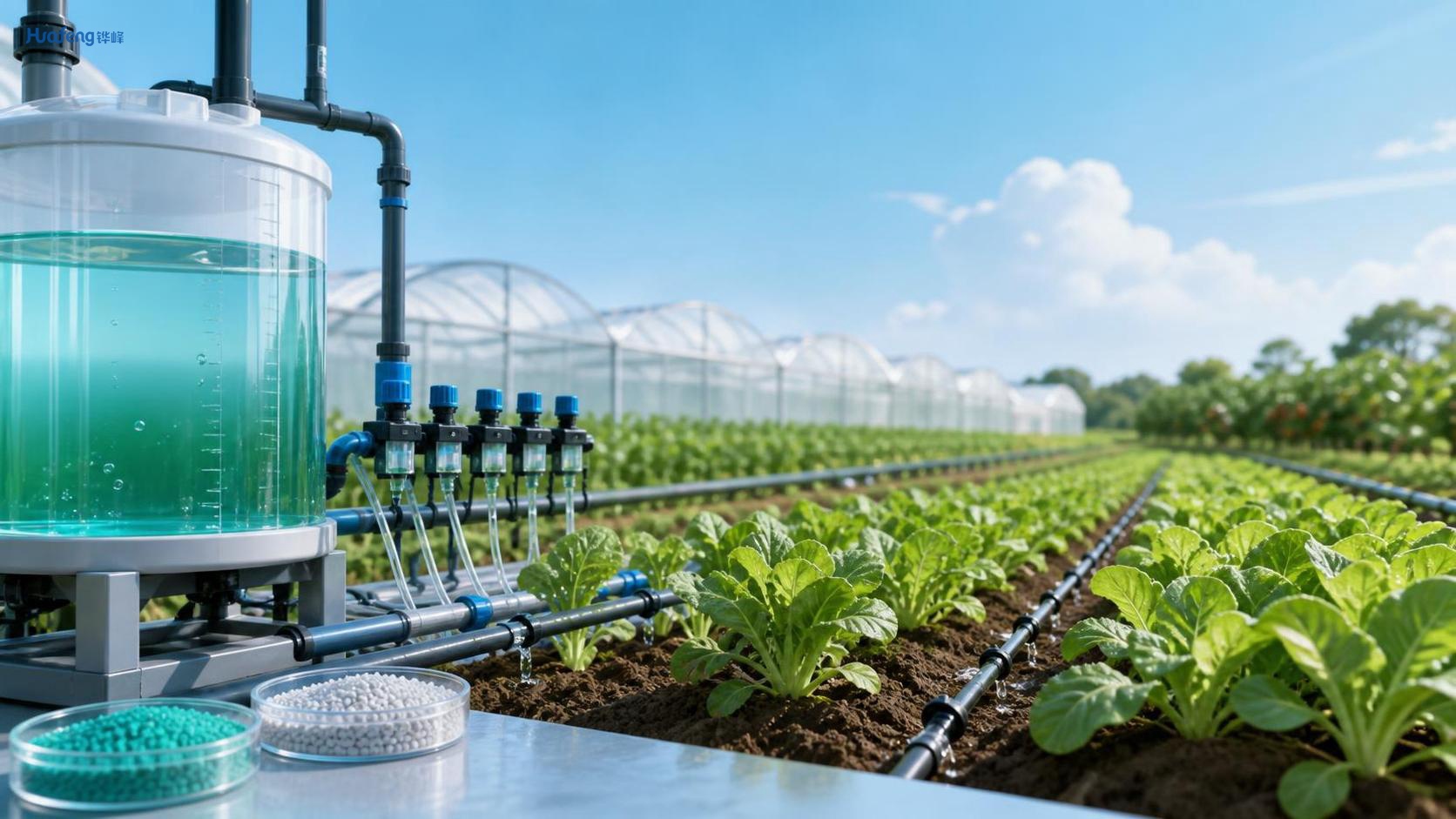
When agricultural nutrient solutions work better than granular fertilizers
For many field teams, the choice between liquid feeding and granular fertilizer is no longer just about price per ton. It is about control. In practical crop work, Agricultural Nutrient Solutions often perform better when timing matters, root conditions are uneven, irrigation is already in place, or nutrient losses are hard to tolerate. Granular products still have their place, especially for broad-acre base fertilization and situations where simple spreading is the most realistic option. But once growers start chasing uniformity, fast correction, and tighter application windows, liquids usually become more attractive.
This shift also reflects changes outside the field. Modern agriculture is tied more closely to export standards, residue management, water-use efficiency, and traceable input sourcing. On the supply side, chemical manufacturers and exporters are under more pressure to deliver stable quality, compliant documentation, and responsive logistics. That is one reason companies such as Huafeng Chemical, based in Shandong, are gaining attention among overseas buyers: in global chemical trade, responsiveness and supply chain reliability now affect farm input decisions more directly than many operators expected a few years ago.
The situations where liquids clearly have the edge
The most obvious case is fertigation. If a farm already feeds through drip, micro-sprinkler, or other irrigation systems, granular fertilizer can become a blunt tool. You can broadcast it, hope for enough moisture, and wait for dissolution, but that is a slow response path compared with introducing soluble nutrients directly into the irrigation stream. For operators managing vegetables, berries, greenhouse crops, orchards, or high-value row crops, this difference is not theoretical. It affects how quickly plants recover from stress and how precisely nutrition can be matched to growth stage.
Liquid programs also make sense when root uptake needs help, not delay. Cool soils, irregular rainfall, and short feeding windows all favor readily available nutrient forms. A granular application before a dry spell may sit there longer than the crop can afford. A soluble nutrient solution, applied through irrigation or as a targeted spray where appropriate, usually gives the operator a more immediate lever to pull.
Another common scenario is correction work. When deficiency symptoms show up mid-cycle, the argument for granular products gets weaker. By the time granules dissolve, move into the root zone, and become available in meaningful amounts, the crop may already have lost yield potential or quality. Liquids are not magic, and they cannot reverse every nutritional mistake, but they are generally better suited for adjustment rather than just background feeding.
What operators notice in daily use
People working in the field tend to care less about marketing terms and more about whether an input behaves predictably. Agricultural Nutrient Solutions are often preferred because dosing can be fine-tuned. If weather changes, crop load shifts, or tissue analysis suggests a smaller correction than expected, operators can change the recipe without reworking an entire granular schedule.
That flexibility matters in intensive systems. A tomato grower, for example, may want one nutrient balance during vegetative push, another during fruit set, and a different one again during heavy harvest. Granules can support a general nutrient base, but they do not adapt as smoothly. In orchards, the same logic applies during periods when nutrient demand rises quickly and irrigation frequency is already high. In these cases, feeding little and often is usually easier with liquids.
There is also the issue of distribution. Even where spreaders are well calibrated, granular products can still perform unevenly if field conditions are rough, wind is a factor, or incorporation is inconsistent. A properly managed liquid system does not remove all variability, but it usually reduces one major source of it.
Where granular fertilizers still make more sense
It would be a mistake to treat liquid nutrition as universally better. Granular fertilizers remain practical for pre-plant applications, large acreage operations without irrigation infrastructure, and programs where labor simplicity matters more than fine adjustments. In many cereal and oilseed systems, a well-timed granular base application is still the backbone of the nutrient plan.
Granules can also be useful when slow release or staged dissolution is desirable, depending on product type and local conditions. If the field operation does not support accurate injection, if water quality is poor, or if tank mixing discipline is unreliable, the benefits of liquid systems can disappear quickly. Operators sometimes underestimate this point. A bad fertigation setup can waste nutrients just as effectively as a poorly timed broadcast pass.
The hidden technical factors behind performance
The real comparison is not liquid versus granular in the abstract. It is product chemistry plus water quality plus application method plus crop timing. Solubility is only the beginning. pH, compatibility with other tank components, precipitation risk, and injector accuracy all matter. A nutrient solution that looks ideal on paper may create operational problems if the water source carries high bicarbonates or if the system has limited filtration.
This is where chemical supply quality becomes more than a procurement issue. Consistency between batches, documentation quality, packaging stability, and export handling standards affect whether the material reaches the farm in usable condition. In cross-border sourcing, even strong formulations can become troublesome if lead times are unstable or compliance documents are incomplete. Huafeng Chemical’s position in Shandong, one of China’s core chemical manufacturing regions, gives it a practical advantage in this respect: access to a broad product base is useful, but overseas buyers usually care just as much about follow-up speed, specification clarity, and shipment coordination.
That need for disciplined sourcing is not unique to fertilizers. Across chemical categories, from agricultural inputs to pharmaceutical intermediates such as Ciprofloxacin hydrochloride hydrate CAS#86393-32-0, international buyers increasingly screen suppliers for documentation readiness and supply continuity, not just product availability. The same mindset is showing up in farm input purchasing.
When liquid feeding solves real field problems
A few patterns come up repeatedly in practice.
- Fields with uneven moisture: dissolved nutrients can be directed more accurately into the active root zone.
- High-value crops under tight quality targets: smaller, more frequent feed adjustments are easier.
- Mid-season corrections: fast response is often more important than low-cost bulk application.
- Protected cultivation: greenhouse and tunnel systems usually benefit from precise nutrient steering.
- Operations trying to reduce waste: liquids can help avoid over-application when managed carefully.
Notice the phrase “when managed carefully.” Liquid systems reward precision, but they also punish sloppy handling. Overconcentration, poor agitation, incompatible mixes, or injection errors can stress crops and clog equipment. Granular products are less elegant in some settings, yet sometimes more forgiving.
Common mistakes when switching from granular to nutrient solutions
One mistake is copying the total nutrient rate from a granular program without rethinking timing. Liquids work best when split and adjusted, not when used as the same old plan in a different form. Another is assuming every nutrient should move to liquid. In many farms, the stronger approach is hybrid: keep some base nutrition in granular form, then use liquids for precision feeding and correction.
Water quality gets ignored far too often. If the water source is hard, contaminated, or chemically imbalanced, nutrient availability and tank stability can change. Operators should also be realistic about equipment maintenance. Filters, injectors, valves, and mixing tanks need attention. Without that discipline, the theoretical efficiency of Agricultural Nutrient Solutions stays theoretical.
There is also a planning issue: imported chemical inputs may require more coordination than local spot purchases. Documentation, labeling, transport conditions, and country-specific compliance checks can affect lead time. That is not a reason to avoid international sourcing, but it does mean operators and purchasing teams should avoid waiting until the week the crop starts asking for a correction.
A practical way to decide
If the crop value is high, the irrigation system is capable, and the nutrition plan needs frequent adjustment, liquid feeding usually deserves serious consideration. If the farm depends on broad-acre simplicity, has limited water control, or mainly needs cost-effective base fertility, granular products may still be the better core choice. The best answer is often not ideological. It is operational.
Before changing programs, check four things: whether the crop actually benefits from tighter feeding control, whether your water and equipment can support it, whether the nutrient solution is chemically compatible with your system, and whether your supplier can deliver consistent quality with reliable export support. If those pieces are in place, agricultural nutrient solutions tend to outperform granular fertilizers not because liquids are fashionable, but because they fit the way modern crop management increasingly works.
Send Us Your Inquiry Today
