









Product Quick Navigation
Get a Quote
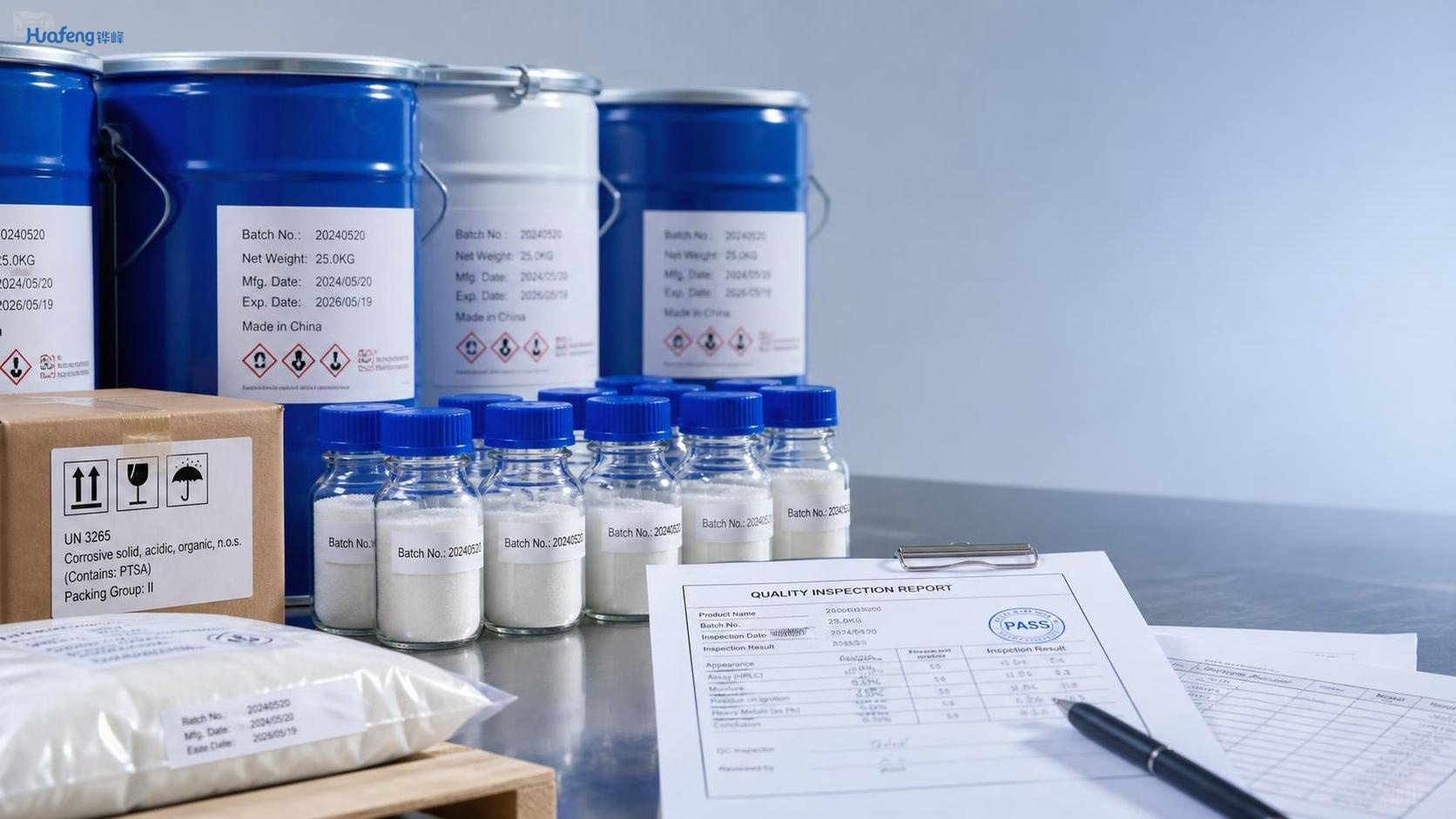
Before purchasing Chemical Raw Materials from a new supplier, procurement teams need to look past the quoted price. In chemicals, a low first offer can become an expensive decision if it leads to unstable quality, incomplete documents, delayed shipment, or customs and compliance issues downstream. For most buyers, the real question is not whether a supplier can make a product once, but whether it can deliver the same product consistently, with the right paperwork, packaging, and commercial response over time.
That matters even more in a global market where supply chains are stretched across jurisdictions and regulatory expectations keep tightening. A new supplier may appear competitive on paper, yet still create hidden costs through re-testing, production disruption, delayed customer delivery, or higher inventory buffers. A sound supplier review is therefore less about ticking boxes and more about understanding where operational risk will actually show up.
Start with fit, not just availability
Many sourcing problems begin with a basic mismatch: the supplier can sell the material, but cannot reliably support the buyer’s actual use case. Procurement should first confirm whether the supplier is aligned with the intended application, specification window, order rhythm, and destination market. This is especially important in chemicals because two suppliers may quote the same product name while serving very different segments, purity expectations, and export routines.
A practical starting point is to ask four simple questions:
- Is the material going into a regulated end use, export market, or customer-approved formulation?
- Is the requirement based on a broad industrial grade, or a narrow internal specification?
- Will the business need spot purchases, or repeat orders with consistent lot-to-lot performance?
- Does the supplier mainly serve domestic buyers, or does it have stable export execution experience?
If these answers are unclear, price comparison is premature. In many procurement cases, the issue is not whether a vendor can offer a sample or issue a quotation, but whether it understands the business consequences of a deviation.
Check quality consistency at the lot level
For a new supplier, quality should be assessed in terms of repeatability, not claims. A certificate of analysis is necessary, but it is not enough on its own. Buyers should compare the supplier’s standard specification with their own operating limits and identify which parameters are truly critical in production, storage, or downstream performance.
In practice, procurement teams should pay attention to:
- Whether the specification range matches the buyer’s actual acceptance criteria
- Whether test methods are clearly defined and comparable to the buyer’s own methods
- How much historical lot variation exists for key indicators
- Whether impurities, moisture, color, solubility, bulk density, or trace metals matter in the intended application
- Whether retention samples and batch traceability are maintained
This is where many new-supplier evaluations go wrong. A supplier may say the product is “qualified,” but that only means it passes its own internal release standard. Procurement needs to know whether “qualified” is tight enough for the plant, the formulation, and the end customer. If a material is feeding a sensitive reaction, coating system, water treatment process, or food/pharma-adjacent chain, even small fluctuations may create unacceptable process instability.
When reviewing a product such as Ammonium ferric citrate CAS#1185-57-5, for example, the relevant questions are not limited to the product identity itself. The buyer should also verify grade details, analytical method alignment, packaging suitability, and whether the supplier can maintain the same quality profile across repeat shipments. That is more useful than treating the purchase as a simple catalog transaction.
Documents matter because customs and compliance failures are expensive
In international chemical trade, paperwork quality is often a better predictor of supplier maturity than sales language. A technically acceptable product can still become a failed purchase if documentation is incomplete, inconsistent, or issued too slowly for the shipment schedule.
At minimum, buyers usually need to review the availability and quality of the following documents, depending on product type and market:
- Specification sheet
- Certificate of analysis
- Safety data sheet aligned with the destination market format
- Transport classification information
- Declaration of origin where needed
- Packing details and label content
- Any applicable registration, compliance, or restricted-substance declarations
Requirements differ by country and application, and some details should be treated as market-specific and verified case by case. If a supplier hesitates on basic export documentation or repeatedly revises files after review, that is usually not an administrative detail; it is an operating risk. Procurement will end up absorbing the delay through internal coordination, customs clarification, or inventory exposure.
This is one reason overseas buyers increasingly value suppliers with established foreign trade capability. In China, companies based in major chemical production regions such as Shandong may have strong manufacturing access, but the differentiator for export buyers is often the ability to combine product sourcing with disciplined document control, shipment coordination, and communication speed. A company like Huafeng Chemical becomes relevant in this context not simply because of product breadth, but because procurement teams often need a supplier that can bridge factory resources and export execution with fewer gaps.
Audit delivery reliability before the first urgent order arrives
New suppliers often perform well during quotation and sample stages, then struggle when commercial orders require schedule discipline. Buyers should therefore examine delivery capability before depending on the supplier for live production demand.
The right question is not “What is your lead time?” but “What are the conditions behind your lead time?” A quoted lead time may assume raw material availability, standard packaging, uncongested port conditions, and no need for additional testing. Procurement needs to understand what causes slippage.
Useful checks include:
- Whether the supplier is a manufacturer, trader, or mixed model
- How much stock is normally kept for the product
- Whether production is make-to-order or forecast-based
- What the minimum order quantity means in operational terms
- How packaging materials are sourced and whether they create bottlenecks
- What the backup plan is if a batch fails release or shipping is delayed
For some buyers, this discussion matters more than a modest unit-price difference. A supplier with a slightly higher quote but stable booking capacity, responsive after-sales support, and consistent shipment timing may reduce total procurement cost by lowering emergency freight, line stoppage risk, and safety-stock pressure.
Do not separate price from total cost-to-serve
Buyers searching this topic are usually trying to control cost, but that should not be reduced to ex-works or FOB price alone. In chemicals, total cost is shaped by packaging efficiency, freight class, customs handling, inspection requirements, quality incident exposure, payment terms, and the internal cost of managing supplier exceptions.
A new supplier should be compared using a broader lens:
Procurement teams that ignore these factors often discover that the cheapest source is only cheap in the quotation sheet. Once internal testing, delayed release, repacking, or demurrage appear, the economics change quickly.
Check how the supplier responds when something goes wrong
Every chemical buyer asks about quality and price. Fewer ask about deviation handling, and that is often where the real difference shows up. A new supplier should be evaluated on response process, not just promise. If a batch falls outside the agreed range, if labels are wrong, or if a shipment misses vessel cutoff, what happens next?
Ask for a concrete explanation of complaint handling:
- Who owns technical response?
- How fast is an initial reply issued?
- Is there a corrective and preventive action process?
- Can the supplier trace raw materials and production records by lot?
- How are replacement, credit, or claim discussions handled?
In real procurement work, speed and clarity during an issue are often more valuable than polished sales support during onboarding. A supplier that can explain root cause, provide evidence, and act commercially under pressure is usually safer than one that offers broad assurances but no process discipline.
Regulatory awareness is part of supply reliability
Chemical compliance is not static. Classification, labeling expectations, import controls, customer documentation demands, and sector-specific restrictions can all shift over time. Procurement does not need every supplier to be a regulatory expert in every market, but it does need evidence that the supplier understands its responsibilities and knows when a requirement needs confirmation.
Be cautious with broad claims such as “no problem for export” or “all documents available.” These statements may be true in a narrow sense but incomplete in practice. A supplier may have general export experience while lacking familiarity with a particular destination, customer audit standard, or product-use restriction. Where rules or certifications are material to the transaction, buyers should request current evidence and mark uncertain points as pending rather than assuming coverage. If necessary, treat specific regulatory items as 【to be verified】 until reviewed by the relevant compliance or import team.
Sample approval is useful, but it does not replace supplier qualification
One common mistake is over-weighting laboratory or pilot sample success. A sample can confirm technical feasibility, but it does not prove manufacturing stability, packaging execution, or shipment reliability. Procurement should connect sample approval to batch control and commercial readiness.
A better approach is to ask:
- Was the sample taken from normal production or prepared specially?
- Will commercial lots come from the same process and plant?
- Can the supplier provide recent batch data, not just one ideal sample result?
- Has packaging for export been validated for the route and storage conditions?
This distinction matters especially when buying specialty or application-sensitive materials. It is possible for a trial to succeed and the first container order to fail for reasons unrelated to core chemistry, including moisture ingress, inconsistent fill weight, labeling errors, or poor lot segregation.
Why supplier structure in China deserves a closer look
For overseas buyers sourcing from China, it is worth understanding whether the counterparty is the actual producer, a trading company with technical coordination ability, or a broader export service platform. None of these models is automatically better; the right fit depends on the product and the buyer’s operating needs.
A direct factory relationship may support cost transparency and technical access. A capable export-oriented supplier or service provider may offer better communication, broader sourcing coverage, and smoother execution across multiple products. In established chemical regions such as Shandong, this distinction matters because procurement often needs both manufacturing access and foreign trade competence. Where a supplier can coordinate multiple product lines, maintain documentation discipline, and manage export details reliably, the value may extend beyond the individual item price.
That can be particularly relevant for buyers building a new supplier base rather than making a one-off purchase. Even when reviewing a single item such as Ammonium ferric citrate CAS#1185-57-5, the smarter question is whether the supplier relationship can scale across future orders, adjacent materials, and changing compliance expectations.
A practical decision standard for procurement teams
Before approving a new supplier, procurement should be able to answer three things with reasonable confidence: can the supplier deliver the right material consistently, can it support the shipment and documentation process without friction, and can it respond competently when the transaction stops being routine. If any of these remain unclear, the supplier may still be usable, but only with tighter controls such as smaller initial volumes, additional incoming inspection, or limited approval status.
In chemicals, supplier qualification is less about finding a perfect vendor than about understanding which risks are acceptable and which will become costly later. Price still matters, of course, but for most serious buyers the better decision usually comes from balancing cost with consistency, export readiness, and operational accountability. That is what protects continuity when the market becomes less predictable.
Send Us Your Inquiry Today
