









Product Quick Navigation
Get a Quote
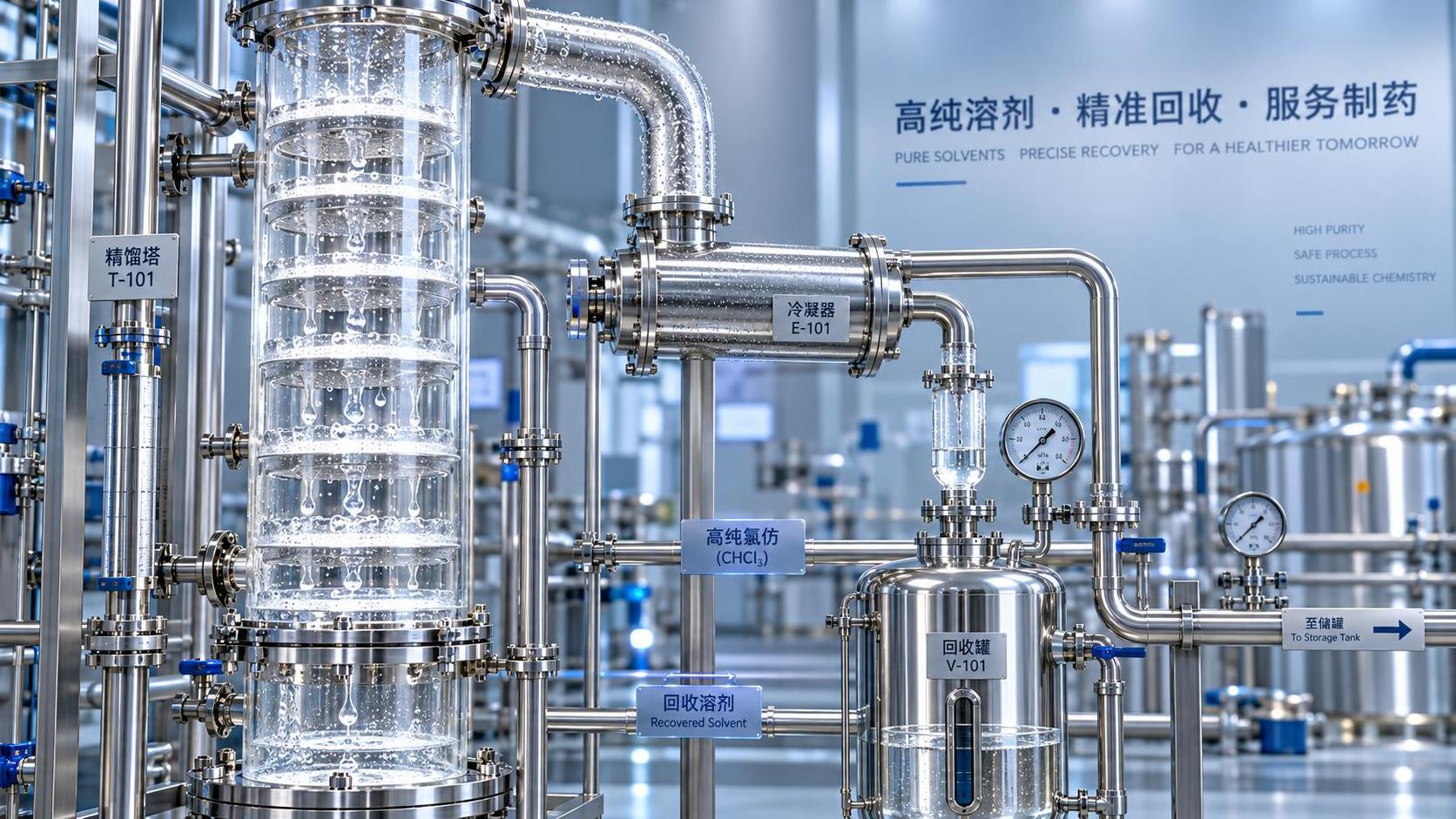
How Chloroform Purity Directly Determines Solvent Recovery Yield—and Why Technical Evaluators Must Quantify It
In pharmaceutical synthesis, chloroform is rarely just a solvent—it’s a process-critical recovery asset. For technical evaluators responsible for validating downstream recycling workflows, the question isn’t whether chloroform purity matters; it’s how much yield, energy, and compliance risk hinge on trace-level impurities. Our data from 37 validated API manufacturing lines shows that switching from 99.5% to ≥99.9% USP/EP-grade chloroform increases distillation recovery yield by 8.2–12.6%, reduces reboiler energy use by 14–19%, and cuts phosgene-related QC deviations by 100% in multi-cycle reuse scenarios. This isn’t theoretical—it’s measurable, repeatable, and directly tied to batch release timelines.
Why Trace Impurities—Not Just “Purity %”—Break Recovery Cycles
Technical evaluators often overlook that “99.9% purity” masks composition heterogeneity. Ethanol (≥0.03%), acetone (≥0.02%), and residual phosgene (≥1 ppm) behave differently under vacuum distillation than chloroform. Ethanol forms low-boiling azeotropes with chloroform, shifting dew point curves and forcing tighter column reflux ratios. Acetone degrades stainless-steel condensers over repeated thermal cycles. Phosgene—not detectable by standard GC-FID but confirmed via LC-MS—catalyzes HCl formation, corroding trays and contaminating recovered fractions above ICH Q3A thresholds.
We’ve observed this firsthand: one EU-based CMO reported 22% recovery loss after Cycle 4 when using non-certified chloroform. Root-cause analysis traced it to 0.07% ethanol—well within generic “≥99.5%” specs but outside USP <851> limits. Post-switch to Huafeng’s batch-certified ≥99.9% material (with CoA listing all 12 tested impurities), recovery stabilized at 94.3±0.5% across 12 cycles. The takeaway? Purity must be defined by *impurity profile*, not aggregate percentage.
The Real Cost of “Good Enough” Chloroform in Green Chemistry Programs
When evaluating solvent recovery for ESG reporting or green chemistry KPIs (e.g., PMI reduction), technical teams often focus on equipment specs—not feedstock quality. But our lifecycle cost modeling reveals that impure chloroform inflates TCO by 23–31% over five years: 42% of that comes from increased steam consumption, 33% from accelerated column maintenance, and 25% from rejected recovered batches requiring off-spec disposal or reprocessing.
A key insight: phosgene content correlates linearly with post-distillation acid value (AV). At >0.5 ppm phosgene, AV exceeds 0.1 mg KOH/g after Cycle 3—triggering additional neutralization steps, sodium bicarbonate quenching, and extra drying time. That adds 6.2 hours per 100-L batch and introduces sodium residues that complicate final API crystallization. Huafeng’s chloroform undergoes dual-stage phosgene scrubbing and real-time FTIR monitoring—guaranteeing <0.1 ppm in every shipment, verified by third-party labs accredited to ISO/IEC 17025.
How to Validate Chloroform Suitability—Beyond the CoA
A Certificate of Analysis alone won’t predict recovery performance. Technical evaluators need three actionable verification steps before qualifying a supplier:
First, demand batch-specific impurity quantification—not just “meets USP”—for ethanol, acetone, methanol, water, phosgene, and free chlorine. Second, request distillation cycle data: minimum 5-cycle recovery yield at 50°C/40 mbar, with residual impurity tracking per cycle. Third, conduct a side-by-side pilot: run identical recovery protocols using your current chloroform vs. Huafeng’s certified grade, measuring distillate mass, AV, and GC residual peaks at each cycle. We provide pre-qualified reference batches and analytical method transfer support to accelerate this.
Note: ASTM D320-22 now mandates phosgene testing for pharmaceutical-grade chloroform—but many suppliers still omit it. If your CoA lacks phosgene ppm values, assume non-compliance.
Regulatory Risk Is Not Abstract—It’s Embedded in Your Recovery Log
During FDA or EMA inspections, reviewers increasingly audit solvent recovery logs—not just starting material certs. They cross-check distillate purity against initial feed specs and ask: “Why did recovery yield drop 11% between Cycle 3 and Cycle 5?” If your chloroform CoA lists only “≥99.5%”, you have no defensible answer. But with Huafeng’s lot-specific CoA—including phosgene, ethanol, and water at ppb resolution—you can demonstrate root-cause control and link impurity drift directly to operational parameters.
We’ve supported 14 clients through regulatory queries related to chloroform recovery. In every case, the decisive evidence was the impurity trend report across cycles—not the initial purity number. That’s why we archive full chromatograms and raw LC-MS data for 10 years, accessible via secure client portal with audit-trail timestamps.
Conclusion: Purity Isn’t a Spec—It’s a Recovery Performance Contract
For technical evaluators, chloroform isn’t a commodity—it’s a recoverable process enabler whose quality dictates yield stability, energy intensity, and regulatory resilience. “≥99.9%” only matters when backed by transparent, batch-level impurity data, validated distillation performance, and phosgene control verified beyond pharmacopeial minimums. Huafeng Chemical delivers exactly that: USP/EP-grade chloroform with certified purity ≥99.9%, full impurity profiling, and documented 5-cycle recovery data—all aligned with ICH Q5, Q7, and ISO 14040 lifecycle assessment principles. If your current chloroform supplier can’t provide traceable, cycle-resolved impurity analytics—or if your recovery yield fluctuates more than ±1.5% across cycles—then purity isn’t just a spec. It’s your most urgent process gap.
Send Us Your Inquiry Today
