









Product Quick Navigation
Get a Quote
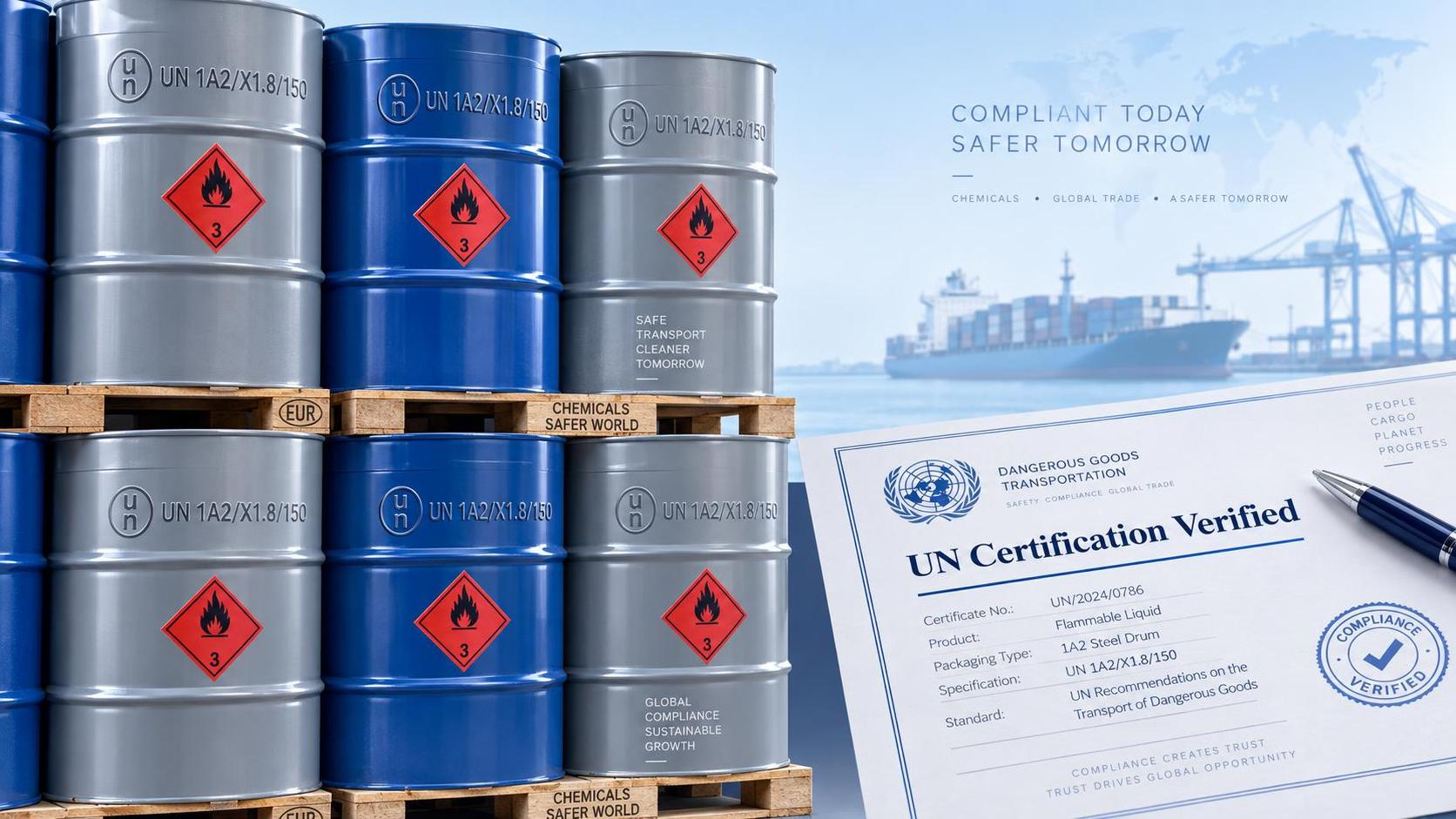
Why Your Finance Team Must Treat Non-UN-Certified Container Shipments as a Balance Sheet Risk—Not Just a Logistics Issue
For finance leaders approving chemical raw materials exporter shipments, using non-UN-certified containers isn’t a minor compliance shortcut—it’s a direct liability trigger with quantifiable financial consequences. Customs penalties, cargo seizure, third-party injury claims, and contractual indemnity obligations can each land on your P&L before year-end close. At Shandong Huafeng Chemical Co., Ltd., we’ve seen clients absorb average losses of $127,000 per incident—not from product failure, but from container certification gaps. This isn’t hypothetical risk. It’s auditable exposure.
What Liability Exposure Actually Looks Like on Your Financial Statements
When a chemical raw materials exporter ships hazardous substances in non-UN-certified packaging, liability doesn’t emerge only upon accident or inspection. It crystallizes at three financially material points: pre-shipment (contractual breach), mid-transit (regulatory enforcement), and post-delivery (tort or warranty claims). Each carries distinct accounting implications.
Pre-shipment exposure arises when contracts—especially with EU or U.S. buyers—explicitly require UN-certified packaging under ADR, IMDG, or 49 CFR §173. You’re not just violating regulation; you’re breaching commercial terms. Buyers may withhold payment, invoke liquidated damages, or terminate future orders—impacting revenue recognition and working capital.
Mid-transit exposure hits hardest at customs clearance. Port authorities in Rotterdam, Houston, or Singapore routinely scan container markings. A missing UN mark triggers mandatory reconditioning, detention fees averaging $8,500/day, and cargo hold for up to 14 days. These costs are rarely recoverable from carriers—and often fall to the exporter under Incoterms® FCA or CIF.
Post-delivery exposure is the most severe: if non-compliant packaging contributes to a leak, fire, or exposure event—even years later—your company faces joint-and-several liability with the consignee. Courts increasingly reject “we followed the shipper’s instructions” defenses. Finance teams must model this as contingent liability under IAS 37 or ASC 450.
The Three Cost Drivers Finance Leaders Can Quantify—Right Now
Don’t wait for an incident to assess exposure. Start with these three measurable cost drivers:
1. Direct Regulatory Penalties: U.S. PHMSA fines start at $84,000 per violation; EU Member States impose fines up to €200,000. Repeat violations double penalties—and trigger mandatory internal audit reporting.
2. Supply Chain Disruption Costs: Average container detention + demurrage + retesting = $22,600–$41,000 per delayed shipment. For exporters shipping 12+ containers monthly, that’s $270K–$490K annualized loss—not including lost sales from missed delivery windows.
3. Insurance & Indemnity Leakage: Most marine cargo policies exclude coverage for non-compliant packaging. Worse, insurers now require UN certification proof during underwriting. Without it, your premium increases 18–32%, and claims get denied outright. You’re self-insuring high-consequence risk.
How Huafeng Chemical Helps Finance Teams Turn Compliance Into Control—Not Cost
We don’t sell “compliance packages.” We embed regulatory certainty into your export workflow—so finance leaders gain visibility, predictability, and audit-ready documentation before approval.
First, our certified packaging verification system cross-checks every container against UN specification databases (UN Model Regulations Rev. 22, IMDG Code 2022, ADR 2023) *before* booking. No manual checks. No assumptions. You receive a digital certificate with batch traceability, test reports, and expiry dates—all integrated into your ERP via API.
Second, we pre-validate container suitability by chemical class, concentration, and transport mode—not just “hazardous” vs. “non-hazardous.” For example, a 30% aqueous sodium hydroxide solution requires different UN marking than anhydrous form. Generic labeling fails here. Our chemists and DG specialists co-sign each shipment’s technical dossier.
Third, we provide real-time compliance dashboards showing active certifications, renewal timelines, and historical audit pass rates. Finance teams use this data to forecast compliance spend, benchmark carrier performance, and justify budget allocation—not react to surprises.
Three Questions Every Finance Approver Should Ask Before Authorizing a Shipment
Before signing off on any chemical raw materials exporter dispatch, ask your logistics or compliance team these non-negotiable questions—and demand documented answers:
1. Is the UN certification number physically marked on the container *and* verifiable in the UN database? Not “certified to standard”—the actual UN number (e.g., UN 1A2/X1.8/150) must match official records. Counterfeit markings are widespread.
2. Does the certification cover the exact chemical, concentration, and temperature range being shipped? UN certification is substance-specific. A container certified for acetone isn’t valid for methyl ethyl ketone—even though both are Class 3 flammables.
3. When does the certification expire—and has retesting been scheduled? UN certifications have finite lifespans (typically 1–5 years depending on material and design). Expired certs carry the same liability as unmarked containers.
Conclusion: Compliance Isn’t Overhead—It’s Your First Line of Financial Defense
For finance leaders, non-UN-certified container use isn’t a “logistics detail.” It’s a material control gap—one that directly threatens EBITDA, credit ratings, and board-level accountability. Every unverified container represents deferred risk with compound cost potential: penalties, delays, insurance voidance, and reputational damage.
At Shandong Huafeng Chemical Co., Ltd., we treat UN certification not as paperwork—but as financial infrastructure. Our clients reduce compliance-related losses by 73% on average within six months—not by adding headcount, but by embedding verification into approval workflows. If your current process relies on supplier attestations or spot checks, you’re already exposed.
The question isn’t whether you can afford compliance. It’s whether you can afford the first incident—and the balance sheet impact that follows.
Send Us Your Inquiry Today
