









Product Quick Navigation
Get a Quote
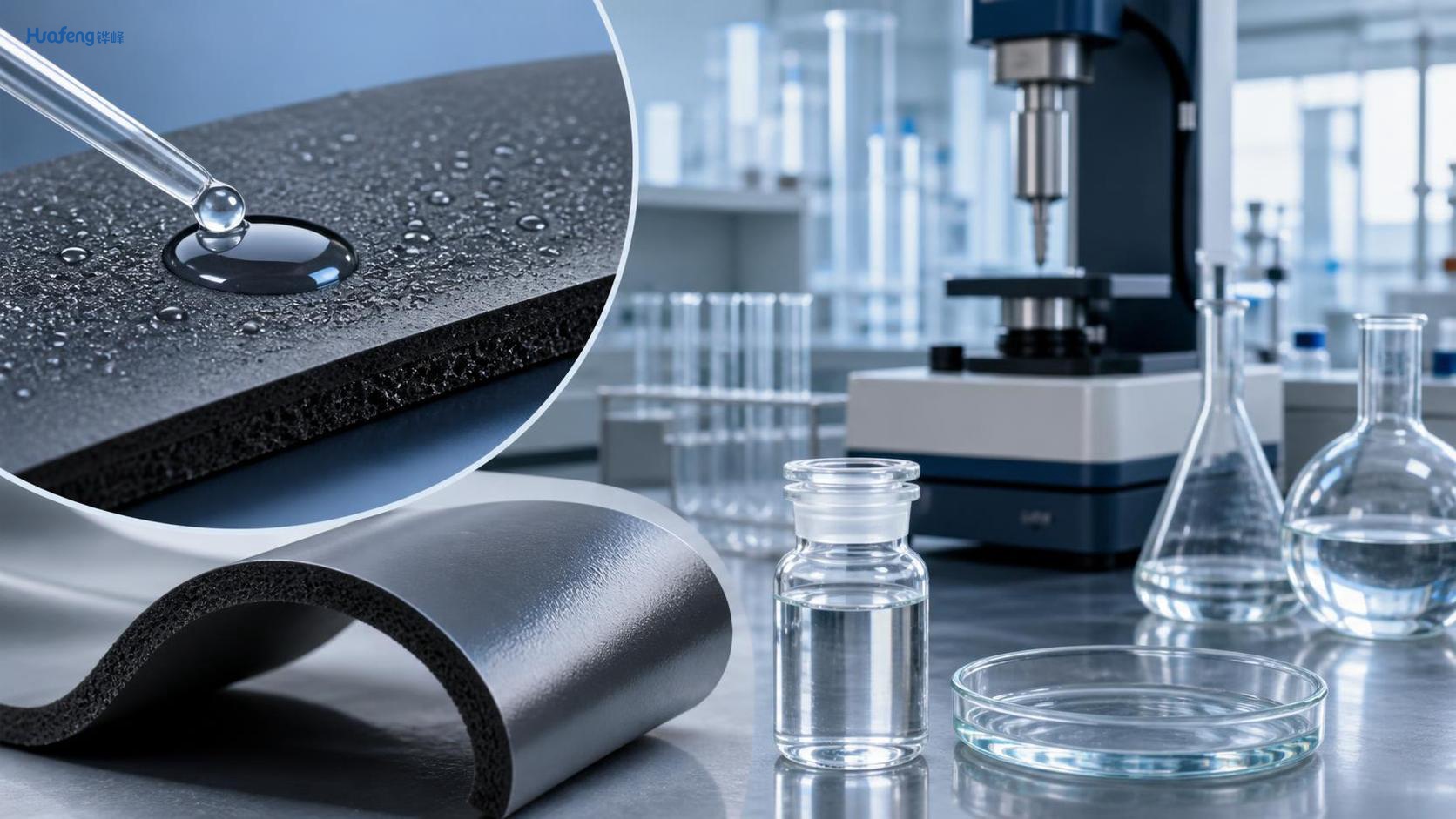
Why surface adhesion becomes the real problem in coatings and inks rubber applications
In chemical applications, coatings and inks rubber additives can make the difference between a stable bond and a surface that fails after converting, storage, or end use. Operators usually notice the problem late: ink lifts during tape testing, a coating beads up instead of wetting, edges curl after lamination, or the printed layer cracks when the rubber substrate flexes. By that stage, the issue is no longer just “adhesion.” It has become a production loss, a rework problem, and sometimes a customer complaint.
That is why it helps to look at adhesion as a system rather than a single property. In coatings and inks rubber formulations, additives influence how the liquid phase wets the substrate, how the film forms, how the cured layer handles stress, and how the interface survives water, heat, oils, abrasion, or repeated bending. A rubber part may look simple, but its surface chemistry rarely is. Plasticizers, release residues, low surface energy, cure package residues, and migration from the compound can all interfere with bonding.
For daily production work, the practical question is not whether additives matter. It is which additive mechanism solves which adhesion failure, and what trade-offs come with it.
Adhesion starts before the additive does
A common misunderstanding is to treat rubber additives as a universal fix. In reality, even a well-chosen additive cannot fully compensate for an unsuitable substrate surface or an unstable process window. Rubber is often harder to coat or print than rigid plastics because the surface can vary from batch to batch depending on polymer type, filler system, sulfur or peroxide cure, residual processing aids, and storage conditions.
EPDM, silicone rubber, nitrile rubber, natural rubber, and thermoplastic elastomers do not behave the same way. Some have relatively low surface energy. Some contain ingredients that migrate. Some keep changing after molding. For operators, this means the same ink or coating package may behave well on one line and fail on another, even when the color and viscosity look normal.
Before adjusting additives, it is usually worth checking a few basic conditions: whether the surface has been cleaned, whether corona, plasma, or flame treatment is stable if used, whether mold release is present, whether the substrate is fully cured, and whether the drying or curing schedule allows the binder to anchor properly. Adhesion chemistry works best when these basics are under control.
How additives in coatings and inks rubber systems influence adhesion
Not all additives improve adhesion in the same way. Some help the liquid contact the surface. Some improve compatibility between binder and rubber. Some increase crosslink density at the interface. Others reduce defects that indirectly weaken bonding.
Wetting agents are often the first lever people reach for. If an ink or coating pulls back, forms craters, or shows uneven coverage, poor wetting is usually involved. A suitable wetting additive lowers surface tension enough for the formulation to spread more uniformly over the rubber substrate. But lower surface tension alone is not a full adhesion strategy. A film can wet nicely and still delaminate later if the resin system has little chemical or physical affinity with the substrate.
Adhesion promoters address that second part. Depending on the formulation and substrate, they may improve interfacial attraction, participate in crosslinking, or create better anchoring to difficult surfaces. In practice, they are often evaluated alongside the main binder rather than as an afterthought. If the polymer backbone of the coating or ink is fundamentally mismatched with the rubber, the promoter may only give partial improvement.
Dispersants, defoamers, and flow modifiers also affect bonding more than many operators expect. Poor pigment dispersion can create weak points in the dried film. Excess foam can leave pinholes or voids. Overuse of slip or leveling additives may improve printability but reduce intercoat adhesion or make the surface too slick for downstream bonding. This is where troubleshooting gets tricky: the additive solving one processing problem may quietly create another.
The balance between flexibility and bond strength
Rubber substrates move. They compress, stretch, twist, and recover. So adhesion cannot be judged only by initial peel or tape test results. A hard, highly crosslinked coating may adhere well on day one but fail when the substrate flexes repeatedly. On the other hand, a very soft film may survive deformation but lack chemical resistance or blocking resistance.
This is why plasticizers, flexibilizers, and crosslinking aids need careful handling in coatings and inks rubber formulations. Too much softness can reduce cohesion within the film. Too much hardness can shift stress directly to the interface. The better approach is usually to define the end-use stress first: static marking on a rubber part is one thing; a coated seal, roller, or flexible industrial component is another.
Typical failure modes and what they often point to
When adhesion fails, the failure pattern gives clues. Clean removal from the rubber surface often suggests inadequate wetting, low substrate surface energy, contamination, or poor chemical affinity. If the failure happens within the coating layer itself, film cohesion may be the problem rather than interfacial adhesion. Edge lifting after drying can indicate solvent evaporation imbalance, internal stress, or excessive shrinkage. Smudging or poor rub resistance may point to incomplete cure.
Migration-related failures deserve special attention. Some rubber compounds release low molecular weight materials over time, especially under heat. A print that passes initial checks can lose adhesion later because the interface changes during storage. In these cases, the operator may need more than an additive adjustment. Surface pretreatment, a primer layer, or a different binder package may be necessary.
Choosing additives by substrate and process, not by label
In plant reality, materials are often selected under time pressure. The risk is choosing an additive because it is described as “for adhesion” without checking whether it fits the resin system, solvent package, application method, and rubber type. Screen printing, gravure, spray coating, dip coating, and roller application do not stress the formulation in the same way. Drying temperature and line speed matter too.
A useful screening approach is to define four things early: substrate type, expected surface condition, downstream mechanical stress, and compliance boundary. That last point is easy to overlook. In export-oriented chemical supply, a technically acceptable additive may still be unsuitable because of market-specific restrictions, documentation gaps, or customer qualification requirements. Usually this has to be checked against the destination market and the intended application, especially when coatings or inks may be used in regulated industrial chains.
This is also where supply chain discipline starts to matter as much as formulation know-how. Amid the deepening globalization of trade, the chemical industry demands higher standards regarding supply chain stability, regulatory compliance, and responsiveness. For users and operators, inconsistent documentation or slow response on technical details can delay trials just as much as a poor additive choice can.
Why export service capability matters in practical formulation work
Surface adhesion problems are often solved in stages. A lab may narrow the issue down to one or two additive routes, then the plant needs samples, technical documents, delivery timing, and confirmation on whether the same material can support future scale-up. If any of those steps break, the technical discussion stalls.
That is one reason overseas buyers increasingly pay attention not only to product range but also to foreign trade execution. Shandong Huafeng Chemical Co., Ltd., based in Shandong Province, operates in a region closely tied to China’s chemical manufacturing base. For buyers working on coatings and inks rubber applications, that kind of sourcing background can be relevant when projects require broader material coordination, faster communication on specifications, and more stable export-side follow-up. It does not replace technical validation, but it can reduce friction around delivery and documentation.
What operators should verify before changing the whole formula
When adhesion drops, the instinct is often to reformulate immediately. Sometimes that is necessary. Often it is premature.
A short verification routine can save time:
- Check whether the rubber surface has changed due to supplier batch, storage age, mold release, or post-cure condition.
- Review viscosity and solvent balance at the point of application, not only in the lab sample.
- Confirm actual drying or curing temperature on the line. Setpoint and substrate temperature are not always the same.
- Evaluate additive dosage drift. Small over-additions, especially with surface-active materials, can change intercoat behavior.
- Run aging checks that match real use, such as heat exposure, flex testing, rub resistance, or solvent contact where relevant.
These checks do not solve every issue, but they separate process noise from true formulation mismatch.
A practical way forward
In coatings and inks rubber work, adhesion is rarely controlled by one ingredient alone. It sits at the intersection of substrate condition, resin choice, additive package, cure profile, and use environment. The most reliable improvements usually come from matching the additive mechanism to the real failure mode instead of chasing generic “better adhesion.”
If a project is already showing inconsistent bonding, it is usually worth documenting the rubber grade, pretreatment status, application method, line temperature, and failure pattern before making large formulation changes. That information makes supplier discussions far more productive, especially when materials may need to satisfy both performance expectations and export-side compliance review. In many cases, the next useful step is not a bigger additive package, but a narrower and better-structured trial.
Send Us Your Inquiry Today
