









Product Quick Navigation
Get a Quote
How do food-grade modified starch manufacturers ensure batch-to-batch consistency for sauce applications?
Time : Sep 22, 2026
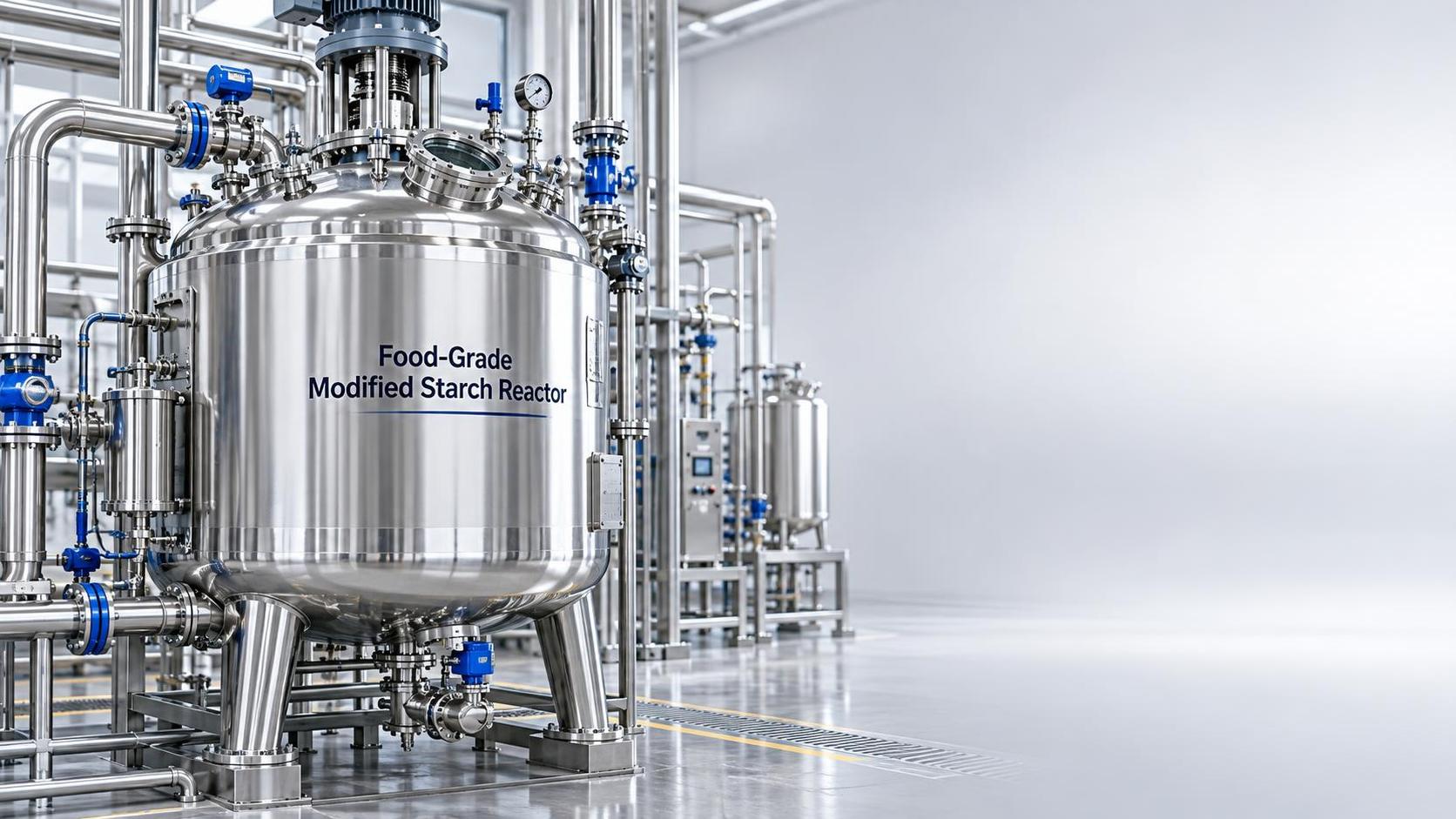
Achieving precise batch-to-batch consistency is critical for any food modified starch manufacturer supplying sauce applications—where viscosity, clarity, and thermal stability directly impact product quality and consumer experience. As global food processors demand stricter repeatability and regulatory traceability, leading suppliers like Shandong Huafeng Chemical Co., Ltd. integrate advanced process control, raw material standardization, and real-time QC analytics to ensure every lot meets exact functional specifications. This article explores how professional food modified starch manufacturer Huafeng Chemical delivers reliability at scale—without compromising on safety, compliance, or performance.
Sauces live or die by their mouthfeel. A slight dip in viscosity can make a premium pasta sauce slide off noodles; a subtle haze may trigger rejection at the bottling line; inconsistent gel strength after thermal processing might cause separation during shelf life. These aren’t theoretical concerns—they’re daily operational realities for food technologists, production supervisors, and QA managers who rely on modified starches as functional workhorses. And yet, behind every stable, glossy, perfectly clinging sauce lies an unspoken dependency: the quiet, unwavering consistency of the starch supplier.
Huafeng Chemical doesn’t treat consistency as a checkbox—it treats it as a system. Not just a matter of “same recipe, same equipment,” but a layered discipline spanning sourcing, synthesis, testing, and documentation. Their approach begins long before the first slurry enters the reactor.
Raw material integrity sets the foundation. Huafeng sources native starches from pre-qualified farms and mills, with documented harvest cycles, storage conditions, and moisture profiles. Each incoming lot undergoes near-infrared (NIR) screening for amylose content, protein residue, and ash level—parameters that directly influence modification efficiency and final functionality. Unlike commodity suppliers who blend origins to meet average specs, Huafeng maintains origin-specific batches where feasible, reducing variability at the molecular starting point.
In-process control is where precision becomes visible. Their modified starch lines feature closed-loop pH and temperature regulation, real-time viscosity monitoring via inline rheometers, and automated reagent dosing calibrated to ±0.3% accuracy. For cross-linked starches used in high-shear, hot-fill sauces, reaction time isn’t measured in minutes—it’s tracked in seconds, with deviation triggers halting feed automatically. Operators don’t guess; they respond to data streams—not dashboards, but actionable alerts tied to predefined functional thresholds.
Then comes the verification layer—not just pass/fail lab tests, but predictive analytics. Every finished lot undergoes not only standard assays (paste clarity, freeze-thaw stability, syneresis rate), but also application-specific challenge testing: simulated cooking cycles, shear stress modeling, and compatibility trials with common sauce matrices (tomato-based, oil-emulsified, low-pH fruit blends). This isn’t validation after the fact—it’s confirmation *before* release, grounded in real-world use context.
Traceability, too, is built into the DNA of each batch. Huafeng’s LIMS (Laboratory Information Management System) links raw material certificates, reactor logs, QC results, and packaging records into a single auditable chain. When a European co-manufacturer asks for proof of gluten-free status or non-GMO origin, the answer isn’t pulled from a folder—it’s retrieved in under 90 seconds, with full version-controlled documentation. That responsiveness matters when a recall looms or a retailer audit arrives with 48 hours’ notice.
Of course, consistency isn’t only about starch. It’s also about how the starch interacts with other ingredients—especially mineral components that influence pH buffering, opacity, or texture modulation. In certain savory sauce formulations, for instance, Calcium carbonate CAS#471-34-1 serves as more than filler: its mild alkalinity helps stabilize acidic tomato bases, while its fine particle size contributes to mouth-coating richness without grittiness. Huafeng’s technical team routinely evaluates such synergies—not as isolated ingredient specs, but as functional partnerships within the full matrix. They understand that a starch’s performance shifts subtly depending on whether calcium carbonate is present at 0.3% or 0.8%, and adjust modification parameters accordingly.
This systems-level thinking extends beyond the lab. Huafeng’s export service model embeds consistency into logistics and communication. Batch-specific Certificates of Analysis are issued digitally before shipment—not days later. Packaging includes dual-language labeling compliant with both Chinese GB standards and EU Regulation (EC) No 1333/2008. And when a client in Mexico City reports unexpected thinning in a chipotle aioli, Huafeng’s formulation engineers don’t ask for the batch number first—they ask about ambient humidity during blending, shear speed of the homogenizer, and whether the sauce was subjected to ambient cooling post-pasteurization. Context isn’t noise; it’s the missing variable.
There’s also a human rhythm to consistency—one that machines alone can’t replicate. Senior technicians at Huafeng rotate across production lines monthly, cross-training on different modification chemistries (oxidized, acetylated, hydroxypropylated). They carry notebooks—not digital tablets—with handwritten observations: “Lot #HF-8821 showed slower pasting onset under 95°C steam injection—check condensate trap.” These aren’t anecdotes; they’re pattern recognition built over decades, feeding into algorithmic models but never replaced by them.
For users and operators, this translates to fewer line stoppages, less rework, and greater confidence in scaling from pilot batches to 20,000-liter vats. It means knowing that the starch delivered today behaves identically to the one approved six months ago—even if sourced from a different regional mill or processed on a different shift. That predictability saves time, reduces waste, and ultimately protects brand equity on supermarket shelves.
Still, consistency isn’t static perfection. It’s adaptive fidelity—holding true to specification while accommodating natural variation in biological feedstocks, seasonal humidity swings, or evolving regulatory expectations. Huafeng’s R&D pipeline, for example, now includes starch variants designed for clean-label sauces where traditional cross-linkers face scrutiny. Their consistency framework didn’t collapse under that pressure—it evolved, incorporating new analytical markers and revised sensory benchmarks.
In an industry where a single inconsistent batch can delay a product launch or trigger a customer complaint cascade, reliability isn’t a competitive advantage. It’s table stakes. And Huafeng Chemical treats it not as a cost center, but as the quiet architecture holding everything else upright—the invisible scaffold behind every spoonful of sauce that looks right, feels right, and performs exactly as promised.
Send Us Your Inquiry Today
