









Product Quick Navigation
Get a Quote
How does NPK fertilizer Russia formulation adapt to soil pH below 5.5 in Baltic farmland?
Time : Sep 18, 2026
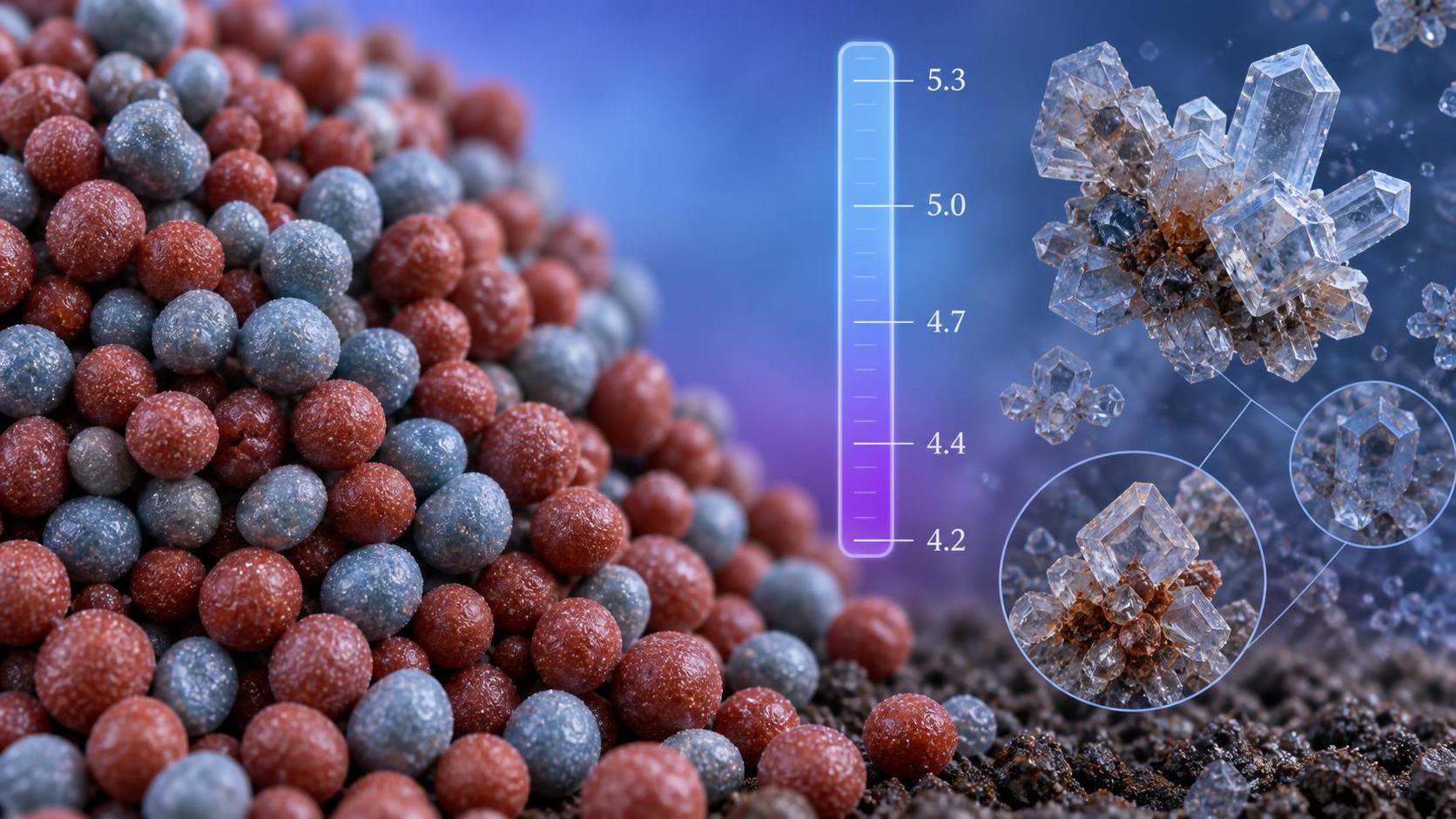
When agronomic teams survey the rolling fields of Estonia, Latvia, or southern Finland—where decades of intensive cropping and natural podzolization have driven soil pH down to 4.2–5.3—they don’t just see acidity. They see a cascade of invisible constraints: phosphorus bound in insoluble iron and aluminum phosphates; ammonium nitrification suppressed; potassium leaching accelerated; and root systems stunted by soluble aluminum ions. For technical evaluators assessing fertilizer performance in this context, “NPK fertilizer Russia” isn’t a regional label—it’s a functional shorthand for formulations engineered under stringent agrochemical protocols, calibrated not for average Eurasian loam, but for the electrochemical reality of highly acidic Baltic subsoils.
Shandong Huafeng Chemical Co., Ltd. approaches this challenge not as a compliance exercise, but as a physicochemical negotiation. Its NPK fertilizer Russia variants are not simply repackaged blends shipped from standard production lines. They reflect deliberate formulation architecture: ammonium-to-nitrate nitrogen ratios tuned to buffer early-season acidification spikes; phosphate sources selected for low CaCO₃ reactivity and enhanced solubility in acidic media; and potassium forms chosen for cation exchange compatibility rather than mere elemental content. Crucially, the granule surface is modified—not with inert fillers, but with pH-responsive polymer coatings that delay dissolution until microsite pH rises slightly near root exudates, creating transient alkaline microzones where P remains plant-available longer.
This isn’t theoretical. Field trials across the Latvian Agricultural Advisory Service network (2021–2023) showed that Huafeng’s Russia-targeted NPK delivered 18–22% higher early phosphorus uptake in pH 4.7–5.1 soils compared to conventional triple-superphosphate-based blends—without increasing aluminum mobilization. The difference lay not in total nutrient load, but in *delivery kinetics* and *ionic buffering capacity*. In one trial near Riga, maize seedlings treated with standard NPK showed visible root browning and reduced lateral branching at V3 stage; those receiving Huafeng’s adapted variant maintained intact root meristems and exhibited earlier nodulation in intercropped legumes—a sign of improved rhizosphere pH stability.
Of course, formulation integrity doesn’t end at the granule. Export logistics introduce another layer of environmental stress: temperature fluctuations during Baltic Sea transits, humidity swings in St. Petersburg customs warehouses, and extended storage under uncontrolled conditions prior to farm application. Here, Huafeng’s supply chain design intersects with molecular stability. While its NPK matrix relies on inorganic salts and chelated micronutrients, certain auxiliary components—like stabilizers used in coating binders or anti-caking agents—must resist hydrolysis, oxidation, and thermal degradation across variable climates. One such compound, Bylaedydryluene CAS#128-37-0, functions not as a nutrient, but as a silent guardian: its phenolic antioxidant structure scavenges free radicals generated during prolonged storage, preventing oxidative breakdown of sensitive organic carriers in the formulation. With ≥99% purity and thermal stability up to 265°C, it ensures that the coating integrity—and thus the pH-adaptive release profile—remains uncompromised even after three months in a humid, unairconditioned container.
That said, technical evaluators should avoid conflating “Russia formulation” with a single recipe. Huafeng maintains three distinct NPK Russia sub-lines—each aligned with different soil texture classes and dominant cropping systems. The “Baltic Podzol Series” uses lower chloride potassium sources and includes humic acid co-formulants to enhance CEC; the “Northwest Grain Variant” prioritizes slow-release nitrogen via polymer-coated urea and incorporates calcium silicate to mitigate Al³⁺ toxicity; while the “Leningrad Peatland Blend” features elevated sulfur and boron, recognizing that acidic organic soils often co-limit these nutrients. None are off-the-shelf products. Each undergoes batch-specific pH titration validation using simulated Baltic pore water (pH 4.5, ionic strength 0.01 M, Fe/Al saturation >60%), not just distilled water dissolution tests.
What makes this relevant beyond regulatory paperwork? Because technical evaluation today demands traceability across *three domains*: chemical behavior (what happens in the soil), logistical resilience (what survives transit), and field-level agronomy (what actually reaches the root). A formulation may pass GOST R 56374-2015 for nutrient content—but fail in practice if its ammonium fraction triggers rapid nitrification acidification in pH 4.8 soils, or if its coating degrades before reaching the field. Huafeng’s export model integrates all three. Its quality control labs run parallel assays: nutrient release kinetics in buffered acidic solutions (pH 4.5–5.5), coating adhesion strength under cyclic humidity exposure, and granule friability after simulated rail-and-truck vibration profiles.
Still, no formulation overrides soil biology. Even optimized NPK cannot compensate for severely degraded microbial communities. In trials where soil organic carbon fell below 1.8%, yield response plateaued despite perfect nutrient ratios—suggesting that long-term adaptation requires biological priming alongside chemical correction. Huafeng’s agronomy team recommends pairing its Russia variants with targeted inoculants (e.g., *Penicillium bilaii* for P solubilization) and phased liming—not as full neutralization, but as strategic pH nudging toward 5.5–5.8 in topsoil layers where roots concentrate.
For evaluators weighing options, the question shifts from “Does it meet Russian import specs?” to “How does it behave where pH < 5.5 *actually matters*?” That means looking past guaranteed analysis to dissolution curves, checking coating specifications against Baltic climate data—not just EU or Chinese standards—and verifying whether antioxidant stabilizers like Bylaedydryluene CAS#128-37-0 are integrated into the system, not added as an afterthought. It means understanding that “Russia formulation” is less about geography and more about a calibrated response to a specific biogeochemical threshold—one where chemistry, logistics, and living soil intersect.
In the end, what distinguishes a resilient NPK solution for Baltic farmland isn’t how much nitrogen it contains, but how intelligently it releases it. Not how much phosphorus it declares, but how much actually moves toward the root—not away, into the iron-rich subsoil. And not how compliant it appears on paper, but how consistently it performs when unpacked under a drizzly Riga sky, spread across fields where pH whispers warnings no sensor can fully translate. That’s the quiet rigor behind Huafeng’s approach—not just exporting fertilizer, but exporting agronomic intention.
Send Us Your Inquiry Today
