









Product Quick Navigation
Get a Quote
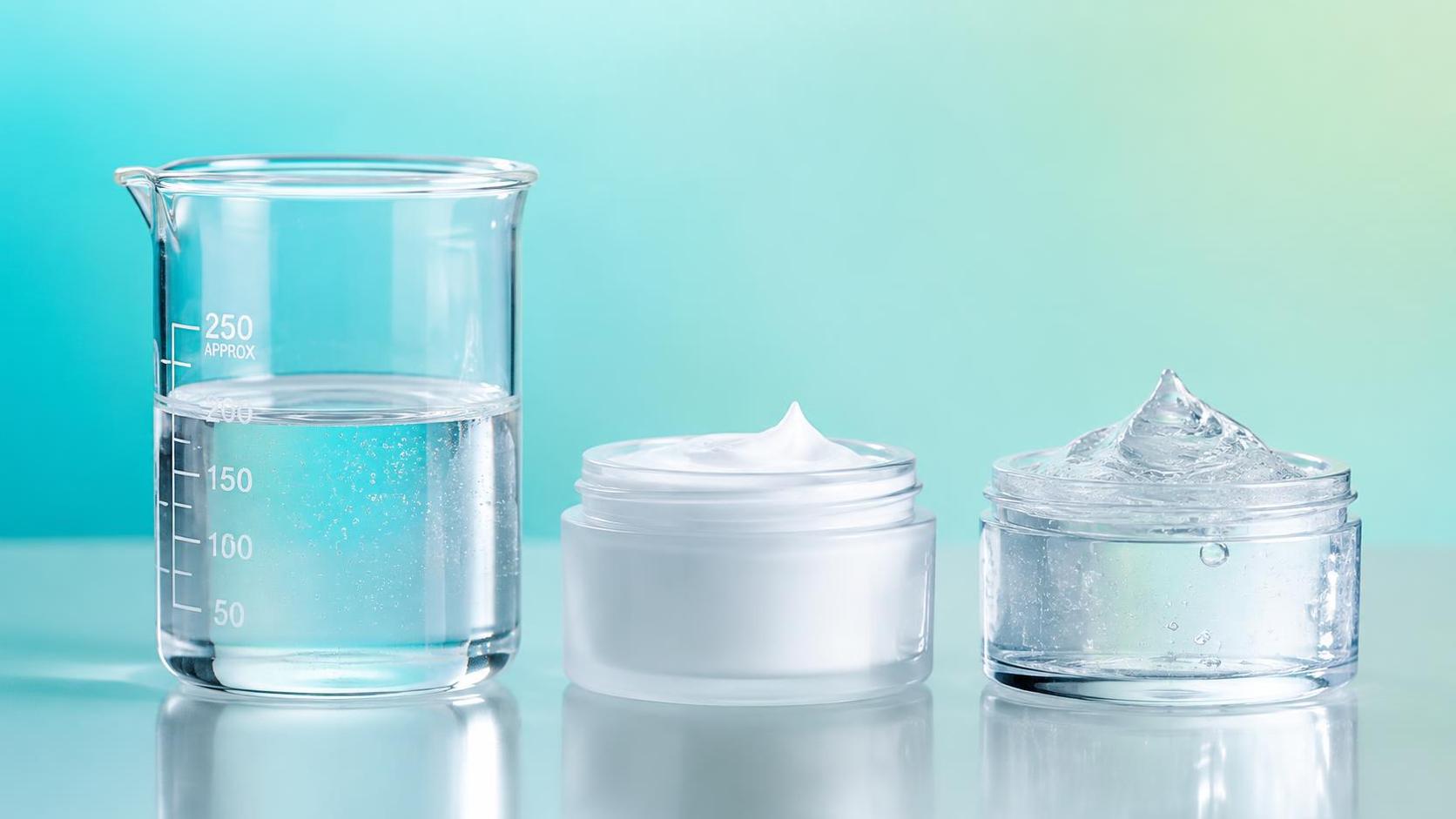
A facial cream may feel rich when it is first applied yet leave the skin tight again an hour later. A shampoo may promise hydration but still make dry hair difficult to comb after rinsing. In both situations, the problem is often not simply the amount of oil in the formula. The product may need a water-binding ingredient that helps slow moisture loss and improves how the formula feels during use.
Glycerol helps retain moisture because it is a humectant: it attracts water, holds it through hydrogen bonding, and supports water availability in the product and at the surface of skin or hair. Also called glycerin, it is used in lotions, creams, cleansers, soaps, shampoos, conditioners, gels, and many other personal care products. Its effect depends on formula balance, humidity, product format, concentration, and the presence of emollients or film-forming ingredients.
Why skin and hair can feel dry even when a product contains water
Water is central to most personal care emulsions and cleansing products, but water added to a formula does not automatically remain where it is needed. On the skin, evaporation begins after application. In a rinse-off shampoo or body wash, water is present during washing but is removed quickly during rinsing. Hair can also lose moisture after cleansing, heat styling, chemical treatments, or exposure to dry air.
Oil-rich ingredients can reduce a rough or tight feeling by lubricating the surface, but they do not necessarily bind water effectively. A formula that relies only on oils may feel protective while offering limited immediate hydration. Conversely, a formula with water but no effective humectant may initially feel fresh and then dry down too quickly.
This is where glycerol has a useful role. Its molecular structure contains several hydroxyl groups, which readily interact with water molecules. Rather than functioning as a simple coating, it helps create a more water-associated environment in the formula and at the applied surface. The result can be improved softness, reduced tightness, and a more comfortable after-feel when the formula is properly designed.
What glycerol does inside a personal care formula
In an aqueous product, glycerol is fully miscible with water. It can contribute to the water phase of an emulsion, gel, shampoo, liquid soap, or toner without requiring a separate solubilization step. That compatibility makes it comparatively straightforward to incorporate, although the broader formulation still needs to be checked for viscosity, preservation, clarity, and sensory changes.
Its moisture-related contribution can be understood in three connected ways:
- Water attraction: Glycerol associates strongly with water, helping the formula retain a more hydrated character rather than allowing water to behave as a rapidly evaporating component alone.
- Humectant action on application: Once a leave-on product is spread over skin, it can help hold water near the outer layer of the skin and improve the feel of hydration.
- Texture support: Because it is a viscous liquid, it can add body and slip to some systems. In the right amount, this may make a formula feel smoother and less brittle during drying.
These effects are related but not identical. A product can contain glycerol and still feel too sticky, too thin, too heavy, or insufficiently moisturizing if the rest of the formula works against it. Humectancy is one part of moisture management, not a substitute for thoughtful emulsion design or barrier-supporting ingredients.
The moisture balance: humectant, emollient, and occlusive effects
Personal care products often perform best when several types of ingredients work together. Glycerol primarily provides humectant behavior. Emollients help smooth the surface and improve flexibility, while occlusive materials reduce the rate at which water escapes. In a basic cream, these functions may come from a water phase, a humectant, oils or esters, emulsifiers, and one or more ingredients that create a light protective film.
A lightweight daily lotion, for example, may use a moderate humectant level with fast-spreading emollients and a low level of protective film-forming material. A hand cream intended for repeated washing exposure may need a more substantive protective phase. A clear gel may rely heavily on humectants and polymers but require careful sensory adjustment so that it does not leave a tacky residue.
Where glycerol is especially useful
Leave-on creams, lotions, and serums
Leave-on products provide the longest contact time, so humectant selection has a direct effect on perceived hydration. In an emulsion, glycerol is usually placed in the water phase. It can help reduce the dry, powdery after-feel that sometimes occurs when a cream contains a high level of absorbing powders, certain polymers, or fast-evaporating components.
Its usefulness is not limited to rich creams. A low-viscosity lotion or water-based serum can also benefit from it, especially when the goal is a hydrated feel without a heavy oil phase. However, more is not always better. Excessive use may lead to stickiness, slower absorption, or an overly dense feel, particularly in products designed for humid climates or daytime use under makeup.
Cleansers and liquid soaps
Washing removes soil, sebum, and product residue, but it can also leave the skin feeling stripped. Glycerol is frequently used in liquid hand soaps, body washes, facial cleansers, and cleansing bars to improve mildness perception and reduce the sharp, dry sensation sometimes associated with surfactant systems.
It should not be treated as a way to cancel out an overly aggressive cleansing base. If a cleanser has poor mildness because of surfactant selection, pH, fragrance loading, or repeated-use conditions, adding a humectant may improve feel but will not correct the underlying formulation issue. The cleansing system still needs to be appropriate for the intended use.
Shampoos and conditioners
In hair care, moisture retention is often noticed through manageability rather than through a direct “hydrated” sensation. Hair that feels rough after washing may be harder to detangle and may show more static or flyaway behavior. In shampoos, glycerol can contribute to a less drying wash experience. In conditioners, masks, and leave-in products, it can complement conditioning agents, oils, and film-formers that help improve slip and reduce friction.
Very dry or porous hair may benefit from a formula that combines humectancy with substantive conditioning ingredients. Yet a humectant-heavy system is not automatically ideal for every climate or hair type. Some users notice that hair becomes less predictable in very humid conditions when moisture-attracting ingredients dominate without enough conditioning balance. Product evaluation should therefore include the expected usage environment, not just a single laboratory appearance check.
Transparent gels and water-based products
Clear gels, styling products, and aqueous skin care formats often have limited room for oils. Glycerol can provide moisture support while maintaining a water-based concept. The practical challenge is that it may affect gel structure, clarity, drying time, and tack. A formula that looks elegant in a beaker may become stringy, sticky, or slow to dry after a polymer and humectant are combined at production scale.
Formulation choices that change the result
When evaluating glycerol in a new or existing product, the first question should be what problem needs to be solved. Is the formula leaving a tight after-feel? Does a gel dry with too much drag? Is a shampoo perceived as harsh? Or is a cream comfortable initially but not sufficiently lasting? Each issue can point to a different adjustment.
Several factors deserve attention:
- Use level: The suitable amount depends on product type and desired sensory profile. A small adjustment can noticeably change tack, viscosity, and dry-down.
- Humidity during use: Humectant behavior is influenced by the surrounding environment. A product developed only under one climate condition may feel different elsewhere.
- Other polyols and humectants: Materials such as propanediol, butylene glycol, sorbitol, sodium PCA, betaine, and hyaluronic acid can be used alongside or instead of glycerol. They do not have identical sensory, processing, or cost characteristics.
- Oil phase and film formation: A leave-on formula may need emollients or occlusive support to convert water-binding capacity into a lasting comfortable feel.
- Polymer compatibility: Some thickeners and gel systems respond differently in the presence of polyols. Viscosity, clarity, and stability should be rechecked after changes.
- Preservation and water activity: Humectants can influence the water environment of a formula. They are not a replacement for an appropriately designed preservation system or the necessary challenge testing.
When a formula feels sticky instead of moisturizing
Tackiness is one of the most common concerns when glycerol is used in higher amounts. The sensation may appear during application, after partial drying, or when the product is layered with sunscreen, foundation, or another leave-on product. It is not always caused by the humectant alone. High levels of certain polymers, a low oil phase, fast water evaporation, or a heavy dose of multiple water-binding ingredients can create a surface film that feels adhesive.
A useful troubleshooting approach is to compare formula variations one change at a time. Reducing the humectant level may help, but so can modifying the emollient blend, changing polymer type, adjusting the emulsifier system, or adding a suitable sensory modifier. A thinner product is not necessarily less sticky, and a richer product is not necessarily more moisturizing. The sensory outcome comes from how ingredients interact during spreading and dry-down.
It is also important to distinguish tack from richness. A hand cream can leave a protective, slightly substantive layer that is acceptable for overnight use but unsuitable for a daytime product requiring quick absorption. The intended application moment should guide the decision. Products used before dressing, makeup, or hair styling usually need a cleaner finish than products intended for intensive care.
Processing considerations in manufacturing
Because glycerol is water soluble, it is commonly added to the aqueous phase. In many emulsions, it can be combined with water before heating and emulsification. In temperature-sensitive systems, the preferred addition point depends on the full formula, processing method, and supplier guidance for each ingredient.
Its viscosity can make handling slightly different from handling water-thin liquids. Accurate weighing, adequate mixing, and attention to transfer losses are useful during batch preparation. In large-scale production, the order of addition matters when gums, carbomers, starches, or other thickening materials are present. Some powders disperse more easily when pre-wetted with a polyol, while others require a specific hydration sequence to avoid clumps. There is no universal addition order that suits every polymer system.
After any adjustment, assess more than initial appearance. A practical review includes viscosity over time, odor and color stability, emulsion separation where relevant, freeze-thaw behavior when part of the internal protocol, pump or bottle dispensing, and sensory evaluation after application. For rinse-off products, foam volume and foam feel may also change and should be assessed alongside mildness perception.
Choosing between glycerol and other humectants
Glycerol remains widely used because it is effective, familiar to formulators, water compatible, and suitable for many product formats. Still, it is not always the only or final choice. A formulator may combine it with another humectant to improve spreadability, reduce tack, support a particular label direction, or achieve a specific viscosity profile.
Propanediol and butylene glycol are often selected when a lighter feel or additional solvent functionality is useful. Sorbitol can provide humectancy but may affect texture differently because of its own physical properties. Sodium PCA and betaine are commonly associated with skin-conditioning systems, while high-molecular-weight polymers may offer a different type of surface hydration impression. The right comparison is not “which ingredient retains the most water” in isolation. It is which combination gives the required stability, sensory performance, compatibility, and intended-use result.
Questions that often arise during product evaluation
Can glycerol dry out the skin in low humidity?
Humectant performance is influenced by the environment and the surrounding formula. In a dry setting, a leave-on product that depends only on humectancy may not feel as lasting as one that also includes suitable emollient and occlusive support. This is why moisturizers are usually designed as balanced systems rather than as a single active ingredient in water.
Does glycerol work in rinse-off products?
Yes, although contact time is short. In cleansers and shampoos, it is mainly used to support product feel and reduce the perception of dryness during and after use. It cannot provide the same residual effect as a leave-on lotion or conditioner.
Is a higher level always more effective?
No. Increasing the level can improve moisture-related performance up to a point, but it can also create tack, alter viscosity, slow dry-down, or affect foam and clarity. Evaluation should focus on the finished formula rather than the humectant level alone.
Glycerol is most effective when it is treated as part of a moisture-retention system. It brings water-binding capability and can improve comfort across many personal care formats, but the final result depends on how it is balanced with cleansing agents, polymers, oils, conditioning materials, and the product’s intended environment of use.
Send Us Your Inquiry Today
