









Product Quick Navigation
Get a Quote
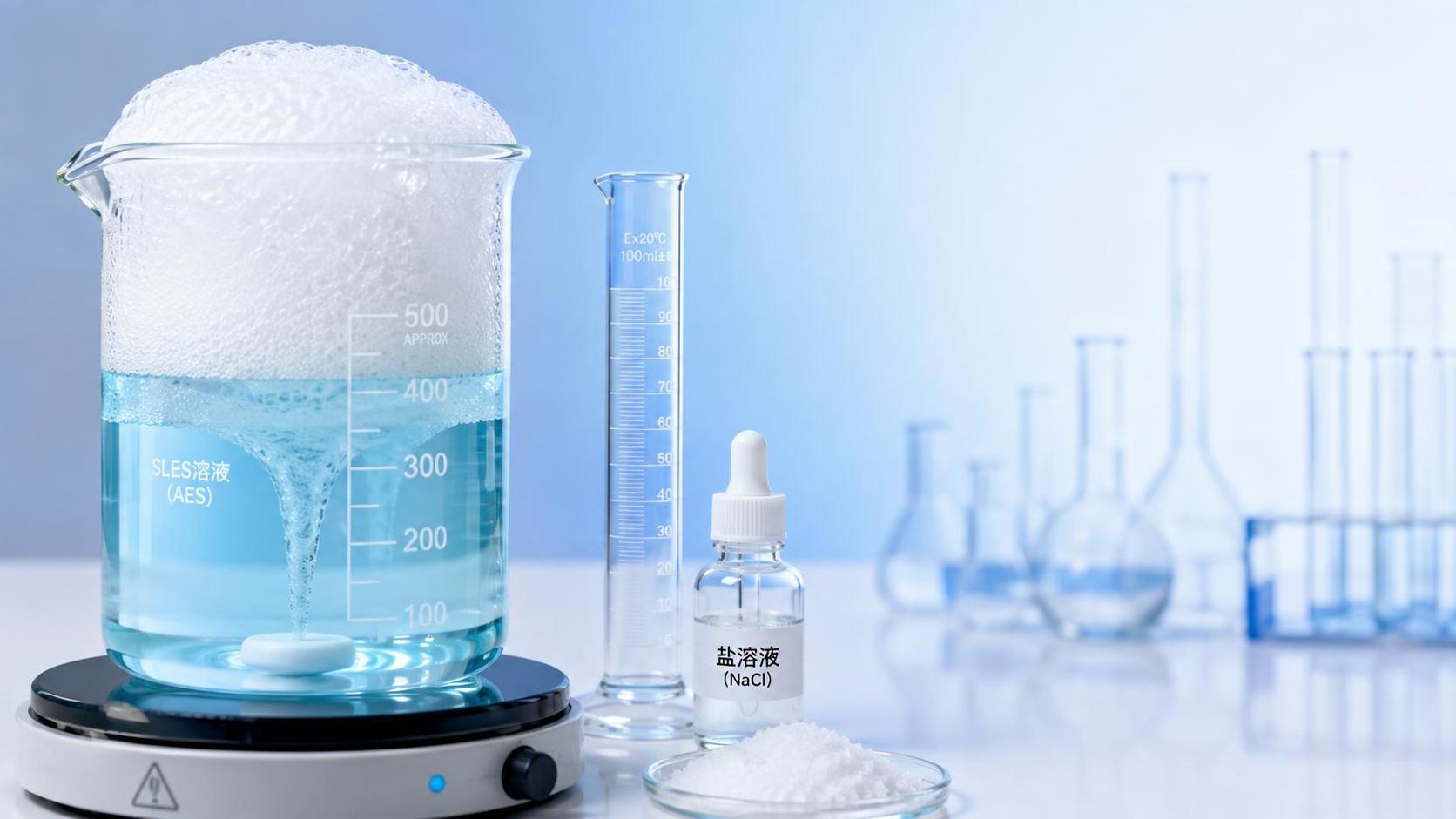
Foam performance begins with surfactant structure, but it does not end there
In liquid cleansers, Sodium Lauryl Ether Sulfate (SLES) is often selected because it can produce abundant foam, develop viscosity with salt, and work across a broad range of personal care and household formulations. Yet a formula containing SLES does not automatically deliver the foam profile users expect. Foam volume, bubble size, creaminess, persistence, and rinse behavior all depend on how the surfactant is formulated, processed, diluted, and used.
For technical evaluators, the practical question is therefore not whether SLES is a foaming surfactant. It clearly is. The more useful question is whether a particular SLES grade and formulation system can generate the required foam under the product's real conditions: water hardness, use concentration, oil or soil load, packaging format, target viscosity, temperature exposure, and the presence of other functional ingredients.
A high initial foam reading can be misleading when the intended cleanser must also remain stable over time, tolerate salts and fragrances, rinse cleanly, and maintain performance after consumers dilute it with hard water. Evaluating SLES foam requires looking at the complete surfactant system rather than treating active matter as the only meaningful variable.
Why SLES creates foam effectively
SLES is an anionic surfactant. Its molecule contains a hydrophobic alkyl chain that associates with oils and air-water interfaces, together with a hydrophilic sulfate group that remains water-soluble. When a cleanser is agitated, SLES molecules accumulate at the air-water interface and lower surface tension. This allows air to disperse into the liquid as bubbles.
Foam formation is only the first part of the process. Once bubbles form, the liquid film surrounding them must resist drainage and rupture. In a well-balanced cleansing system, SLES contributes both rapid foam generation and a workable base for foam stabilization. The ethoxylated portion of the molecule generally improves water solubility and can moderate the harshness associated with more strongly cleansing anionic systems.
However, SLES alone often produces foam that is described as open, light, or fast-rising rather than especially dense and creamy. This can be appropriate for hand wash liquids, household cleaners, and some shampoo systems, where quick visual foam is valued. It may be less suitable by itself for formulas expected to produce rich, fine-bubbled foam during a slow, low-agitation wash.
The foam seen by an end user is shaped by three related but distinct behaviors:
- Foamability: how readily the cleanser produces foam when shaken, pumped, rubbed, or mixed with water.
- Foam volume: the amount of foam generated at a defined dilution and agitation level.
- Foam stability: how long the foam remains before bubbles coalesce, drain, or collapse under normal use conditions.
A material may perform strongly in the first two areas but show weaker persistence in the presence of oils, heavy soil, or hard water. A technical evaluation should therefore avoid reducing foam behavior to a single volume measurement.
Active matter influences foam, but concentration alone is an incomplete guide
The supplied active matter of an SLES solution affects how much surfactant is available to form micelles and stabilize foam. Within a finished cleanser, increasing total anionic surfactant content can improve foam generation up to a useful formulation range. Beyond that point, more active matter may not create a proportional gain in consumer-perceived foam. It can also affect viscosity, clarity, mildness, raw material cost, and preservative strategy.
Technical teams should distinguish between the active matter of the incoming SLES raw material and the active surfactant concentration in the finished product. A common source of confusion is comparing two formulations by raw material addition level when the supplied materials have different active contents. Such a comparison can lead to incorrect conclusions about foam efficiency.
The concentration seen during use matters just as much. A hand soap dispensed in a small dose may be diluted quickly under running water. A body wash may be worked with wet hands or a sponge. A shampoo encounters wet hair, sebum, styling residues, and variable amounts of water. A dishwashing liquid may face cooking fats and food residues. The same formula can appear highly foaming in a bottle-shake test yet behave modestly in one of these use environments.
Foam testing should therefore reflect the intended product format. Testing a concentrated formulation without controlled dilution is useful for quality consistency, but it does not replace testing at a realistic in-use concentration. Where the product will be marketed across regions with different water qualities, testing in both softened and hard water gives a more dependable basis for selection.
Salt can build viscosity while changing the foam balance
SLES is widely used in salt-thickened systems because sodium chloride can alter micelle structure and increase viscosity within a suitable range. This behavior is commercially useful: it allows formulators to create a pourable but substantial liquid cleanser without relying entirely on polymeric thickeners.
Salt response is not linear. A small addition may increase viscosity, while further addition can eventually reduce viscosity or destabilize the system. The exact response depends on SLES concentration, ethoxylation level, co-surfactants, temperature, pH, fragrance, preservatives, solvents, and other dissolved ingredients. Two SLES-based formulas with similar surfactant content may therefore have very different salt curves.
Foam is affected by this same balance. Properly managed salt addition can support a consumer-preferred texture and may help maintain a coherent foam structure. Excessive electrolyte loading, however, can reduce surfactant solubility, alter micellar behavior, and create problems such as haze, phase separation, viscosity drift, or weaker foam under dilution.
It is tempting to treat a higher-viscosity cleanser as a better-performing cleanser. That assumption is unreliable. Viscosity affects dispensing, sensory perception, and sometimes the rate at which the product mixes with water, but it is not a direct measure of foam quality. A very thick formula can disperse slowly and may initially foam less readily than a lower-viscosity system with better dilution behavior.
For formulation screening, salt should be evaluated as a controlled adjustment variable rather than as a simple thickener. Record both viscosity and foam behavior after each salt increment, then repeat the assessment after storage at relevant temperatures. A formula that looks ideal immediately after batching may shift after fragrance equilibration or after exposure to cold and heat.
Co-surfactants determine whether the foam feels light, creamy, or resilient
SLES is frequently paired with amphoteric or nonionic co-surfactants because blended systems can improve the balance between cleansing, foam quality, mildness, and viscosity control. Cocamidopropyl betaine is a common example in personal cleansing products. In many systems, it can improve foam density and stability, reduce the sharpness of anionic cleansing, and broaden the workable salt-thickening range.
The benefit does not come simply from adding any secondary surfactant. Each co-surfactant changes the mixed micelle system differently. An amphoteric surfactant may improve the quality of foam and salt tolerance at a particular ratio, while excess use can alter viscosity, clarity, cost, or sensory feel. Nonionic surfactants can assist with solubilization of fragrance or oils, but some can suppress foam if used at levels that dominate the surfactant balance.
For products intended to handle oily soils, the formulator faces a tradeoff. Strong detergency is needed to remove oil, yet oil contamination can destabilize foam. A formula designed only around maximum initial foam may disappoint once it contacts sebum, makeup residue, kitchen grease, or industrial grime. In those applications, foam retention under controlled soil load is more informative than an unsoiled shake test.
Polymeric thickeners, conditioning agents, pearlizers, opacifiers, fragrances, and botanical extracts can also influence apparent foam performance. Some affect bubble drainage; others interfere with surfactant assembly or reduce the rate of foam generation. Ingredients added for visual or sensory reasons should be introduced early enough in development that their impact on foam and viscosity is understood before the formula is finalized.
Water hardness changes the result at the point of use
Water quality is one of the most important reasons a cleanser can perform differently outside the laboratory. Calcium and magnesium ions in hard water can interact with anionic surfactants. Depending on formulation design and water hardness level, this may reduce foam volume, affect rinsing, or change the feel of the lather.
SLES generally performs more flexibly in practical formulations than a simple single-surfactant comparison might suggest, especially when supported by appropriate co-surfactants and sequestration strategy. Still, a formula developed only with deionized water may overstate what users will experience in regions where hard water is common.
This does not require testing against every possible water source. It does require selecting test conditions that represent the intended market and product claim. If the cleanser is expected to maintain foam in hard water, the evaluation protocol should specify water hardness, surfactant dilution, temperature, agitation method, and assessment timing. Without these controls, foam comparisons are easily distorted by test variability.
Process conditions can make a sound formula appear inconsistent
SLES foam behavior is sensitive to the state of the finished liquid. Excessive agitation during manufacturing can entrain air, making visual foam assessments unreliable and complicating filling. Inadequate mixing may leave salt, polymer, fragrance, or other additives unevenly distributed, causing local viscosity variation and inconsistent foam from one sample to another.
Order of addition also matters. Salt is usually introduced after the base surfactant system has been properly blended and after ingredients that strongly affect micellar structure have been accounted for. Adding salt too early, or attempting to correct viscosity before fragrance and other final components are incorporated, can create a misleading viscosity target that later becomes unstable.
Temperature deserves attention during both production and quality testing. Surfactant systems may show changes in clarity, viscosity, and foam response as temperature changes. Comparing a warm production sample with a room-temperature retained sample can produce conclusions that are more about test conditions than material quality. A practical specification should state the test temperature and any equilibration time before measurement.
What to compare when evaluating SLES for a liquid cleanser
Raw material selection should go beyond asking whether the material meets a general active matter or appearance requirement. These parameters remain important, but foam consistency depends on a wider set of properties and on how reliably they are maintained between lots.
- Active matter and supplied form: compare on an active basis, accounting for water and any formulation-relevant components in the supplied product.
- pH and color: both can affect finished-product adjustment, appearance, fragrance compatibility, and batch-to-batch consistency.
- Sodium chloride content: residual salt can change the amount of additional salt needed to reach target viscosity.
- Unsulfated matter and related impurities: these may influence odor, appearance, formulation behavior, and compatibility depending on the application.
- Foam under controlled dilution: assess initial volume and stability using the same water quality, temperature, agitation, and observation interval for all samples.
- Viscosity response curve: compare the full response to salt rather than recording only one finished viscosity point.
- Storage behavior: evaluate clarity, phase stability, odor, viscosity, and foam after relevant temperature exposure.
Specifications should be connected to the actual formulation need. For example, a product that uses a narrow salt-thickening window needs more attention to residual electrolyte variation than a formula thickened primarily by another mechanism. A clear cleanser with a demanding fragrance profile needs more compatibility screening than an opaque utility cleaner. The appropriate evaluation method follows the risk in the finished product, not a generic raw material checklist.
Interpreting common foam claims with caution
“More foam” is often used as a shorthand for better cleansing performance, but the relationship is limited. Foam can support user perception and help distribute a cleanser across hands, hair, skin, or a surface. It does not independently prove detergency, mildness, or rinse efficiency. A high-foaming product can still clean poorly under heavy soil, while a lower-foaming product may be effective for its intended task.
Likewise, low foam does not necessarily indicate a poor SLES grade. It may result from fragrance loading, oils, conditioning ingredients, hard water, high electrolyte content, insufficient use concentration, or a test method that does not suit the product. Before changing suppliers or raising surfactant dosage, isolate the likely cause through a controlled formula comparison.
A useful evaluation sequence is to establish a baseline SLES system, measure its foam and viscosity at defined conditions, then introduce one variable at a time: co-surfactant ratio, salt level, fragrance, polymer, soil load, or water hardness. This approach takes more discipline than comparing finished batches by eye, but it identifies whether the limitation lies in the raw material, formula architecture, processing, or test method.
SLES remains a practical foundation for many liquid cleansers because it offers a workable combination of foaming, cleansing, and formulation flexibility. Its performance is strongest when it is selected as part of a system. For a technical evaluator, the most defensible decision comes from matching the material's active content, salt response, co-surfactant compatibility, and real-use foam behavior to the requirements of the finished cleanser.
Send Us Your Inquiry Today
