









Product Quick Navigation
Get a Quote
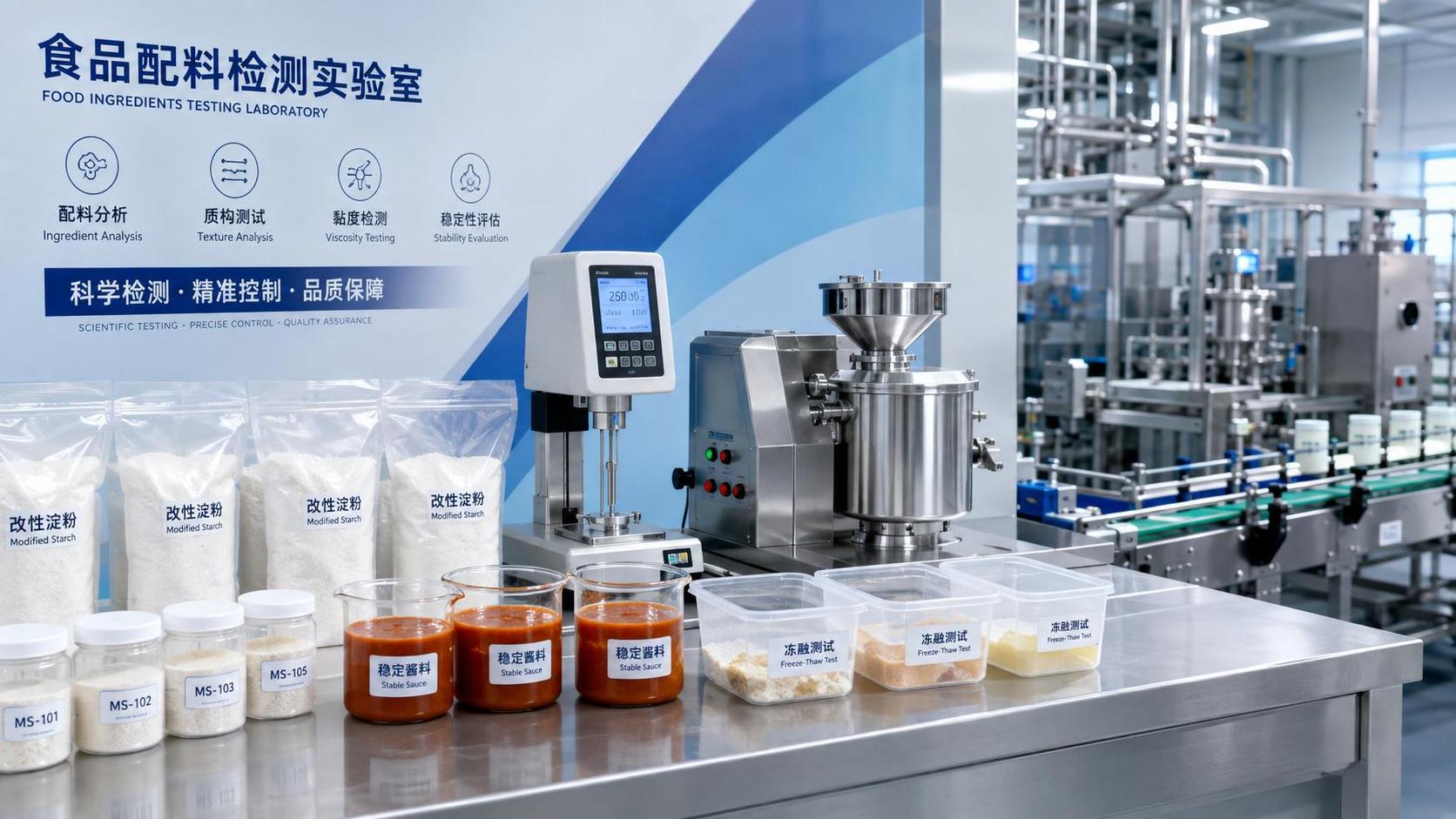
A modified starch may represent a small percentage of a recipe, yet it can decide whether a sauce stays smooth after retort processing, whether a frozen meal releases water on thawing, or whether a dairy dessert delivers the texture consumers expect. That is why learning how to compare modified starch suppliers for food use is not simply a purchasing exercise. It is a cross-functional decision involving procurement, R&D, quality assurance, regulatory teams, and production managers.
Price matters, of course. But a low quotation can quickly lose its appeal if the starch performs differently from one batch to the next, arrives without adequate documentation, or cannot be replaced promptly when demand changes. The right supplier should make formulation and supply planning more predictable—not add another source of uncertainty to the factory floor.
Start with the application, not the product name
“Modified starch” is a broad category rather than a single ingredient. Two products described with similar terms may behave very differently in a food system. Before comparing suppliers, define what the starch needs to do in your particular formulation.
For example, an instant soup producer may need cold-water dispersibility and rapid viscosity development. A manufacturer of retorted sauces may prioritize heat, shear, and acid resistance. In fruit preparations, clarity and freeze-thaw stability may be more important than maximum thickening power. Bakery fillings, processed meat, confectionery, dairy products, noodles, and plant-based foods all create different processing and sensory requirements.
A useful supplier comparison begins with a short internal brief that covers:
- The food category and intended consumer experience
- Process conditions, including temperature, pH, shear, holding time, and filling method
- Whether the product will be frozen, refrigerated, shelf-stable, or reheated
- Target viscosity, texture, opacity, gel strength, or moisture retention
- Relevant labeling requirements and destination-market regulations
- Expected annual volume, packaging preference, and delivery schedule
This preparation changes the conversation. Instead of asking a supplier, “Do you have modified starch?” a buyer can ask, “Which grade has proven stability in an acidic, hot-filled sauce with a six-month ambient shelf life?” The second question is much more likely to reveal the supplier’s real technical depth.
Compare functional performance using conditions close to production
A specification sheet is necessary, but it is not a finished answer. Moisture, pH, viscosity range, particle size, and microbiological limits provide a baseline; they do not fully predict performance in a complex food matrix. Sugar, salt, fat, protein, hydrocolloids, emulsifiers, and processing equipment can all affect the result.
Ask each shortlisted supplier for product data that is relevant to the intended use. Depending on the application, this may include gelatinization profile, hot and cold viscosity, clarity, syneresis, gel texture, freeze-thaw cycles, resistance to acid, and tolerance to high shear. If a supplier only provides generic product descriptions, it may be difficult to assess whether its material is suitable for a demanding formulation.
Then move to samples. Laboratory screening is valuable, but pilot-scale or line trials are where hidden issues often appear. A starch that looks promising in a beaker may form lumps during plant mixing, lose body after homogenization, or create an undesirable mouthfeel after storage. Where possible, test competing samples under the same recipe, process, packaging, and storage conditions.
Evaluate more than a single viscosity number. Look at dispersion behavior, processing consistency, flavor release, appearance, final texture, and stability over time. Record observations in a shared scorecard so that R&D, quality, and procurement are judging the same criteria.
Questions worth asking during sample evaluation
- Does the starch hydrate easily with the available mixing equipment?
- How does it respond to the product’s actual pH and salt level?
- Can it maintain viscosity after heating, pumping, filling, or retort treatment?
- Does the finished product remain stable after freeze-thaw cycles or extended storage?
- Will it support a clean, glossy, creamy, or transparent appearance where needed?
- Is the dosage level commercially reasonable without compromising sensory quality?
The best-performing starch is not always the one with the highest viscosity. In many foods, controlled texture, clean flavor release, and stable processing behavior matter more than maximum thickening.
Read specifications as a quality-control document, not a brochure
When comparing modified starch suppliers, request a current technical data sheet, specification sheet, certificate of analysis format, safety documentation, and allergen or GMO statements where applicable. The key point is consistency between the documents and the material being offered.
Pay attention to the parameters that affect both food safety and production reliability. These may include moisture content, pH, viscosity, ash, whiteness, microbiological limits, foreign matter controls, and packaging details. The acceptable range should be clear. Broad or vague descriptions make it harder to manage incoming inspection and batch release.
It is also sensible to ask how the supplier manages lot traceability. If a quality question arises after a finished product reaches the market, your team needs to identify the raw material batch, shipment, production date, and supporting documentation without delay. A supplier should be able to explain this process plainly rather than treating traceability as a vague assurance.
For food applications, origin and processing details can matter as much as the finished specification. Ask about the botanical source, the type of modification, and any processing aids or additives relevant to your market. This is especially important for brands managing allergen policies, dietary claims, identity standards, or customer-specific restricted-substance lists.
Check food safety and regulatory readiness for the destination market
A starch may be widely used in one country but subject to different rules, labeling practices, or permitted-use conditions elsewhere. Importers should not assume that “food grade” automatically means suitable for every market. Regulations can vary by starch type, modification method, food category, and intended level of use.
Ask suppliers to provide the documentation required for your destination market and to clarify the regulatory status of the proposed grade. Depending on the market and application, this may involve food safety management certifications, manufacturing-site information, contaminant statements, additive declarations, country-of-origin details, and documents supporting customs clearance.
Certification is important, but the quality of a supplier’s response matters too. Are documents current? Are they consistent across samples, quotations, and commercial shipments? Can the supplier answer technical or compliance questions with evidence rather than broad marketing language? A responsive documentation process is often a practical indicator of how smoothly the relationship will work later.
If your food brand supplies multiple countries, build a market-by-market compliance checklist. This avoids a familiar and expensive problem: approving an ingredient for one factory, then discovering that its documentation or labeling position does not support another export destination.
Look beyond unit price to the true delivered cost
Modified starch is often quoted by weight, but the lowest price per kilogram may not produce the lowest cost in use. A lower-priced grade may require a higher dosage, longer processing time, more careful handling, or added stabilizers to achieve the desired result. It may also introduce greater batch variation, leading to rework, waste, and line interruptions.
Compare suppliers using a total-cost view. Include dosage rate, yield, freight terms, import duties where relevant, packaging format, payment conditions, minimum order quantity, lead time, and inventory carrying cost. A starch with stronger process tolerance can sometimes reduce operational risk enough to justify a higher purchase price.
Ask for quotations in a comparable format. Incoterms, currency, packing size, validity period, shipment method, and port of loading should be clear. If several suppliers are being evaluated internationally, normalize the commercial terms before making a price comparison. Otherwise, an apparently attractive offer may conceal logistics or handling costs that emerge later.
Test supply chain reliability before it becomes urgent
Food production schedules leave little room for ingredient uncertainty. Supply resilience deserves the same attention as laboratory performance, particularly when a starch is used across high-volume SKUs or in seasonal products.
Discuss production capacity, normal lead times, typical order quantities, packaging availability, warehouse practices, and contingency planning. A dependable supplier should be candid about what it can support. Overly broad promises are less useful than a realistic explanation of lead times, export arrangements, and alternatives if a specific grade is temporarily constrained.
For overseas buyers, export capability is part of product quality. Delays in preparing shipping documents, unclear labeling, or poor coordination with forwarders can affect production just as seriously as an off-spec batch. Suppliers with established foreign trade processes can help reduce avoidable friction around quotations, document preparation, shipment follow-up, and communication across time zones.
Shandong Huafeng Chemical Co., Ltd., based in Shandong Province, operates in an important Chinese chemical-industry region and serves overseas customers through comprehensive chemical export services and a broad product portfolio. For buyers assessing a potential export partner, the useful question is not simply whether a supplier can ship modified starch. It is whether its commercial team, technical contacts, and documentation workflow can support the buyer’s food application and destination-market requirements throughout the order cycle.
Measure technical support by the quality of the conversation
Not every supplier needs to act as a full formulation partner. Still, a food-grade ingredient supplier should be capable of discussing the practical behavior of its material. When a production issue occurs, a buyer needs more than a repeated specification sheet.
During the evaluation stage, notice whether the supplier asks informed questions. Do they inquire about pH, process temperature, product shelf life, mixing sequence, or competing ingredients? Do they recommend a trial plan rather than immediately pushing one grade? Can they explain likely trade-offs between viscosity, clarity, stability, and dosage?
Technical support is especially important when reformulating for cost control, replacing a discontinued ingredient, improving freeze-thaw performance, or developing products for new regions. A supplier that understands the application can help narrow the trial process. One that only sells from a catalog may leave your team to solve every processing issue alone.
Use a weighted scorecard instead of an informal shortlist
Supplier selection can become subjective when different departments value different things. Procurement may focus on cost and delivery, while R&D focuses on texture and QA focuses on documentation. A weighted scorecard brings these perspectives together without pretending that every factor has equal importance.
For a routine dry mix, price and delivery may carry significant weight. For a retorted infant-food product or a complex frozen meal, regulatory assurance, traceability, and process stability may deserve much more weight. Common evaluation categories include functional performance, product consistency, food safety documentation, regulatory fit, commercial terms, logistics capability, communication quality, and technical service.
Score each supplier after sample testing and document review, then discuss the gaps. A supplier that ranks second on price but first on consistency and responsiveness may be the better long-term choice. In some cases, approving a primary supplier and a qualified secondary source is the most practical way to protect production continuity.
Common mistakes when comparing modified starch suppliers
One frequent mistake is comparing only the product name and viscosity specification. Similar labels do not guarantee equivalent behavior. Another is conducting trials in a simplified system that does not reflect the actual product or production line. A third is accepting certificates at face value without checking their scope, date, and relevance to the supplied grade.
Buyers also sometimes wait until a supply problem occurs before investigating backup options. By then, trials, documentation review, and commercial onboarding can take longer than expected. Maintaining an approved alternative is usually easier than qualifying one during a production emergency.
Finally, avoid treating communication as a soft factor. In international food ingredient trade, slow replies and unclear documents can become concrete operational costs. Reliable communication is part of supply-chain performance.
A practical decision that protects the finished product
The most effective way to compare modified starch suppliers for food use is to connect ingredient selection with the reality of your product, market, and supply chain. Begin with the desired functionality, validate it in meaningful trials, verify compliance documentation, calculate total delivered cost, and assess whether the supplier can support consistent exports over time.
When those elements align, modified starch becomes what it should be: a dependable functional ingredient working quietly in the background, helping food manufacturers deliver stable quality from one production run to the next.
Send Us Your Inquiry Today
