









Product Quick Navigation
Get a Quote
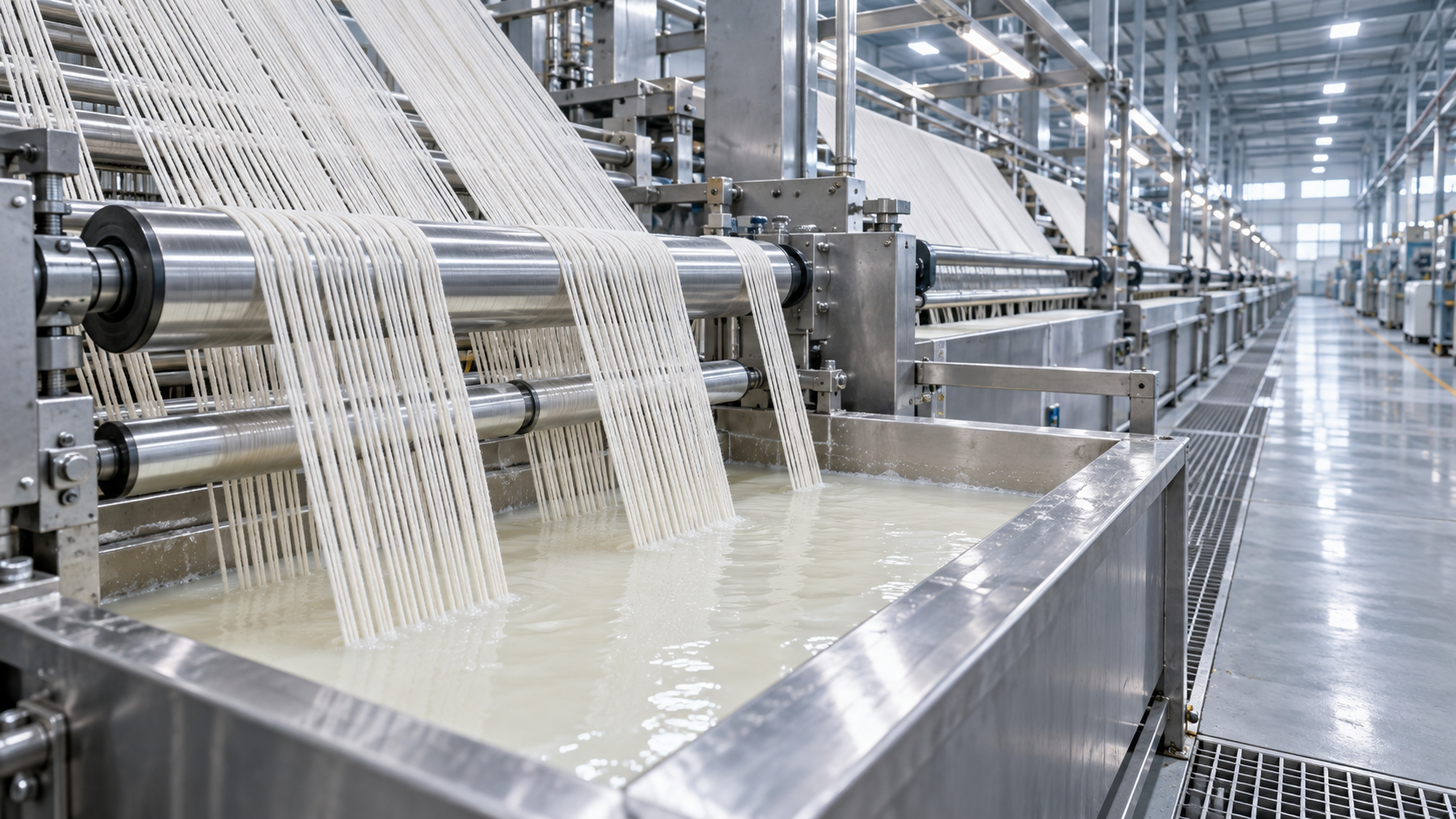
A modified starch is a credible sizing candidate for a Russian textile mill when it protects the intended warp yarn at the mill’s operating speed, stays manageable in the size box, and can be removed adequately in finishing. A favorable viscosity specification or low purchase price alone cannot establish any of those outcomes. The selection has to be made against the yarn, machine, water, cooking procedure, and downstream process that will use it.
For technical evaluators comparing textile modified starch for Russia, the most useful starting point is a controlled comparison with the mill’s existing size formulation. Measure preparation behavior, yarn protection, weaving performance, and desizing together. A product that improves one stage can still raise total processing cost if it creates brittle yarn, deposits on equipment, or leaves excessive residue on fabric.
Start with the yarn and the limits of the sizing line
Modified starch is rarely selected in isolation. It may be used with other film formers, lubricants, softeners, wetting agents, or preservatives, depending on the yarn and formulation. The relevant question is whether a candidate works in that complete system at a practical concentration and under the temperatures and residence times available on the mill’s line.
For cotton and cotton-rich yarns, starch-based sizing can offer useful film formation and protection, but different yarn constructions can respond very differently. A coarse, relatively robust yarn and a finer, hairier yarn do not impose the same demands on penetration, surface coverage, or film flexibility. Twist, fiber quality, yarn count, and the intended weave all influence how much protection is needed.
Blends containing synthetic fibers add another constraint: a starch that performs well on cotton should not automatically be assumed to adhere equally well to every blend. Compatibility with the other size ingredients and actual adhesion to the yarn need to be checked. For predominantly synthetic warps, the mill may need a different formulation or film-forming system; a starch modification alone may not solve poor surface adhesion.
Before requesting samples, document the current recipe and process window: ingredient proportions on a dry-solids basis, cooking method, available temperature control, size-box temperature, machine speed, squeezing arrangement, drying conditions, and target moisture. Include water quality and the planned desizing route. These details make supplier recommendations more meaningful and expose candidates that cannot be prepared reliably on the installed equipment.
Viscosity must be useful throughout the run
Viscosity is a practical measure of how a size liquor will be handled, but a single value on a data sheet is not a complete performance criterion. Starch viscosity depends on concentration, temperature, preparation, shear, and measurement method. Two products reported at different solids contents or temperatures cannot be ranked fairly by comparing their figures alone.
Ask the supplier to state the test concentration, cooking and cooling procedure, measurement temperature, instrument or method, and relevant holding time. Then repeat the comparison using the mill’s own preparation conditions. Record viscosity after cooking, at the intended application temperature, and after a representative holding period. If the process includes recirculation or substantial pumping, include a comparable shear exposure.
A liquor that is too viscous for the line can be difficult to pump or control and may produce uneven application. A liquor that is too thin may not deliver the intended solids pickup under the same squeezing conditions. Neither outcome should be diagnosed from viscosity alone: wet pickup, liquor solids, squeeze pressure, yarn speed, and drying all affect the amount of size left on the yarn.
Holding behavior matters as much as the initial reading. Thickening, separation, skin formation, or deposits during a long production shift can make a product difficult to run even if its freshly cooked liquor looks acceptable. Cooling during stoppages deserves particular attention. A candidate should be assessed after a realistic interruption and restart, not only during uninterrupted laboratory preparation.
For mills receiving material through long supply routes or storing it through cold periods, keep the powder dry and protected from contamination, and follow the supplier’s storage instructions. Storage conditions for the powder and the temperature history of the prepared liquor are separate questions; neither should be used as a substitute for testing the other.
Judge the film on yarn, not on a sample sheet alone
The size film needs enough strength to protect yarn against repeated contact with guides, heddles, reeds, and neighboring ends. It also needs enough flexibility to withstand bending and abrasion without excessive cracking or shedding. A hard film may look protective in a simple film test yet perform poorly if it breaks away from the yarn during weaving.
Compare candidates on sized yarn at similar, measured dry add-on. Check whether the coating is reasonably uniform, whether adjacent ends separate cleanly after drying, and whether the yarn remains flexible enough for the machine. Examine hairiness and abrasion resistance alongside tensile behavior. A gain in yarn strength can be useful, but it does not by itself demonstrate that the surface film will remain intact through repeated abrasion.
Adhesion and penetration should be assessed together. Excessive surface buildup can leave a stiff coating and increase the risk of flaking; excessive penetration may leave too little material at the surface to bind protruding fibers. The balance depends on yarn structure and the sizing system, so changing the starch may require adjustment of concentration, wetting, squeeze settings, or the rest of the recipe.
Use laboratory abrasion and hairiness tests to screen samples, with the same conditioning and test method for each. Then inspect the sized beams and weaving equipment during a mill trial. Dust or deposits around splitting zones and machine contact points can indicate a problem, although their cause may also lie in drying, yarn quality, or mechanical settings. Investigate the process before attributing every deposit to the starch.
Compare add-on and weaving results together
Report size add-on as dry size relative to unsized yarn weight, using the same sampling and calculation method for each trial. A candidate should not receive credit for better protection simply because substantially more material was applied. Equally, forcing every product to the same recipe concentration may be misleading if their solids, viscosity, or pickup differ.
Where practical, first compare products at a similar dry add-on. A second comparison can establish the lowest add-on that meets the mill’s operating requirements. Record warp breaks over a defined production quantity or time, alongside loom speed, yarn lot, style, machine settings, and stoppage causes. Separate size-related observations from obvious yarn defects or equipment faults. Short trials can screen out poor candidates, but they may not reveal performance across a full beam, shift change, or restart.
Desizing can change the ranking
Good weaving performance is only part of the decision. Residual size can interfere with wetting and produce uneven results in subsequent preparation, dyeing, printing, or finishing. The required level of removal depends on the fabric and the downstream process, so agree on the acceptance method with the finishing team before the sizing trial begins.
Starch-based sizes are often assessed for removal using an enzymatic route, but the result depends on the specific starch modification, the complete size formulation, enzyme selection, temperature, pH, time, and washing. A modification chosen for handling or film properties may behave differently during removal. Do not assume that every modified starch responds identically to the same desizing recipe.
Test fabric produced with each candidate under the intended desizing conditions. Use an agreed method to assess residual starch and, where appropriate, the broader consequences for fabric absorbency and subsequent processing. Iodine-based checks can help indicate remaining starch, but they should be interpreted in the context of the formulation and test method; a visual result alone may not describe every residue or predict finishing performance.
If removal is inadequate, identify whether the problem is the starch, another ingredient in the size, excessive add-on, insufficient enzyme activity, or inadequate washing. A change that improves weaving but requires a more demanding desizing operation should be evaluated against the cost and capacity of that operation, not only against the size-room result.
Build a comparison that supports a production decision
A useful trial separates product differences from changes in operating conditions. Select a representative yarn and fabric, identify the incumbent formulation, and agree in advance on the measures that would justify adoption. Keep the yarn lot, equipment settings, water source, preparation procedure, and finishing route as consistent as practical. When an adjustment is necessary to make a candidate runnable, record it rather than treating the trial as a direct like-for-like comparison.
- Preparation: Record dispersion, cooking behavior, liquor solids, viscosity at the specified temperature, stability during holding, and behavior after a stoppage.
- Sizing: Measure wet pickup and dry add-on; observe beam uniformity, drying, yarn separation, and any deposits or sticking.
- Yarn protection: Compare hairiness, abrasion behavior, flexibility, and tensile properties using consistent sampling and conditioning.
- Weaving: Record warp breaks, stoppage causes, speed, deposits, and fabric defects over a defined, representative run.
- Finishing: Assess residual size and fabric absorbency after the intended desizing and washing sequence.
Set acceptance limits from the mill’s own baseline and product requirements. A fine warp running on a demanding machine may justify a different balance of film strength, flexibility, and cost from a coarser construction. If a candidate meets the laboratory criteria but causes unstable size-box behavior or leaves unacceptable residue, it is not yet qualified for that process.
Cost comparisons should use consumption per unit of acceptable production, not price per kilogram alone. Include the dry add-on required, preparation losses, auxiliary chemicals, weaving interruptions, and any change in desizing or reprocessing. These inputs are mill-specific; a cheaper powder can be the more expensive choice when it requires a higher dosage or reduces usable output.
Keep material identification and supply consistency in scope
Once a candidate has passed process testing, request a product specification that describes the material being purchased and the properties relevant to repeatable use. For modified starch, that may include its stated type or modification, applicable solids or moisture limits, viscosity test conditions and limits, appearance, and preparation guidance. Confirm the intended packaging, shelf life, storage conditions, and batch documentation. The specification should match the material used in the approved trial.
Chemical catalog entries can cover unrelated products, so product identity matters before a sample is introduced into a sizing recipe. For example, Saccharin sodium dihydrate CAS#6155-57-3 is a sweetener, not a textile modified starch or a substitute sizing agent. Its listed properties do not establish anything about warp protection or desizing.
For shipments into Russia, agree on the required transport, customs, safety, and product documents with the parties handling the transaction, and verify applicable requirements for the specific material and route. For technical qualification, retain the approved sample, batch identification, trial recipe, and test results so that later deliveries can be compared with the material that earned approval.
The decision becomes clearer when preparation, weaving, and finishing are treated as one process. Select the candidate that consistently meets the mill’s yarn-protection and removal requirements at a workable add-on, then control the conditions that made that result possible.
Send Us Your Inquiry Today
