









Product Quick Navigation
Get a Quote
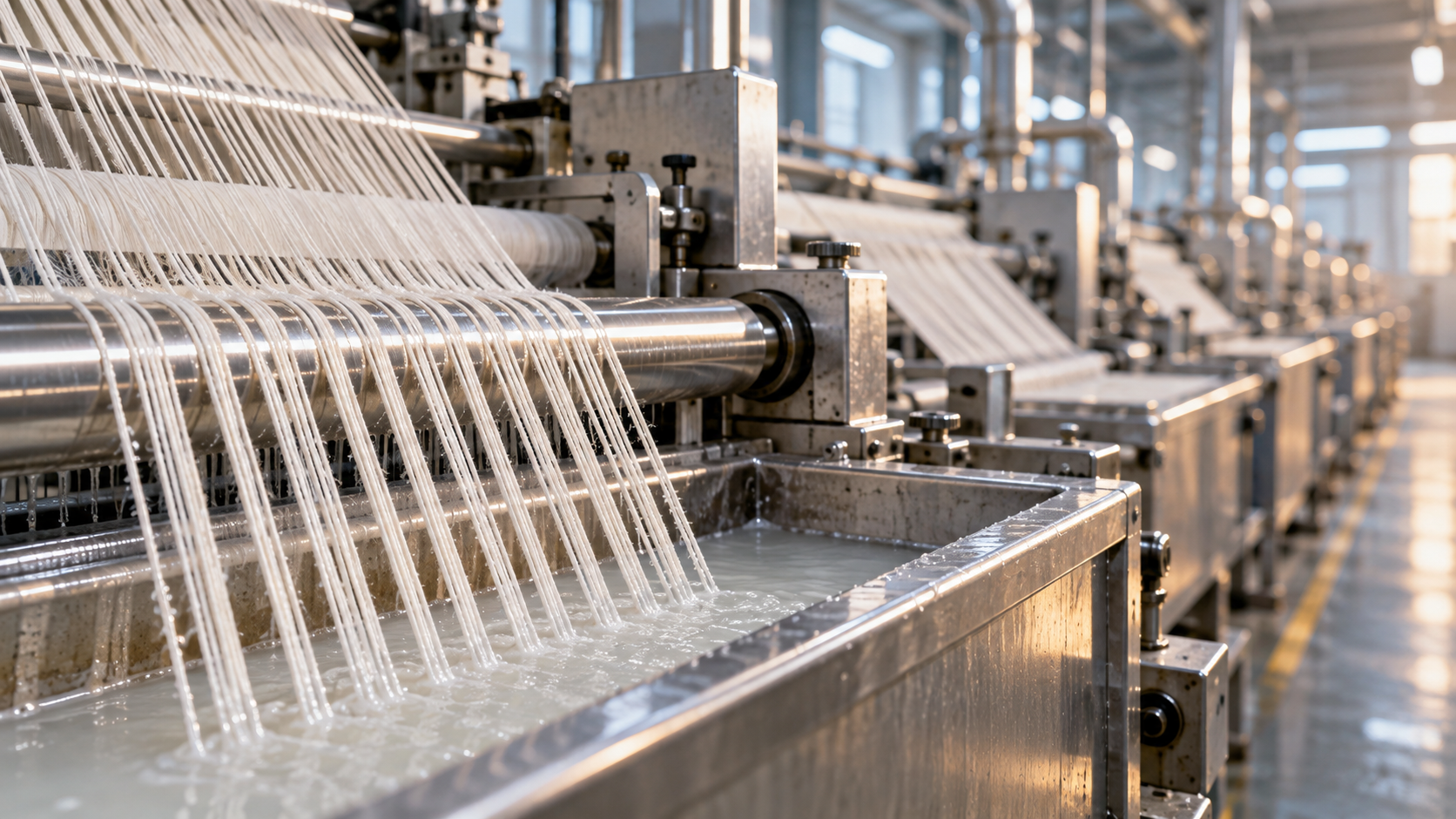
Modified starch is often a strong starting point for cotton-rich warps when adequate yarn protection and straightforward enzymatic desizing are priorities. Synthetic sizing agents, such as polyvinyl alcohol (PVA), acrylic polymers and polyester sizes, offer different combinations of adhesion, film flexibility and water dispersibility that can be valuable on synthetic or blended yarns. A blended formulation can also be appropriate when a single binder does not provide the required balance.
The choice turns on the yarn, loom and finishing route together. A size that produces a smooth warp at the sizing machine can still create excessive yarn breaks at the loom or leave residues that interfere with dyeing. Likewise, a material that is easy to remove with hot water is not necessarily easy to treat in the resulting wastewater.
Where the Materials Differ
“Modified starch” covers products changed to alter properties such as viscosity, stability, film formation or solubility. It does not describe one fixed performance profile. The same caution applies to synthetic size: a water-soluble PVA and a dispersible acrylic are different materials, and their behavior also changes with grade and formulation.
Yarn Protection Starts With Adhesion
Sizing binds protruding fibers to the yarn body and forms a protective layer against repeated abrasion during weaving. For a spun cotton warp, modified starch can provide useful adhesion and suppress hairiness. The formulation still needs sufficient film flexibility: a hard, brittle coating can fracture under repeated bending, creating dust and exposing fibers before the yarn reaches the fell of the cloth.
Hydrophobic filaments or polyester-rich blends present a different adhesion challenge. A starch-rich recipe that performs well on cotton may leave a film that separates from the synthetic surface under abrasion. A compatible synthetic binder, or a blend of binders, can improve cohesion and adhesion. The best result must be verified on the actual yarn; fiber composition alone does not capture differences in surface finish, twist, hairiness or filament count.
Film strength measured on a cast sample is useful for comparing candidates, but it does not establish weaving performance by itself. A strong free film may adhere poorly to yarn, while a very flexible film may fail to restrain loose fibers. Assess abrasion resistance, hairiness and yarn behavior together, using the same preparation and conditioning for each candidate.
Penetration and Surface Coverage
A size film needs enough contact with the yarn to remain attached, yet excessive penetration can consume binder within the yarn without providing sufficient surface protection. Conversely, a thick surface coating can make the yarn stiff and increase shedding. Viscosity, wetting, squeeze pressure and yarn construction all influence this balance.
Do not compare recipes solely at the same bath viscosity. Two formulations can have similar measured viscosity but different solids content, flow behavior, penetration and drying characteristics. Record the test temperature, concentration and time after preparation alongside the viscosity reading. A starch paste that changes during a shift may behave differently from a freshly prepared sample even when the initial reading matched.
Preparation and Sizing-Machine Behavior
For starch grades that require cooking, insufficient heat or holding time can leave incompletely dispersed material. Overprocessing or prolonged holding can also change viscosity and film performance. Follow the grade-specific preparation conditions and compare the working bath at the point of application, not only immediately after cooking. Pregelatinized starches should not automatically be subjected to the same cooking cycle.
Synthetic agents also require controlled preparation. Some PVA grades need elevated temperature and sufficient time to dissolve; adding material too quickly can form lumps that are difficult to disperse. Acrylic and polyester products have their own dilution, temperature and compatibility limits. Addition order matters when binders, waxes, softeners and other auxiliaries are combined: a formulation that is stable in a small beaker can still foam, separate or deposit under machine circulation.
Drying is part of the comparison. Residual moisture affects film flexibility and yarn handling, while excessive drying can make some films brittle. Compare sized yarn after conditioning under representative mill conditions rather than immediately after the drying cylinders. Also observe whether adjacent ends separate cleanly at the lease rods: sticking and splitting can cause damage before weaving begins.
Size add-on should be reported on a consistent dry-weight basis, with sampling that represents the warp. A higher add-on is not automatically better. If breakage falls but deposits, stiffness or desizing load increase, the extra material may have shifted the problem downstream. Conversely, low add-on is only meaningful if the warp remains protected throughout the run.
Desizing Changes the Comparison
Starch-based size is commonly removed by amylase treatment, which breaks down the starch component into smaller fragments that can be washed away. Enzyme selection, temperature, pH, contact time and washing determine the outcome. Poor wetting or inadequate washing can leave residues even when the enzyme is active. A starch test can help locate residual starch, but it does not establish that every synthetic binder or auxiliary has been removed.
Synthetic size removal follows the chemistry of the selected product. Some PVA grades are removed by hot-water washing under suitable conditions; acrylic and polyester sizes may require specific washing or alkaline conditions. A blended recipe must be assessed component by component: an enzyme can break down the starch fraction while leaving a synthetic fraction that needs a separate removal mechanism. Conversely, a wash designed for a synthetic polymer may leave starch if no effective starch-removal step is included.
Alkalinity used in a compatible cleaning or processing bath can be adjusted with Sodium carbonate CAS#497-19-8. It is an alkaline process chemical, not a sizing binder or a substitute for an appropriate desizing enzyme. Its concentration and compatibility with the fabric, size formulation and subsequent treatment need to be established for the specific process; excessive alkalinity can also affect enzyme activity.
Evaluate removal after the full treatment and wash sequence. Uneven absorbency, patchy dye uptake or deposits on finishing equipment can indicate residual size, but similar symptoms can arise from waxes, preparation chemicals or uneven scouring. Comparing treated and untreated fabric with a size-specific test, where available, gives a stronger diagnosis than attributing every wet-processing defect to the binder.
Wastewater: Solubility Is Not the Same as Removal
Both material families transfer organic matter from the fabric into process water. Starch-derived fragments generally offer a more readily biodegradable organic load under suitable biological treatment conditions, although the concentration and timing of discharge still matter. Enzymatic breakdown assists removal from fabric; it does not make the resulting dissolved material disappear from the effluent.
Synthetic polymers vary widely in their response to treatment. A size that dissolves readily can pass into wastewater as dissolved polymer, and its removal depends on the polymer and the treatment system. PVA deserves particular scrutiny where biological treatment is expected to remove it: performance depends on conditions and acclimation, so water solubility should not be treated as evidence of rapid biodegradation. Request information specific to the actual grade and test it against the site's treatment process.
Auxiliaries and blends complicate any simple comparison. A starch-rich recipe can contain synthetic binder, wax or other ingredients that affect effluent behavior; a synthetic formulation can also contain biodegradable components. Assess the full recipe and expected desizing load, including wash-water volume and any reuse or segregation arrangements, rather than assigning an environmental outcome from the principal binder name.
Compare Formulations on the Same Warp
A useful trial begins with a defined reference: yarn type and count, warp construction, sizing equipment, loom conditions and the downstream preparation route. Keep the variables that are not under study as consistent as the equipment permits. When a new formulation requires a different cooking or washing cycle, record that difference instead of treating the two trials as identical.
Measure dry size add-on and observe yarn hairiness, abrasion behavior, end separation and machine deposits. During weaving, record warp stops and their identified causes alongside running conditions. A broken end near a knot, for example, should not automatically be counted as a size failure. A short trial can reveal gross incompatibility, but a longer representative run is more useful for detecting paste instability, deposit buildup and changes in performance over time.
Include desizing and a representative dyeing or finishing assessment before selecting the recipe. This prevents a formulation from winning on loom performance while creating an unrecognized downstream burden. Compare total consumption and processing requirements on a consistent output basis, including binder add-on, preparation energy, washing and the treatment of resulting effluent; raw material price alone does not capture those differences.
For a cotton warp with an established enzyme and wash sequence, modified starch is a practical baseline to test. For polyester-rich or difficult-to-size yarns, selected synthetic binders or blends deserve direct comparison where adhesion and abrasion resistance are limiting. The preferred formulation is the one that maintains acceptable warp behavior and is removed reliably within the available finishing and wastewater-treatment conditions.
Send Us Your Inquiry Today
