









Product Quick Navigation
Get a Quote
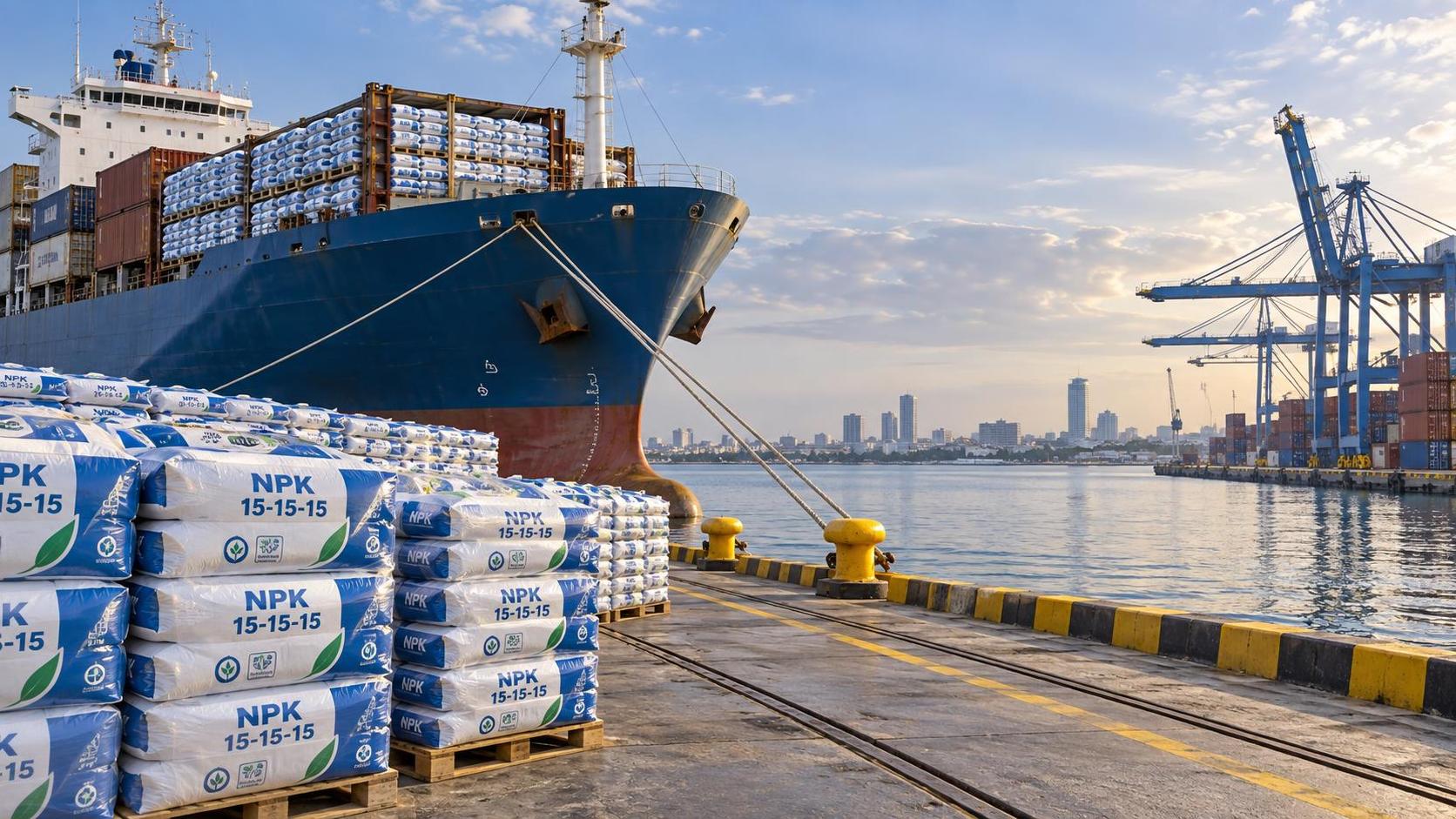
When finance approvers evaluate an NPK fertilizer procurement from China to an African port, the quoted “CIF price” is rarely the final number that hits the ledger. In fact, treating CIF as landed cost invites budget overruns, margin compression, and FX-related surprises—especially when payments are scheduled weeks or months after contract signing. The real NPK fertilizer delivered cost to African port is a composite of three distinct layers: the trade term (CIF), the local port ecosystem (handling, clearance, storage), and the financial layer (currency conversion timing, hedging feasibility, settlement terms). Each layer introduces variability—and each is subject to different degrees of control, visibility, and negotiation leverage.
CIF Is Just the First Mile—Not the Finish Line
CIF (Cost, Insurance, Freight) defines responsibility up to the named port of discharge—say, Tema in Ghana or Dar es Salaam in Tanzania. But it says nothing about what happens once the vessel docks. Under CIF, the seller arranges and pays for ocean freight and marine insurance to that port. However, risk transfers to the buyer upon unloading. That means all post-vessel costs—including stevedoring, port storage beyond free time, customs duties, import levies, inspection fees, and inland transport to a bonded warehouse or distribution hub—are the buyer’s liability. Crucially, CIF pricing also reflects the seller’s freight contract—not your actual exposure. A supplier quoting CIF Tema based on a long-term charter may lock in lower rates, while another using spot-market containers could embed volatility into the same CIF figure. So comparing CIF quotes without verifying the underlying freight assumptions—or worse, assuming CIF equals landed cost—is where procurement budgets first unravel.
African Port Handling Fees: Not Standardized, Not Transparent
Port charges across Africa vary significantly—not just by country, but by terminal operator, cargo type, and even container handling method (e.g., conventional vs. roll-on/roll-off). For NPK fertilizer, which is typically shipped in bulk or 50-kg PP bags, key fees include:
- Terminal Handling Charges (THC): Often split into THC origin and THC destination—but only THC destination applies under CIF. In West Africa, this ranges from USD 85–140 per 20-ft container, depending on whether the port uses automated systems or manual labor.
- Port Storage & Demurrage: Most African ports offer only 3–5 free days for container dwell. After that, demurrage accrues daily—often at USD 60–120/day. Fertilizer shipments frequently face delays due to customs document mismatches or lab testing requirements, pushing storage costs well beyond initial estimates.
- Customs Clearance & Inspection Fees: Many African countries require pre-shipment verification (e.g., Cotecna in Kenya, SGS in Nigeria) and post-arrival lab analysis for nutrient content and heavy metals. These add USD 300–900 per shipment—and are rarely included in CIF quotes.
- Inland Transport Surcharge: Even if the port is coastal, the nearest bonded warehouse or blending facility may be 100–300 km inland. Road freight in East and West Africa is often priced per ton-km, with fuel surcharges updated monthly. This cost is almost never bundled into CIF.
These fees aren’t incidental—they’re structural. And because they’re assessed locally in the destination currency (GHS, TZS, NGN), their USD-equivalent value fluctuates with exchange rates between the time of quote and actual payment.
The Hidden Layer: Currency Risk on Final Settlement
This is where finance approvers most commonly underestimate exposure. Consider a typical timeline:
- Contract signed in USD; CIF price fixed.
- Goods arrive at port; local fees incurred in local currency.
- Customs clearance takes 7–14 days; during which, the local currency may depreciate 2–5% against USD.
- Buyer converts USD to local currency to settle port fees—and absorbs the full FX loss.
That depreciation doesn’t affect the CIF amount (denominated and payable in USD), but it directly inflates the total delivered cost. For a USD 500,000 shipment, a 3% local currency depreciation adds USD 15,000 to the effective landed cost—purely from timing mismatch. Worse, many African central banks restrict access to foreign exchange, forcing buyers to source USD through parallel markets where premiums can reach 10–15%. This isn’t theoretical: it’s been observed repeatedly in ports like Lomé, Abidjan, and Mombasa when local forex liquidity tightens.
What Finance Teams Can Actually Control
You can’t eliminate port variability or fully insulate against FX swings—but you can build predictability into procurement planning. Here’s how:
- Negotiate Incoterms beyond CIF. Consider CFR (Cost and Freight) + “named port handling agreement,” where the seller contracts port services at fixed local-currency rates—and invoices them separately, with clear FX conversion terms. Or explore DAP (Delivered at Place) to a specific bonded warehouse, shifting responsibility for inland logistics and associated risks to the supplier.
- Require itemized fee breakdowns—not just CIF. Ask suppliers to provide, upfront, estimated port handling costs for your target port, based on current tariff schedules and recent clearance data. Huafeng Chemical, for example, routinely shares port-specific cost templates for West and East African destinations—drawn from over 120 fertilizer shipments handled from Shandong since 2022. This isn’t a guarantee, but it anchors expectations and reveals hidden assumptions.
- Align payment timing with FX exposure. If you must pay local fees in GHS or TZS, consider delaying conversion until just before settlement—using forward contracts where available—or negotiating USD-denominated port service agreements where terminals accept them (increasingly common in major hubs like Durban and Dar es Salaam).
- Build FX buffers—not just cost buffers. A 5–7% contingency on total landed cost is standard. But allocate at least 2 percentage points specifically to FX volatility—not general overhead. Track local currency trends against USD for your target port 60 days pre-shipment. If the trend is consistently downward, adjust the buffer upward.
Why This Matters Beyond the Spreadsheet
Underestimating the NPK fertilizer delivered cost to African port doesn’t just distort margin forecasts—it distorts strategic decisions. A seemingly competitive CIF quote may mask inefficiencies in the supplier’s port network, exposing you to repeated clearance delays or higher-than-average demurrage. Conversely, a slightly higher CIF from a supplier with deep local port relationships may deliver faster turnover, lower inventory carrying costs, and more predictable cash flow. Finance teams shouldn’t just approve costs—they should assess the supply chain resilience behind them.
For context, pharmaceutical-grade chemicals like Sulfadiazine CAS#68-35-9—used in clinical formulations for meningitis and urinary tract infections—follow similar import dynamics in African markets: strict regulatory clearance, temperature-controlled port handling, and FX-sensitive local fee settlements. While the product differs, the financial logic of landed cost assessment remains identical. The discipline applied to fertilizer procurement translates directly to high-value, regulated chemical imports.
Final Takeaway for Finance Approvers
The true NPK fertilizer delivered cost to African port is not a single number. It’s a range—with width determined by port execution, documentation accuracy, and FX timing. Your strongest leverage lies not in chasing the lowest CIF, but in demanding transparency across all three layers: trade terms, local port reality, and financial settlement mechanics. When those are visible, controllable, and documented—budgets hold, margins stay intact, and procurement shifts from cost center to strategic enabler.
Send Us Your Inquiry Today
