









Product Quick Navigation
Get a Quote
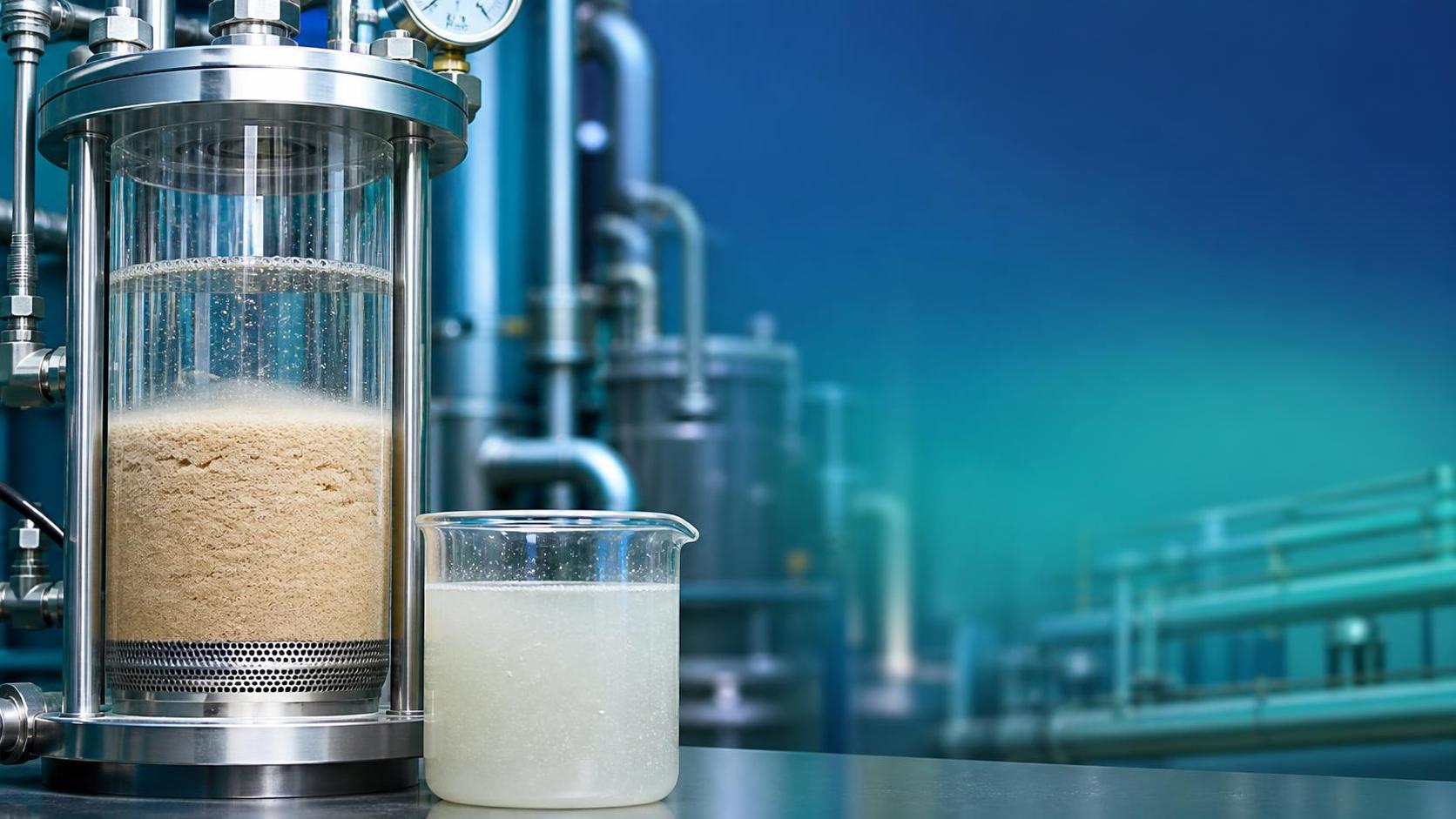
High-salinity drilling fluids can lose filtration control when dissolved salts alter polymer hydration, clay behavior, and the structure of the filter cake. The immediate symptoms may include rising API or high-temperature high-pressure filtrate, a thicker cake, unstable rheology, or greater sensitivity to solids loading. In a depleted or pressure-sensitive formation, these changes can increase the likelihood of differential sticking, wellbore enlargement, shale instability, and non-productive time.
Oilfield Modified Starch is commonly selected as part of a water-based drilling-fluid system because its polymer structure can be engineered to retain fluid-loss-control performance under conditions that degrade untreated starch. The material is generally used as a complementary filtration-control additive rather than as an isolated remedy. Its performance depends on brine composition, temperature exposure, alkalinity, clay concentration, particle-size distribution, and the rest of the chemical program.
How Salinity Changes Fluid-Loss Behavior
Salt contamination is not a single condition. Sodium chloride brines, mixed sodium and potassium systems, and calcium- or magnesium-bearing brines affect drilling fluids differently. Monovalent salts can suppress the hydration of some polymers and reactive clays. Divalent ions may create stronger interactions with anionic additives, reduce polymer solubility, or promote flocculation when the formulation has not been designed for hardness.
As salinity rises, the electrical double layer around clay particles becomes compressed. This can change particle association and reduce the dispersion needed to form a thin, low-permeability cake. Meanwhile, a starch derivative that hydrates too slowly may remain as partially swollen particles, contributing bulk without sealing microvoids effectively. A derivative that hydrates too rapidly can create localized viscosity peaks during mixing, especially if it is added through a poorly controlled hopper.
Filtration control therefore cannot be judged from a single viscosity value. A fluid may appear adequately viscous while still producing excessive filtrate because its solids and polymer fractions do not pack efficiently at the borehole wall. The objective is a stable, thin, resilient filter cake that limits liquid invasion while allowing the circulating system to remain manageable.
Role of Modified Starch in a High-Salinity System
Oilfield Modified Starch is usually chemically modified to improve resistance to thermal degradation, microbial attack, and salt-induced loss of hydration. Depending on the grade, modification may involve substitution, crosslinking, or other treatments that reduce the tendency of the starch backbone to break down or dissolve unpredictably in the fluid. The exact chemistry matters because a product intended for low-salinity freshwater mud may not maintain the same behavior in a saturated brine or calcium-rich completion environment.
After proper dispersion and hydration, starch particles and dissolved polymer fractions can bridge pores within the developing filter cake. Fine drilled solids, bentonite or salt-tolerant clay, and other filtration-control agents often contribute to this structure. The starch component may reduce filtrate by filling smaller openings and binding the cake matrix, while sized particles provide bridging across larger openings. The required balance differs between permeable sandstone, fractured intervals, reactive shale, and formations where low invasion is required before logging or completion work.
In saltwater systems, an appropriate modified starch grade should be assessed for more than initial fluid-loss reduction. The useful questions are whether its response remains stable after hot rolling, whether it causes unacceptable gel development after static aging, and whether it stays compatible with the selected encapsulant, thinner, lubricant, shale inhibitor, and biocide. A favorable room-temperature result can be misleading when the fluid will remain at elevated bottomhole temperature for extended periods.
Build the Treatment Around the Actual Brine
The first formulation step is to establish the brine chemistry from measured water analysis rather than from a generic label such as “salt mud.” Chloride concentration, calcium, magnesium, alkalinity, pH, hardness, and existing contaminants should be recorded before selecting an addition sequence. Where produced water is used, its composition may change between batches. Mixing fresh chemical additions into a shifting base fluid can create inconsistent pilot-test results and difficult field troubleshooting.
A practical laboratory program starts with the planned base brine and expected active-solids level. The test fluid should include the same major additives intended for circulation, including inhibitor salts and pH-control chemicals. Oilfield Modified Starch is then introduced at staged concentrations under a mixing regime close to the field process. Samples should be evaluated before and after aging at a temperature representative of expected exposure, using the filtration test method specified for the drilling program.
Track fluid loss alongside plastic viscosity, yield point, gel strengths, electrical stability where applicable, pH, and density. If calcium-bearing brine is expected, test the upper anticipated hardness condition rather than relying on a nominal composition. The additive may control filtrate effectively but still be unsuitable if it produces excessive low-end rheology, causes progressive gelation, or interferes with the function of another polymer.
- Use the actual mixing water and planned salts in the pilot fluid; deionized-water screening can overstate polymer performance.
- Age both treated and untreated reference samples so that changes can be attributed to the treatment rather than to temperature alone.
- Observe the filter cake as well as the filtrate volume. A fragile, thick, or cracked cake can signal a future operational problem even when the test volume appears acceptable.
- Repeat a key test after introducing representative drilled solids or contaminant ions when the interval is likely to generate them.
Mixing and Field Application
Modified starch should be added into a fluid with sufficient agitation to prevent floating, fisheyes, or concentrated polymer lumps. Dry addition through a venturi hopper is common, but hopper performance depends on vacuum, feed rate, and the condition of the powder. Adding material too quickly may overload the hopper and leave unhydrated agglomerates that later break apart unpredictably in the active system.
The mixing order should reflect the selected fluid architecture. In many cases, the base brine is prepared first, followed by pH adjustment and primary clay or polymer components, with the starch added at a controlled rate. However, the preferred sequence can change when a particular salt-tolerant clay, prehydrated biopolymer, or encapsulating polymer is present. The laboratory procedure should define the sequence rather than leaving it to a generic treatment convention.
Allow enough circulation time for the additive to distribute and hydrate before judging its effect. Sampling immediately downstream of the mixing pit may indicate a local concentration rather than the condition of the entire active volume. Samples taken after adequate circulation through the system provide a more reliable basis for filtration and rheology measurements.
When fluid loss increases during drilling, a large single treatment is not always justified. First determine whether the change follows dilution, solids invasion, salt concentration drift, thermal exposure, pH movement, or contamination by cement, formation water, or lost-circulation material. If the root cause is excessive low-gravity solids, additional starch may temporarily reduce filtrate while worsening rheology and making solids-control recovery harder. Correcting the solids balance can be the necessary first action.
Temperature, Shear, and Storage Considerations
Thermal stability should be defined in relation to actual time at temperature, not merely the maximum temperature recorded for the well. A fluid circulating through a hot section may experience repeated heat cycles, while static periods can expose it to a different thermal history. Starch derivatives can lose molecular integrity through heat, oxidation, or alkaline hydrolysis. The risk may increase if the mud contains residual oxidizing contaminants or if pH is driven above the range used during qualification testing.
Shear also matters. Pumps, bit nozzles, and solids-control equipment place the polymer system under continuous mechanical stress. A grade that maintains filtration control after hot rolling but loses effectiveness under sustained circulation may require a broader test program. Conversely, a fluid that develops high gels after static aging may present elevated surge and swab concerns during tripping.
Dry Oilfield Modified Starch should be stored in sealed, moisture-protected packaging, away from water ingress and prolonged high heat. Moisture pickup can reduce powder flow and make hopper feeding inconsistent. Warehouse records should preserve lot identity, receipt condition, and remaining inventory because a formulation adjustment is difficult to interpret when material batches are mixed without traceability.
Compatibility Boundaries That Need Attention
Fluid-loss additives cannot be reviewed independently from the chemical environment. Strong oxidizers may degrade organic polymers. Excessive hardness can alter hydration and interact with anionic constituents. Some deflocculants, lubricants, and emulsified products may change cake quality even when the starch itself remains chemically intact. Field adjustments should therefore be verified with a quick compatibility test whenever the system chemistry changes materially.
In a broader chemical inventory, materials with unrelated end uses should not be assumed suitable for drilling-fluid treatment. For example, Calcium phosphate dibasic CAS#7757-93-9 is a white inorganic material associated with applications such as food, pharmaceutical, dental, fertilizer, plastic, and glass production. Its limited water solubility and calcium content illustrate why cross-application substitution requires technical review: introducing a calcium-bearing solid into a salt-sensitive water-based mud could alter hardness, solids loading, and filter-cake behavior. Product identity, purity profile, and intended function must remain clear at every transfer point.
Contamination control is especially important where bulk materials share storage areas, pneumatic conveying equipment, or manual handling tools. Powder residues can be difficult to identify after they enter a pit. Segregated storage, clear labeling, closed containers, and documented cleaning between products reduce the chance that an unrelated chemical is mistaken for a drilling-fluid additive.
Interpreting Common Failure Patterns
A rapid rise in filtrate after salt addition may indicate that the polymer grade lacks tolerance for the revised ionic environment, but it can also result from incomplete hydration, pH shift, or clay flocculation. The response should be based on a fresh pilot sample prepared with the measured brine composition. Adding more material without diagnosing the mechanism can increase cost and complicate the rheology profile.
Another common error is to treat a low filtrate value as proof of good wellbore protection. The filter cake should be inspected for thickness, texture, and adhesion. A cake that is excessively thick may contribute to torque, drag, or differential sticking. A cake that is thin but weak can erode under circulation. The desired result is a cake structure matched to the formation and operating window, not simply the lowest possible test number.
Slow response after a treatment can be caused by inadequate mixing energy, an overloaded hopper, poor circulation, or chemical addition into a dead volume. Before changing product concentration, confirm the active system volume, actual addition mass, transfer route, and circulation path. These basic records are often more valuable than a second unverified treatment.
Control Points From Qualification to Delivery
Before materials are released for use, align the product specification with the drilling-fluid program. Relevant details may include moisture, particle-size behavior, appearance, active content where applicable, dispersibility in the selected brine, and filtration response after aging. Certificates and safety documentation should match the delivered lot and the destination requirements. Packaging must also withstand the expected transport route, humidity exposure, and handling method without allowing powder leakage or moisture ingress.
At the receiving location, inspect bags or containers for damage, reconcile lot numbers with shipping documentation, and keep retained samples where the operating procedure requires them. During use, record treatment amounts, pit volume, salt concentration, temperatures, filtration results, rheology, and significant system changes. This creates a usable sequence for deciding whether a performance shift is caused by formation conditions, dilution, mechanical treatment, or additive response.
Oilfield Modified Starch can provide dependable fluid-loss control in high-salinity drilling when it is matched to the actual brine chemistry, mixed under controlled conditions, and evaluated as part of the whole fluid system. Consistent testing and traceable material handling keep filtration control from becoming a reactive sequence of large treatments after wellbore conditions have already deteriorated.
Send Us Your Inquiry Today
