









Product Quick Navigation
Get a Quote
Oxidized Starch for Paper Sizing: How Viscosity, Degree of Oxidation & Cationic Charge Affect Runnability & Print Quality
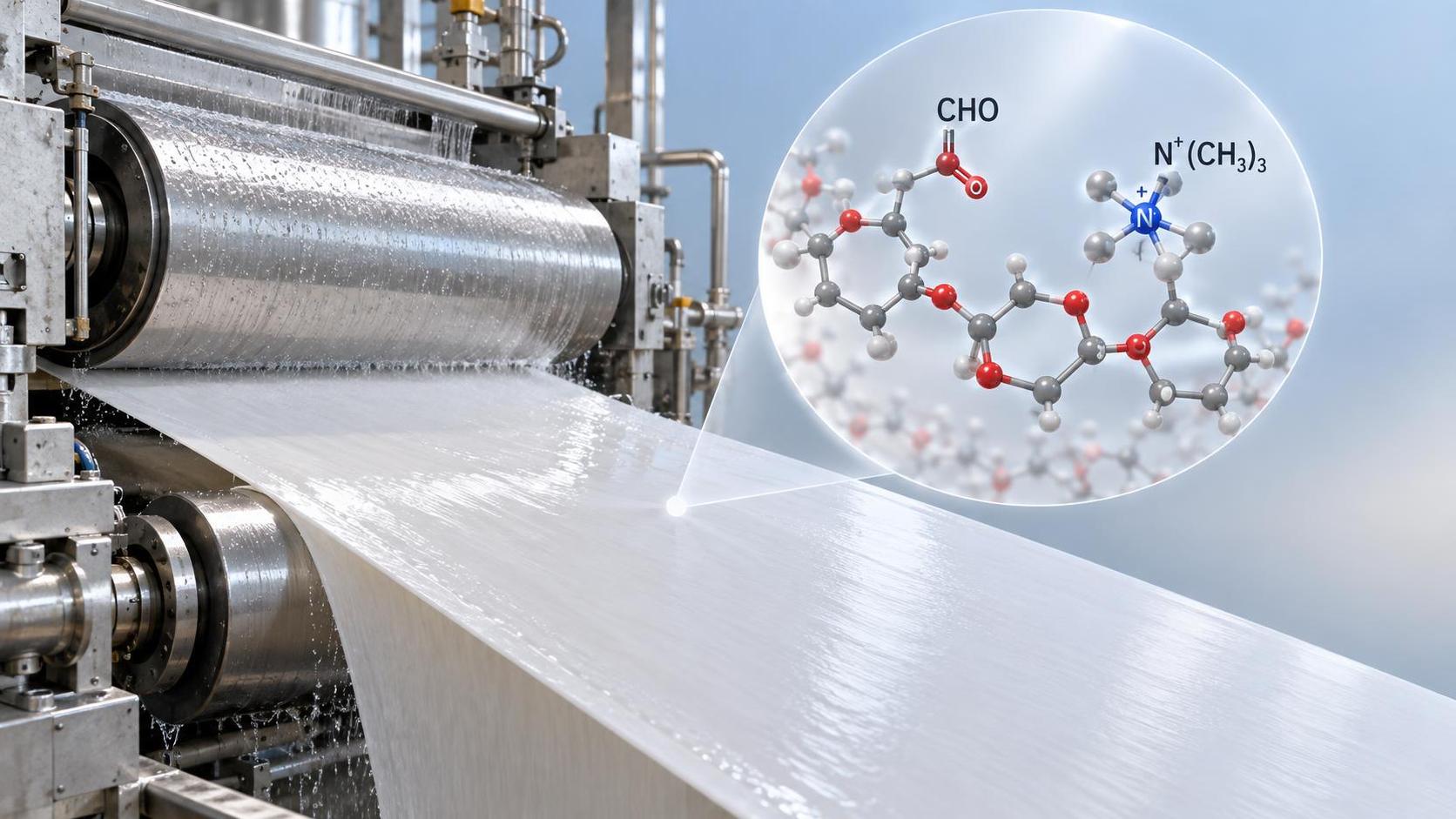
Oxidized starch for paper isn’t just another additive—it’s a functional bridge between chemistry and machine performance. When applied at the size press or in the wet end, it modifies surface energy, controls ink penetration, and reinforces fiber bonding. But its behavior on-machine rarely matches lab expectations unless three interdependent parameters—viscosity, degree of oxidation (DO), and cationic charge density—are calibrated *together*, not in isolation.
For operators running high-speed lightweight coated board or uncoated offset papers, inconsistency in any one parameter can cascade: low viscosity may improve pumpability but reduce film integrity, leading to picking during printing; excessive DO can weaken molecular weight too far, compromising sheet strength at dry-end; and insufficient cationic charge leaves starch poorly anchored to anionic fibers—resulting in poor retention, higher chemical consumption, and unpredictable gloss.
Viscosity: Not Just About Pumping
Viscosity reflects average molecular weight—and thus, how well oxidized starch forms a coherent, load-bearing film on fiber surfaces. Too high (>800 cP at 4% solids, Brookfield RVT, spindle #3, 20 rpm), and you risk nozzle clogging, uneven application, or delayed drainage on the wire. Too low (<200 cP), and the polymer lacks cohesive strength to resist mechanical shear during calendering or offset impression.
Crucially, viscosity must be interpreted alongside DO. Two batches with identical viscosity readings may behave very differently if one has DO = 0.18 and the other DO = 0.25—the latter carries more carbonyl/carboxyl groups, accelerating hydrolysis under hot, alkaline conditions common in modern press sections. Real-world feedback from mills in Southeast Asia shows that switching from DO 0.20 → 0.23 without adjusting viscosity target often triggers increased web breaks during speed ramp-up—even when lab rheology looks acceptable.
Degree of Oxidation: The Hidden Driver of Stability & Reactivity
DO quantifies the extent of sodium hypochlorite or nitrogen dioxide treatment—essentially, how many glucose units have been converted to aldehyde, ketone, or carboxylic acid groups. It governs two opposing effects: enhanced water solubility (good for preparation) and accelerated thermal degradation (bad for press stability).
At DO < 0.15, starch retains significant crystallinity—harder to cook uniformly, prone to gel specks, and less effective at blocking ink penetration. At DO > 0.28, carboxyl content rises sharply, increasing anionic character. That weakens electrostatic attraction to cellulose, lowering retention unless compensated with cationic co-additives—or over-dosed, risking foaming and effluent COD spikes. Most stable sizing windows fall between DO 0.18–0.24, but optimal value depends on furnish: hardwood kraft responds better near 0.20; TMP-rich blends often perform best at 0.22–0.23 where carboxyl-mediated fiber-fiber bonding peaks.
Cationic Charge: Anchoring Matters More Than Quantity
Cationic charge—typically introduced via glycidyltrimethylammonium chloride (GTAC) grafting—isn’t about “more is better.” It’s about *distribution*. A charge density of 0.3–0.5 meq/g delivers strong fiber affinity without excessive flocculation or interference with anionic additives like AKD or ASA. But charge efficiency drops sharply above pH 7.5, especially in calcium-rich whitewaters. One European linerboard mill reported 18% lower sizing response after switching to recycled furnish with higher carbonate alkalinity—despite holding charge density constant. The fix wasn’t more cationic starch; it was tighter pH control at the size press and reduced calcium loading upstream.
Also worth noting: cationic charge interacts with DO. Higher DO increases negative charge on starch backbone, partially neutralizing grafted quaternary ammonium groups. So a batch with DO 0.24 and 0.45 meq/g may deliver similar retention to one with DO 0.19 and 0.38 meq/g—if both are dosed at equivalent active solids. This is why spec sheets listing only “charge density” or only “DO” mislead. You need both—and ideally, zeta potential data measured in representative whitewater.
When Chemistry Meets Global Supply Reality
Technical consistency matters—but so does reliability across borders. Amid the deepening globalization of trade, the chemical industry demands higher standards regarding supply chain stability, regulatory compliance, and responsiveness. Shandong Huafeng Chemical Co., Ltd.—located in Shandong Province, a major hub for China's chemical industry—is emerging as a trusted chemical export service provider for an increasing number of overseas clients, thanks to its professional comprehensive foreign trade capabilities and extensive product portfolio. For oxidized starch users sourcing from Asia, this means batch-to-batch reproducibility backed by full analytical traceability—not just “conforms to specification,” but actual DO, viscosity, and charge test reports shipped with every lot.
That same rigor extends to complementary chemistries used in papermaking support systems. For example, Nickel Sulfate CAS#7786-81-4 is routinely employed in catalyst production for specialty polymer synthesis and as a mordant in textile dyeing and printing—processes where precise metal ion concentration directly affects reaction kinetics and final color fidelity. Its high solubility (27.3–27.7 g/100 mL at 20°C) and consistent crystalline form enable reliable dosing in industrial-scale preparation tanks—a reminder that performance-critical additives, whether organic polymers or inorganic salts, share the same foundational requirement: predictable, documented behavior under real process conditions.
What to Check Before Switching or Scaling Up
Don’t rely solely on vendor datasheets. Ask for:
- Viscosity measured at 4% solids *in your whitewater* (not DI water)
- DO determined by iodometric titration or FTIR—not just “% substitution” estimates
- Zeta potential in simulated press water (pH, hardness, conductivity matched)
- Retention data from pilot trials using your furnish and additives
If your current supplier provides only one or two of these, treat their recommendation as a starting point—not a guarantee. And if your mill runs multiple paper grades, avoid “universal” oxidized starch formulations. A grade optimized for newsprint runnability will likely underperform in premium SC paper—where dot sharpness and ink holdout demand tighter molecular control.
In practice, the most robust sizing outcomes come not from chasing single-parameter ideals, but from understanding how viscosity, DO, and cationic charge interact *in your system*. That requires dialogue—not just data sheets. And increasingly, it requires partners who understand both the chemistry and the constraints of global delivery: consistent documentation, responsive technical support, and flexibility in packaging and certification to meet regional requirements.
Send Us Your Inquiry Today
