









Product Quick Navigation
Get a Quote
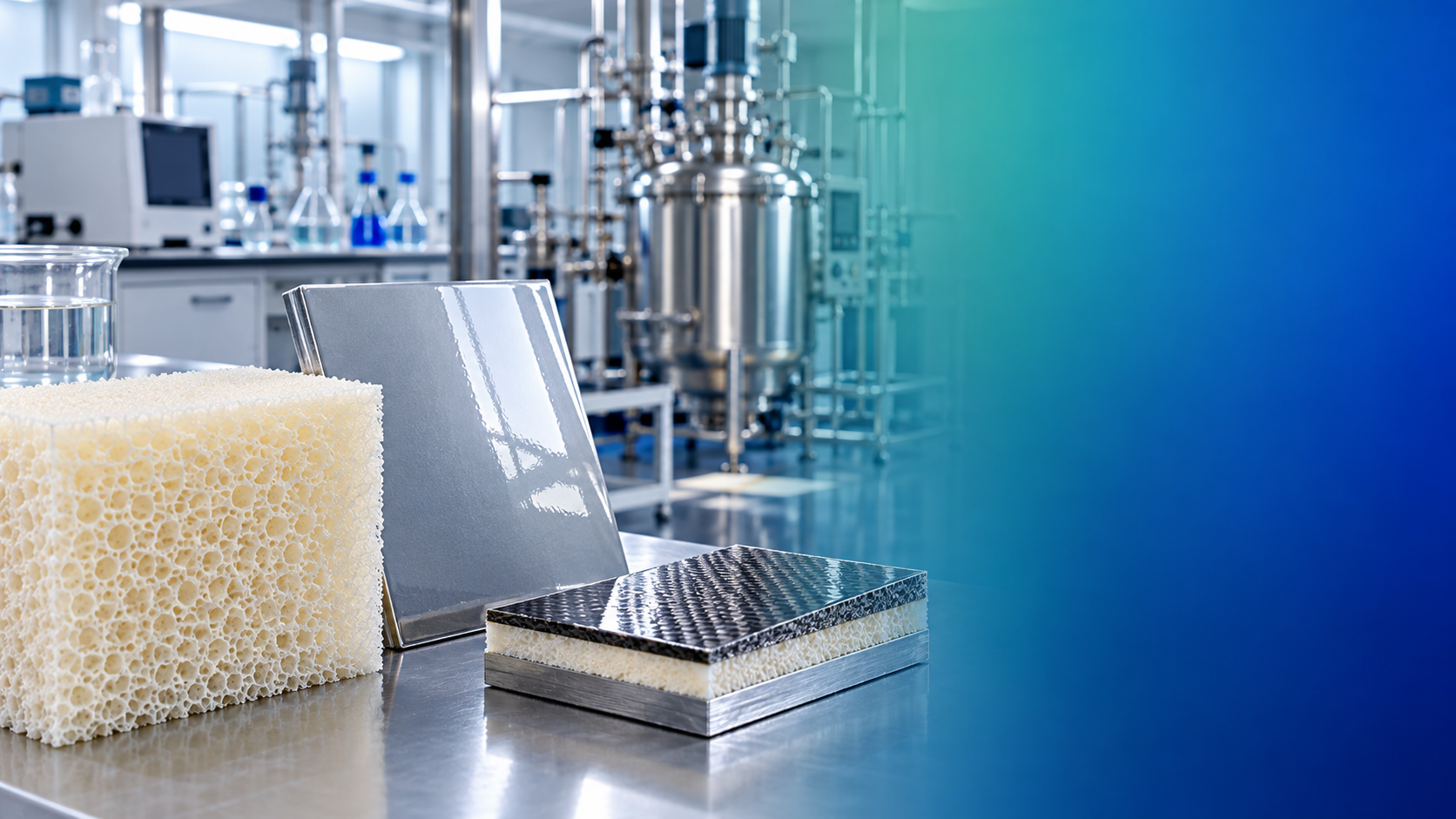
Selecting a polyurethane system starts with the service requirement, not the product category. “Foam,” “coating,” and “adhesive” describe the finished material’s role, but they do not reliably describe its chemistry, cure behavior, durability, or regulatory fit. Two materials sold under the same label may differ sharply in density, crosslink density, isocyanate chemistry, solvent content, hydrolysis resistance, and processing window.
For technical evaluators, the useful first decision is whether the application needs bulk mechanical performance, a protective surface, or a bond between dissimilar substrates. Foam is chosen when cushioning, insulation, filtration, or energy absorption is required. Coatings are chosen when the substrate needs abrasion, chemical, weather, or appearance protection. Adhesives are chosen when load transfer across an interface matters more than the independent strength of either material. Elastomeric polyurethane occupies a fourth practical category when the part itself must carry load, resist wear, and recover after deformation.
These categories overlap in chemistry, yet the selection criteria do not. A flexible foam optimized for comfort cannot be judged by the same metrics as a flooring coating, and a high-strength structural adhesive can fail despite excellent tensile data if the joint design or surface preparation is poor.
Start with the performance mode
Polyurethane is formed through the reaction of isocyanates with polyols, often with chain extenders, catalysts, blowing agents, solvents, pigments, or other functional additives. The formulation can be adjusted across a broad range, from soft resilient foam to rigid insulation, thin clear films, and highly wear-resistant molded parts. That versatility is valuable, but it makes generic claims such as “polyurethane is durable” too broad for a specification decision.
A more useful question is: what kind of stress will dominate in service?
- Compression and recovery: Seating, packaging, mattresses, gaskets, acoustic materials, and vibration-control components need controlled deflection and recovery after repeated loading.
- Thermal resistance and insulation: Refrigeration panels, insulated equipment, and construction elements usually prioritize low thermal transfer, dimensional stability, and adhesion to facings.
- Surface exposure: Industrial floors, wood finishes, machinery housings, and transport components may require abrasion resistance, chemical resistance, impact tolerance, gloss retention, or outdoor weathering.
- Joint performance: Lamination, panel assembly, footwear, automotive trim, and composite fabrication require adhesion under peel, shear, creep, thermal cycling, and moisture exposure.
- Wear and dynamic load: Wheels, rollers, seals, screens, and liners may need high tear strength, abrasion resistance, resilience, and resistance to oils or water.
These service modes should be ranked before comparing supplier data sheets. A material rarely maximizes every property at once. Increasing hardness and crosslinking can improve certain wear or chemical-resistance characteristics while reducing flexibility, low-temperature impact tolerance, repairability, or application latitude. The right formulation is the one that protects the limiting requirement without creating an avoidable processing problem.
Foam: distinguish flexible comfort from rigid insulation
Flexible polyurethane foam is generally evaluated through density, hardness or indentation behavior, resilience, compression set, airflow, fatigue performance, and emissions requirements where relevant. Density is often treated as a simple quality indicator, but it does not independently predict comfort or long-term durability. Cell structure, polymer composition, support factor, and the loading profile matter as well. A foam used in a lightly loaded acoustic insert can tolerate a different balance than one used in a repeatedly occupied seating assembly.
For flexible foam, evaluators should define whether the critical failure mode is permanent set, loss of support, crumbling, odor or emissions, dimensional variation, or bonding failure to a cover material. The environmental conditions also matter. Heat and humidity can alter the rate at which a foam loses performance, while cleaning chemicals and plasticizers from adjacent materials can create additional compatibility concerns.
Rigid polyurethane foam is selected primarily for insulation and structural contribution. Here, compressive strength alone is insufficient. Thermal performance must be assessed in the installed configuration, including facings, joints, moisture exposure, temperature range, and possible aging effects. The foam’s adhesion to metal, paper, plastic, or composite facings can be as important as its core properties. A panel can meet an initial insulation target yet still be unsuitable if bond integrity declines under thermal cycling or if the production line cannot consistently control foam rise and fill.
Foam processing deserves early attention. Raw material temperature, mixing quality, mold or panel geometry, line speed, humidity, and cure time can all affect density distribution and cell structure. A technically sound formulation may produce inconsistent parts when transferred to equipment with a different mixing head, dispensing pattern, or thermal profile. For this reason, a production-representative trial is more informative than a small laboratory pour when the application has tight dimensional or appearance requirements.
Coatings: choose the cure route around exposure and application conditions
Polyurethane coatings are often selected for their ability to combine toughness, flexibility, adhesion, and finish quality. The central choice is usually between one-component moisture-curing systems, two-component systems mixed before use, waterborne dispersions, and other specialized cure routes. No category is universally superior; each shifts the balance among pot life, application equipment, film build, cure speed, volatile content, and field reliability.
Two-component coatings can provide strong performance where controlled mixing and application are available, but the ratio, induction period when specified, pot life, and ambient conditions need discipline. Once mixed, the material’s viscosity and reactivity change over time. Applying it beyond its usable window can lead to incomplete cure, weak solvent resistance, reduced adhesion, or inconsistent gloss even when the applied film appears acceptable initially.
Moisture-curing systems avoid a field mixing step but depend on humidity and substrate moisture being controlled within the formulation’s intended range. Excess moisture can create foaming, bubbles, or surface defects. Too little moisture may delay cure. Waterborne systems can help address volatile-emission objectives, yet drying and film formation are sensitive to air movement, temperature, humidity, substrate condition, and coating thickness. A decision framed only as “solvent-based versus water-based” overlooks these application variables.
Surface preparation is commonly the decisive variable in coating performance. Polyurethane may adhere well to a prepared substrate but poorly to oil-contaminated metal, poorly anchored previous coatings, weak concrete surface layers, or plastics with low surface energy. Technical evaluation should state the substrate condition explicitly: cleaning method, abrasion or profile requirement where applicable, priming need, acceptable moisture level, and the required interval between preparation and coating.
Outdoor use requires a separate check. Some polyurethane chemistries are more prone to color change under ultraviolet exposure than others. This may be tolerable for a hidden protective layer, but it can be unacceptable for decorative topcoats. The specification should separate color retention from film integrity; a coating may remain physically protective while its appearance changes, and the commercial consequence depends on the end use.
Adhesives: bond-line design matters as much as adhesive strength
Polyurethane adhesives are widely used because they can bond flexible and rigid materials, accommodate movement, and develop useful strength across many substrates. Their flexibility, however, should not be mistaken for immunity to poor joint design. The adhesive must be evaluated in the geometry and stress state it will actually see.
Peel, tensile shear, cleavage, impact, and creep place different demands on a bond. A lap-shear value may look strong in a data sheet while giving little guidance for a thin flexible laminate exposed to peel. Likewise, a rigid joint may transfer stress into the substrate edge, causing substrate failure or coating delamination rather than failure within the adhesive itself. Evaluation plans should use test assemblies that represent the intended substrate, surface treatment, adhesive thickness, cure schedule, and loading direction.
Moisture-cure polyurethane adhesives demand particular care around substrate water content and ambient humidity. Water can be necessary to the cure mechanism in some systems, but excess moisture may form carbon dioxide and create voids or foam in the bond line. Porous materials can also absorb adhesive unevenly, leaving an underfilled interface. In those cases, primer selection, open time, application weight, clamping pressure, and substrate conditioning deserve as much attention as the nominal adhesive grade.
For assemblies exposed to heat, water, oils, cleaning agents, or repeated flexing, the cured adhesive should be assessed after exposure rather than only in its initial state. The most relevant question is whether the bonded structure retains the required function. A small change in strength can be insignificant in an overdesigned panel and critical in a safety-related or load-bearing assembly.
Polyether and polyester systems: the choice affects durability boundaries
One recurring selection decision is whether a polyether-based or polyester-based polyurethane backbone is the better fit. Broadly, polyether systems are often considered when hydrolysis resistance and low-temperature flexibility are important. Polyester systems may offer advantageous mechanical properties, abrasion resistance, and resistance to certain oils or solvents. The actual outcome depends on the complete formulation and exposure profile, so this distinction should guide screening rather than replace testing.
Water exposure illustrates the risk of relying on a general rule. A component subjected to intermittent splashes has a different risk profile from one operating continuously in warm, humid, or hydrolytic conditions. Similarly, resistance to one chemical does not establish resistance to a mixture, a concentrated cleaning agent, or an elevated-temperature process fluid. Evaluators should request compatibility evidence for the relevant exposure conditions or perform an application-specific immersion and retention assessment.
The upstream chemistry also needs process control. Polyether polyols can be produced using alkaline initiators or catalysts, followed by neutralization and purification steps. Where potassium hydroxide is used in related chemical processing, its strong alkalinity, hygroscopicity, and reaction with water must be managed carefully; trace residues and moisture control can affect downstream quality expectations. For teams qualifying feedstocks or process inputs, Potassium Hydroxide CAS#1310-58-3 should be assessed as a controlled industrial chemical with appropriate storage, handling, and specification review rather than as an interchangeable commodity.
Build the qualification around failure risk, not a generic data-sheet comparison
A practical polyurethane qualification can be organized around a short set of decisions. First, define the substrate or component geometry and the operating environment. Next, identify the property that would cause the application to fail first: loss of insulation, permanent compression set, coating delamination, cracking, discoloration, bond creep, abrasion, or chemical attack. Then determine which process variables can realistically be controlled in production.
Documentation should follow the same logic. A technical data sheet establishes a starting point, but it should be paired with safety documentation, composition or regulatory declarations where required, batch consistency expectations, cure instructions, storage limits, and a change-control process. For regulated end uses, the finished article may carry obligations that cannot be resolved by the polyurethane supplier’s basic product documentation alone. Additives, residual monomers, pigments, contact materials, and the destination market can all change the review scope.
Supply reliability has a technical dimension as well. Switching polyol source, isocyanate family, catalyst package, blowing-agent approach, or pigment dispersion can change processing and final properties even when a replacement grade carries a similar commercial description. Approval criteria should therefore identify which raw-material changes require notification and which properties must be reconfirmed after a change.
A well-matched polyurethane system is not the one with the longest feature list. It is the formulation whose chemistry, processing window, and retained performance align with the actual part or assembly. When foam, coating, and adhesive evaluations are separated by their dominant failure mode, technical teams can avoid broad material claims and make a selection that remains defensible after production conditions and service exposure are considered.
Send Us Your Inquiry Today
