









Product Quick Navigation
Get a Quote
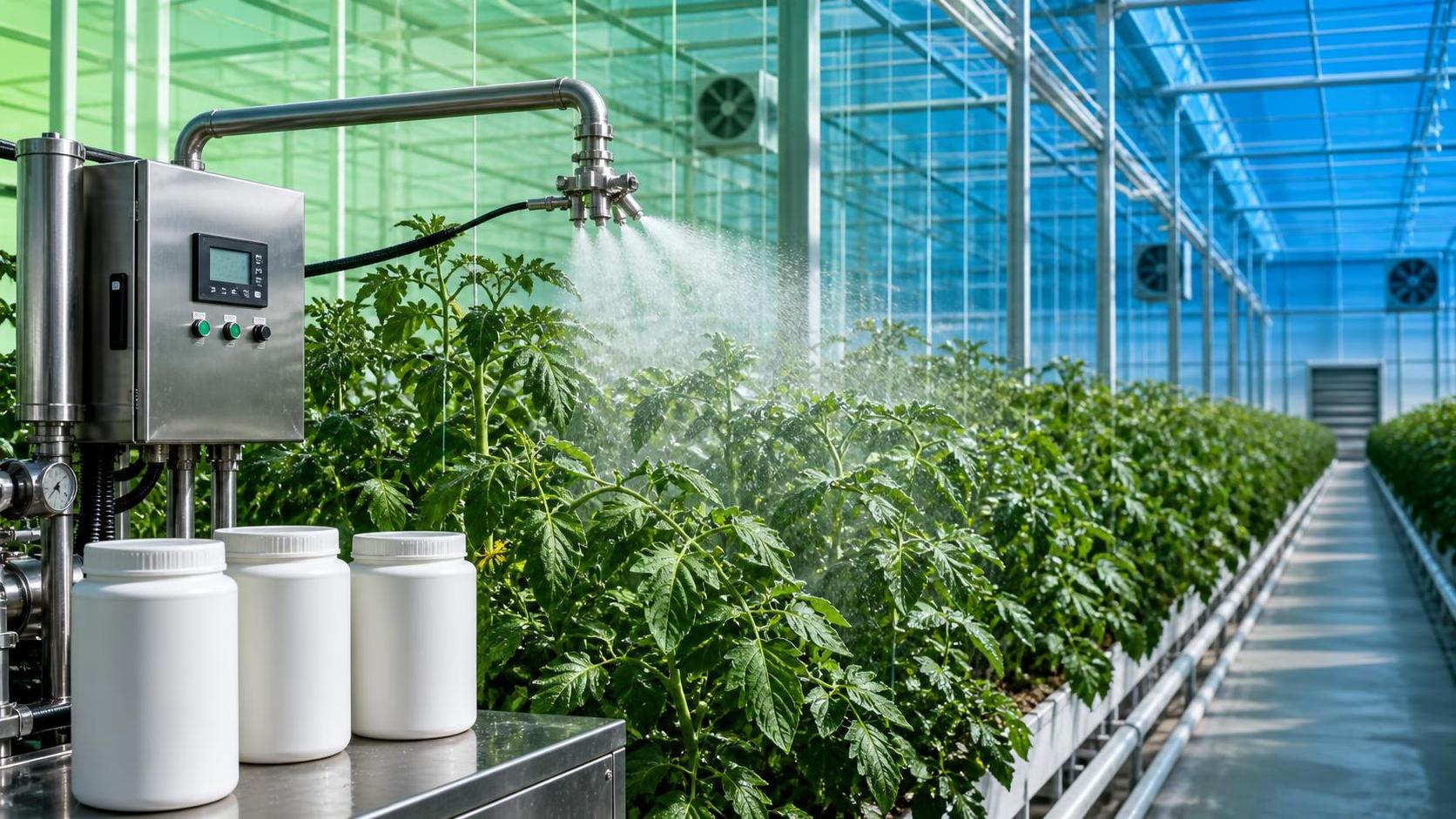
Preventing Fungicide Resistance in Commercial Crop Disease Control
Effective Crop Disease Control is not simply a matter of finding a fungicide that gives a quick visual response. In commercial production, the more difficult task is protecting that response over several seasons. A program can look successful after one spray cycle while quietly selecting for a pathogen population that becomes harder to manage the following year. By the time field performance is clearly disappointing, the issue may no longer be solvable by increasing the dose or changing brands.
For technical teams evaluating crop-protection programs, resistance management should therefore be treated as a design requirement. Product efficacy, formulation quality, registration status, spray timing, coverage, crop stage, weather conditions, and disease pressure all interact. The active ingredient matters, but so does the way it is repeatedly exposed to the target pathogen.
The practical question is not “Which fungicide is strongest?” It is “How can this disease-control program remain reliable when disease pressure rises, spraying windows narrow, and the same crop is grown season after season?”
Why Resistance Develops Faster Than Many Programs Expect
Fungicide resistance is a population-level selection process. Within a disease population, a small number of individuals may naturally be less sensitive to a particular mode of action. Repeated use of the same fungicide group does not create those individuals, but it can allow them to survive while more sensitive individuals are suppressed. Over time, the less-sensitive population can become commercially significant.
This risk is particularly high when a single-site fungicide mode of action is used repeatedly. These products can be highly effective and often have a valuable place in disease programs, but they should not be treated as stand-alone insurance. A sequence of applications with different trade names may still represent repeated exposure to the same biochemical target if the active ingredients belong to the same resistance group.
Field conditions often accelerate the problem. Dense canopies retain humidity. Irrigation can extend leaf wetness. Greenhouse crops may support uninterrupted disease cycles. Perennial crops can carry inoculum between seasons. In these situations, a spray program built around calendar intervals alone may place too much selection pressure on a limited number of fungicide groups.
Another common mistake is confusing poor application performance with resistance, or vice versa. A treatment can fail because the disease was already established, the spray did not reach the infection sites, rainfall reduced deposit retention, water volume was insufficient, or the diagnostic identification was wrong. Resistance should be investigated when performance declines despite correct timing, appropriate application, sound product handling, and a disease target that is listed on the local label.
Build Rotation Around Mode of Action, Not Brand Names
The foundation of resistance prevention is rotation among genuinely different modes of action. Technical evaluators should review the active ingredients and their resistance-group classifications before approving a seasonal program. Brand diversity can be misleading; different brands may contain the same active ingredient, closely related active ingredients, or products with similar cross-resistance concerns.
A workable rotation plan separates fungicide groups across consecutive disease-risk periods. The exact sequence depends on the crop, pathogen, label directions, local resistance guidance, and number of expected applications. What matters is avoiding repeated back-to-back selection from the same group where alternatives are available and registered.
Mixtures can be useful, but they are not automatically resistance-management solutions. A premix is strongest when both components are active against the target pathogen, each is applied at an effective labeled rate, and the two components have different resistance profiles. Adding a weak partner merely to create a “mixture” does little to protect the more vulnerable component. The same caution applies to tank mixes assembled in the field: physical compatibility, crop safety, local label restrictions, spray-water quality, and application sequence all need review.
For practical planning, teams should record four items for every intended spray: the target disease, active ingredient or ingredients, resistance group, and the preceding applications in that production block. This is simple administration, but it catches many avoidable rotation errors before they reach the field.
Use Fungicides Before the Disease Becomes a Rescue Situation
Resistance management is closely tied to timing. Fungicides generally perform better when used preventively or at the earliest practical stage of disease development, according to their labeled use pattern. Once a disease is widespread within a canopy, growers may be tempted to shorten intervals, repeat a familiar active ingredient, or use the highest permitted rate repeatedly. Those decisions can raise selection pressure while still delivering disappointing control.
A disciplined program starts with monitoring. This does not require complicated technology in every operation. Regular field walks, inspection of lower and interior canopy leaves, attention to irrigation patterns, and a record of weather conditions can reveal where infection pressure is building. In protected cultivation, checking ventilation performance and condensation patterns is often as important as selecting the next spray.
The goal is to make a well-timed application when coverage is achievable and disease pressure is still manageable. Curative expectations should remain realistic. Some fungicides have limited post-infection activity, but no product choice compensates for a severely delayed response to a fast-moving epidemic.
Application Quality Is Part of Resistance Management
Poor coverage creates uneven exposure: some pathogen colonies receive too little active ingredient to be controlled, while others may receive an adequate deposit. That inconsistency can make a resistance program look weaker than it is. In tall crops, dense fruiting structures, vines, or heavily layered vegetable canopies, the difference between acceptable and poor penetration is often visible only after disease has advanced.
Nozzle choice, spray volume, travel speed, air assistance where applicable, and equipment calibration deserve routine attention. Water pH and hardness may also affect certain products or tank-mix behavior, so compatibility guidance should be checked rather than assumed. Operators need enough information to understand why a specified volume and coverage pattern matter; a spray record without operational discipline is only paperwork.
Do not respond to weak results by improvising rates. Under-dosing can increase the chance that partially sensitive strains survive, while exceeding labeled rates can create residue, phytotoxicity, regulatory, and worker-safety problems without solving the underlying issue. Use the registered rate, interval, crop, and disease instructions applicable in the destination market.
Reduce the Pathogen Load Outside the Spray Tank
A fungicide program is under less pressure when the crop environment is less favorable to disease. This is where integrated disease management becomes commercially useful rather than theoretical. Removing heavily infected plant material when practical, improving airflow, avoiding prolonged leaf wetness, managing plant density, using clean propagation material, and controlling volunteer hosts can all reduce the number of infection cycles that a fungicide program must interrupt.
The appropriate measures depend on the crop and disease. A greenhouse operator may focus on humidity control and sanitation between production cycles. An orchard manager may focus on pruning, removal of diseased material, and coverage of difficult canopy zones. Field-crop programs may place more weight on rotation, residue management, variety selection, and the disease history of specific blocks.
Resistance pressure usually rises where a crop faces repeated, high disease pressure but management relies almost entirely on sprays. Cultural measures do not replace fungicides in every commercial system. They reduce the frequency with which fungicides must carry the entire disease-control burden.
Evaluate Product Supply as Carefully as the Spray Program
For international procurement teams, supply reliability has direct agronomic consequences. A technically sound rotation can collapse when one planned product is unavailable at the required time, arrives with incomplete documentation, or cannot be cleared for use in the destination market. Emergency substitution frequently leads to repeated use of whatever resistance group happens to be in stock.
Supplier evaluation should cover more than price and nominal active-ingredient content. Review batch traceability, specification consistency, packaging suitability, safety documentation, transport classification, storage expectations, and responsiveness when technical questions arise. Regulatory status must be verified for the country and intended agricultural use; a chemical being available internationally does not mean it is registered as a crop-protection product in every market.
This distinction matters across a diversified chemical supply chain. For example, 2,5-Dimethoxybenzaldehyde CAS#93-02-7 is a chemical intermediate used in organic synthesis, not a fungicide recommendation or a substitute for a registered crop-protection active ingredient. Its handling profile—including storage in a sealed, dry, dark location and its irritant classification—illustrates why product identity, intended use, documentation, and safe segregation must remain clear in chemical operations.
As global trade becomes more demanding, exporters and buyers both need stronger controls around documentation, continuity, and communication. Huafeng Chemical, based in Shandong Province, operates in this environment through comprehensive foreign-trade support and a broad chemical portfolio. For technical procurement, the relevant lesson is straightforward: confirm that each material is suitable for its intended, legally permitted application, and avoid letting a general chemical catalog become a shortcut around crop-protection registration or stewardship requirements.
When Susceptibility Appears to Be Declining
A suspected resistance issue should trigger a structured review rather than an immediate decision to spray more. Confirm the disease diagnosis first. Review the fungicide-use history for that field or greenhouse compartment, including applications made by contractors or during earlier crop phases. Check whether weather, coverage, interval length, and disease stage could explain the result. It is also worth reviewing batch records and storage history, particularly if product performance is inconsistent across locations.
If the concern remains credible, local crop advisers, diagnostic laboratories, registrants, or relevant agricultural extension resources may help determine whether resistance is known in that pathogen and region. The response commonly involves switching to an effective, unrelated mode of action where approved, strengthening non-chemical controls, and avoiding further unnecessary exposure to the suspected group. Decisions should follow local labels and resistance-management guidance rather than generic online recommendations.
A Program That Can Still Work Next Season
Commercial Crop Disease Control becomes more resilient when fungicides are treated as a managed resource. Rotate true modes of action, use mixtures intelligently, apply at the right disease stage, maintain coverage, lower disease pressure through crop management, and keep supply and regulatory checks aligned with the seasonal plan.
The most useful review point is often after the season, not during an outbreak. Compare disease observations with spray records, identify where the same resistance group was used too often, note supply gaps that forced substitutions, and revise the next program before planting or crop establishment. That kind of review is less dramatic than a rescue spray, but it is usually where long-term fungicide efficacy is protected.
Send Us Your Inquiry Today
