









Product Quick Navigation
Get a Quote
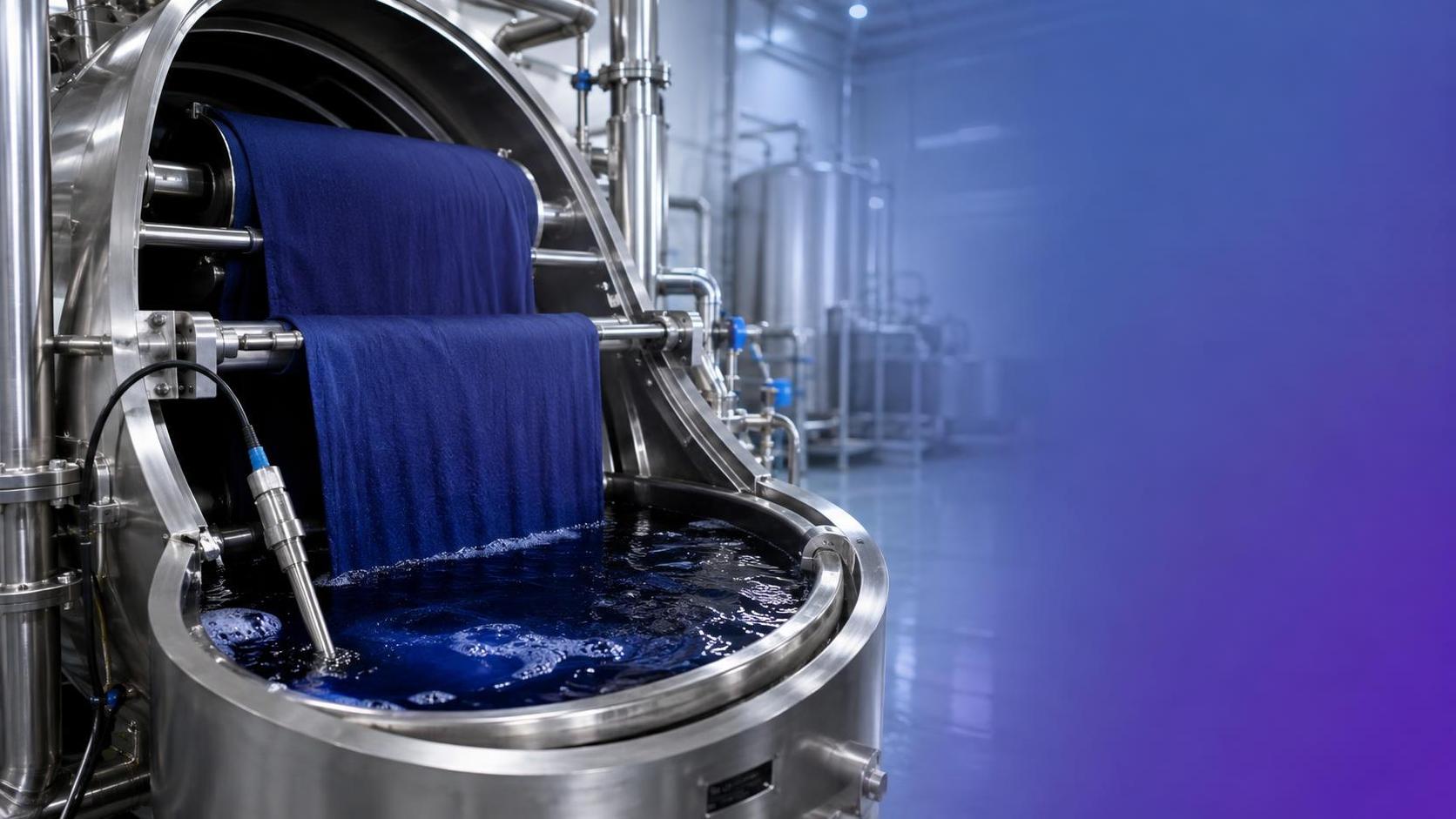
Hydrolysis Is a Process-Control Problem Before It Becomes a Shade Problem
In cotton dyeing, reactive dyes offer a major advantage: under suitable conditions, part of the dye molecule forms a covalent bond with cellulose. That bond is the basis for good wash fastness and bright, reproducible shades. The limitation is that the same reactive group can also react with water. Once hydrolyzed, the dye may still color the fabric, but it can no longer form the intended covalent bond with cotton.
For quality managers, this matters because hydrolysis is not simply a source of lower color yield. It changes the balance between dye applied, dye fixed, and dye removed during washing-off. The result can be variable depth, poor batch-to-batch reproducibility, longer wash-off cycles, elevated color in wastewater, and greater risk that residual unfixed color will bleed during downstream processing or garment use.
The practical objective is therefore not to eliminate hydrolysis entirely. That is unrealistic in an aqueous dyeing system. The objective is to minimize the time that reactive dye spends in conditions where hydrolysis is faster than fixation, while ensuring that the cotton surface is adequately prepared and the fixation stage is sufficiently complete.
Why Reactive Dye Hydrolysis Increases So Quickly
Reactive dyes are designed to react with the hydroxyl groups in cellulose under alkaline conditions. During fixation, alkali promotes conversion of cellulose into a more reactive form, allowing the dye and fiber to form a stable bond. Water also contains hydroxyl functionality and is present in overwhelming excess. Under the same alkaline conditions, hydrolysis competes directly with fiber fixation.
The risk rises when dye, alkali, temperature, time, and liquor conditions are poorly synchronized. A dye that is stable during initial circulation may hydrolyze rapidly after alkali is added, especially when the bath is already hot or the dye remains unevenly distributed. The fabric may then show acceptable initial color depth but poor fixation efficiency. Extra dye is often added in later batches to compensate for weak yield, yet this can increase wash-off demand without solving the original control failure.
Hydrolysis also depends on the chemistry of the selected dye class. Different reactive groups have different reactivity profiles and operating windows. A more reactive dye can fix efficiently at lower temperatures, but it may also require tighter control of alkali addition and dwell time. A dye designed for higher-temperature fixation may offer more time for leveling before fixation begins, but it still requires the correct temperature profile to achieve acceptable bonding.
For this reason, a recipe cannot be assessed only by shade, dye concentration, and final temperature. The sequence of additions and the time spent at each stage are equally important.
Control the Dyeing Sequence, Not Only the Final Conditions
A common mistake is to treat salt, alkali, temperature, and time as separate recipe values. In reality, their order determines whether dye reaches the fiber before the fixation reaction accelerates.
In exhaust dyeing, salt is generally used to promote dye exhaustion onto cotton before full fixation conditions are established. If alkali is introduced too early, a significant portion of dye may hydrolyze in the bulk liquor before it has migrated and leveled on the fabric. This can produce low fixation, uneven shade, and a higher concentration of loose color that must later be washed away.
A more controlled sequence usually follows this logic:
- Dissolve and filter the dye thoroughly before dosing, so undissolved particles do not create localized dark spots or unstable concentration zones.
- Allow sufficient dye circulation and leveling before the bath reaches full fixation conditions.
- Add salt according to the substrate, liquor ratio, shade depth, and dye system, avoiding abrupt changes that can drive rapid, uneven exhaustion.
- Add alkali in portions where the process allows, rather than creating an immediate high-pH environment throughout the bath.
- Hold the material for the validated fixation time, then move promptly to rinsing and washing-off rather than leaving the fabric in an alkaline dye bath unnecessarily.
Staged alkali addition is especially relevant for deep shades and for dye systems with high reactivity. It reduces the chance that a large amount of dye will encounter strong alkalinity before it has distributed uniformly through the substrate. The correct number of additions depends on equipment circulation, fabric form, liquor ratio, dye compatibility, and the validated process route. It should not be copied from another machine or another dye range without checking the actual bath response.
The temperature profile deserves the same attention. Raising temperature before adequate leveling can speed hydrolysis and fixation at the wrong moment. Conversely, operating below the dye system's intended fixation range may leave reactive groups insufficiently bonded, even when the fabric appears to have reached the target shade. Both situations can produce poor wash fastness for different reasons.
pH Measurement Must Reflect the Actual Dye Bath
pH is often recorded as a compliance checkpoint, but it is more useful when treated as a process variable that explains dye behavior. A correct alkali charge on paper does not guarantee a uniform pH in the machine. Delayed dissolution, poor dosing distribution, inconsistent water quality, and inadequate circulation can create temporary local high-pH zones. In those zones, dye may hydrolyze or fix too quickly before leveling is complete.
For quality control, the relevant questions are practical:
- Is the alkali fully dissolved before addition?
- Does the dosing point allow rapid dispersion throughout the liquor?
- Is the recorded pH measured at a consistent stage and temperature?
- Does the machine maintain circulation during and after alkali addition?
- Does the pH drift during the fixation hold?
pH measurement also needs a disciplined method. Samples taken from a poorly mixed point, measured while very hot, or tested with an inadequately maintained electrode can create false confidence. A control plan should define where samples are taken, when they are taken, how they are cooled or handled, and what action is required when readings fall outside the validated range.
Water quality can complicate this further. Hardness, alkalinity, dissolved salts, and contaminants can affect dye dissolution, electrolyte response, and pH control. The effect may be subtle in pale shades but more visible in deep navy, black, red, and turquoise recipes, where small fixation losses create larger wash-off and shade-reproducibility problems. Water used for dye dissolution and chemical make-up should receive the same attention as process water used to fill the machine.
Prepare the Cotton So Fixation Can Occur Uniformly
Hydrolysis cannot be controlled only from the dye bath side. Cotton that is insufficiently scoured, unevenly bleached, contaminated with oils, or carrying variable absorbency creates uneven dye access. Operators may respond by extending time, raising temperature, or increasing alkali. Those adjustments can increase hydrolysis without correcting the underlying substrate issue.
A fabric may still look acceptable immediately after dyeing because unfixed or loosely held dye contributes to apparent depth. Problems become clearer after washing-off, soaping, drying, or subsequent wet processing. The shade may fall away more than expected, the tone may shift, or the fabric may show side-to-side and end-to-end variation.
Before changing a dye recipe, confirm that pretreated cotton is consistent in absorbency, residual impurities, and moisture condition. For continuous operations, variation in padding expression, wet pick-up, fabric speed, and drying profile can alter the quantity of dye and alkali actually carried into fixation. For batch operations, package density, rope circulation, loading level, and liquor flow can affect dye penetration and migration.
Reactive dyeing is particularly sensitive to uneven process conditions because correction after fixation is limited. Once a portion of the dye has bonded to the fiber or hydrolyzed in the bath, subsequent adjustments cannot fully restore the original leveling opportunity.
Wash-Off Is Part of Fixation Quality, Not a Separate Cleanup Step
Even a well-controlled reactive dyeing process leaves some hydrolyzed and unfixed dye on the fiber. Washing-off removes this loose color, along with salt, alkali, and dye residues that could later impair fastness. Cutting wash-off time to improve throughput can conceal fixation problems until the fabric reaches garment washing, printing, finishing, or end-use testing.
An effective wash-off sequence usually progresses from removal of salts and alkali to washing at conditions suitable for dispersing and removing hydrolyzed dye. The exact route depends on dye class, shade depth, equipment, and fabric construction. What matters is that the process is validated against the expected downstream risk rather than judged only by visual appearance at the machine exit.
For quality control, residual unfixed color can be monitored through practical indicators such as wash liquor clarity, staining tendency, shade loss after a defined wash-off route, and comparison of color strength before and after soaping. These checks are especially useful when a plant changes dye supplier, water source, fabric source, machine loading, or recipe scale.
High wash-off demand is often a symptom rather than an isolated utility issue. If the process repeatedly requires extra rinses or extended soaping to meet fastness targets, review the exhaustion and fixation stages first. The source may be excessive hydrolysis, incomplete fixation, over-dosing of dye, or a substrate-preparation inconsistency.
Do Not Assume More Alkali or More Dye Will Correct Low Fixation
When a batch appears pale after washing-off, increasing dye concentration is an understandable response. It may restore apparent depth, but it can also raise the amount of hydrolyzed dye and increase the load on the wash-off process. The same applies to increasing alkali without understanding why fixation was low. Higher alkalinity may accelerate the desired cellulose reaction, but it also accelerates competing hydrolysis and can worsen levelness.
The better response is to identify where color yield was lost. A useful investigation separates four possibilities: inadequate dye exhaustion onto the cotton, poor leveling before fixation, incomplete covalent fixation, and excessive color removal during washing-off. These mechanisms can produce similar visual outcomes but require different corrective actions.
- If exhaustion is low, review salt profile, liquor ratio, dye solubility, fabric absorbency, and circulation.
- If levelness is poor, review dosing sequence, temperature rise, package or fabric flow, and alkali dispersion.
- If fixation is low despite good exhaustion, review pH, fixation temperature, hold time, and dye-system suitability.
- If the shade drops sharply during washing-off, assess both fixation conditions and whether the wash-off route is revealing excessive hydrolyzed dye.
This distinction prevents trial-and-error corrections that may make the next batch harder to control.
Build a Control Plan Around Process Drift
For safety and quality teams, the most useful control plan focuses on changes that shift the hydrolysis-to-fixation balance. These include a new dye lot, a different cotton source, variation in water treatment performance, altered machine loading, chemical substitution, maintenance work affecting dosing pumps, and changes in heating or circulation behavior.
Reactive dyes from different lots or suppliers should be evaluated through a controlled laboratory or pilot procedure before they are used in critical production shades. The review should consider shade strength, tone, solubility, compatibility within a combination recipe, fixation behavior, wash-off response, and fastness after the plant's normal process route. A color match before washing-off is not sufficient evidence of equivalent performance.
Safety controls also belong in this discussion. Alkali preparation and dosing involve corrosive materials, while dye powders can create dust exposure during handling. Closed transfer where practical, local extraction, appropriate personal protective equipment, clear dilution procedures, and controlled chemical labeling reduce handling risk. Process discipline helps both safety and color quality: properly dissolved, correctly identified chemicals are less likely to create concentrated additions or recipe errors that trigger hydrolysis and uneven fixation.
Lower hydrolysis is ultimately achieved through coordination. Dye chemistry, cotton preparation, salt addition, alkali profile, temperature, circulation, and wash-off must support the same objective: getting the dye onto the fiber and fixing it before water consumes too much of its reactive capacity. When that sequence is stable, color yield becomes easier to predict, wash-off becomes more efficient, and quality issues are less likely to emerge after the batch has already left the dyehouse.
Send Us Your Inquiry Today
