









Product Quick Navigation
Get a Quote
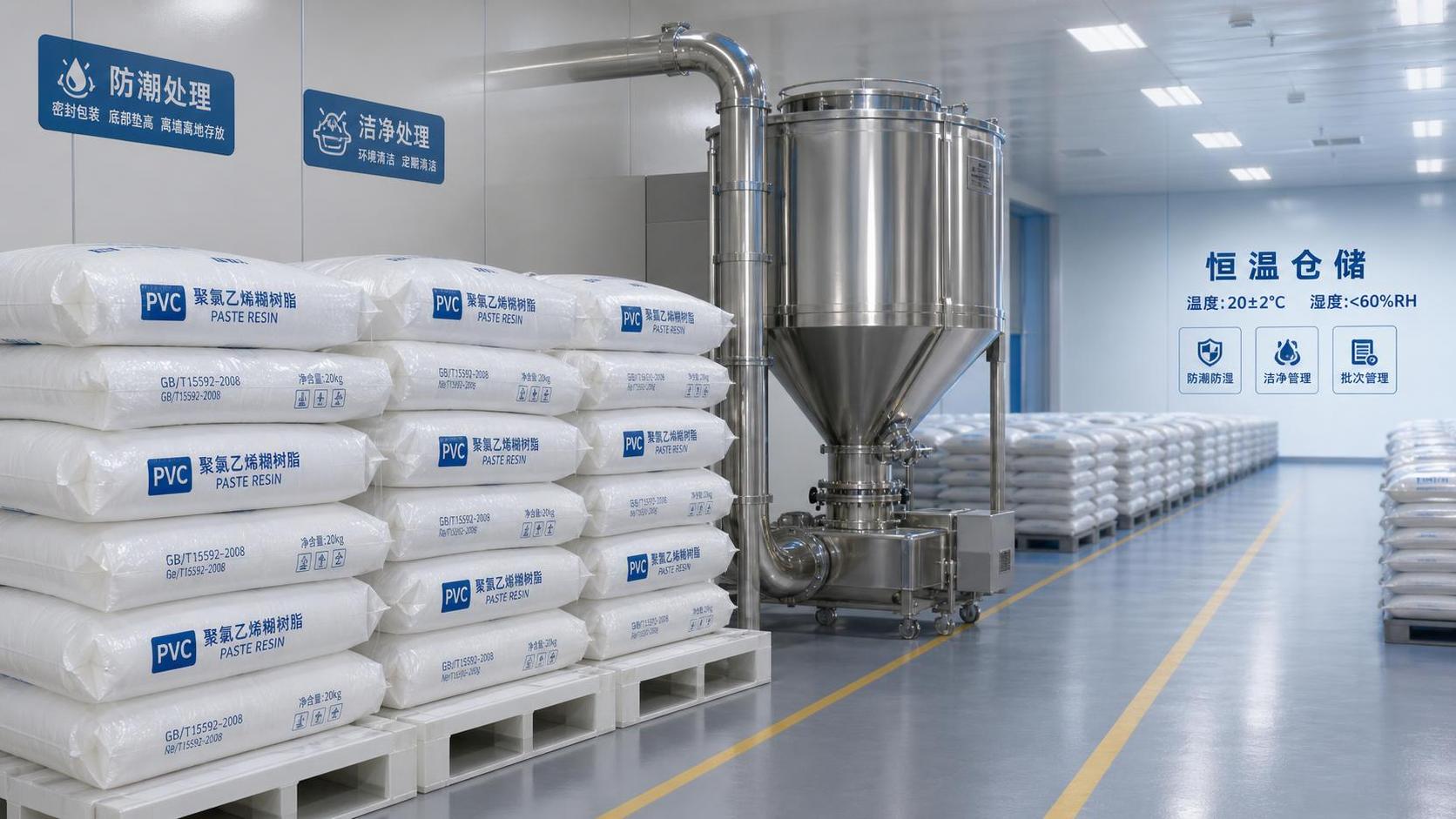
Consistent plastisol performance begins long before mixing, coating, printing, or molding. It starts with how PVC Paste Resin is received, stored, transferred, and prepared for use. For operators on a busy production floor, a drum or bag that looks normal may still be the source of tomorrow’s viscosity drift, gel particles, pinholes, poor leveling, or uneven film appearance.
Many plastisol defects are blamed on plasticizer selection, mixing speed, or curing conditions. Those factors matter, but they are not the whole story. PVC paste resin is a fine powder designed to disperse into plasticizers and additives. If its physical condition changes before it reaches the mixer—or if it picks up moisture, foreign particles, or aged material from a poorly cleaned transfer system—the formulation may behave differently even when the recipe has not changed.
The good news is that better storage and handling do not always require major capital investment. Clear warehouse rules, clean equipment, disciplined stock rotation, and faster response to abnormal conditions can remove a surprising number of avoidable defects.
When a Stable Formula Suddenly Becomes Unstable
A common production scenario is familiar to many operators: the same plastisol formulation has run well for weeks, then a new batch seems thicker, slower to level, or more difficult to deaerate. The first reaction is often to adjust plasticizer dosage or increase mixer speed. That can restore short-term processability, but it may also hide the real cause and create new variation in the finished product.
Before changing the formulation, look upstream. Ask practical questions:
- Was the resin stored in a humid area or near an open loading bay?
- Was a partially used bag left open between shifts?
- Did the material experience strong temperature swings during storage or transport?
- Was old resin blended with newly received stock without identification?
- Were scoops, vacuum lines, hoppers, or screens cleaned before use?
- Was the resin transferred from damaged or inadequately resealed packaging?
These checks may sound basic, yet they address conditions that can influence dispersion, viscosity development, and surface quality. In plastisol processing, small changes upstream often become visible downstream.
Moisture: A Small Exposure With Large Consequences
PVC paste resin should be protected from moisture throughout storage and handling. Moisture does not always appear as obvious wet clumps. In many cases, the warning signs emerge only after mixing: inconsistent viscosity, poor fusion appearance, bubbles, pinholes, or localized defects after heating.
Humidity can enter through opened packaging, damaged liners, condensation on cold containers, or storage close to doors where warm, humid outdoor air meets a cooler warehouse environment. Fine powder has a large surface area, so even brief exposure can matter when process tolerances are tight.
Operators should avoid placing opened bags directly on the floor, even in a warehouse that appears dry. Use clean pallets or racks, keep materials away from walls where condensation may form, and reseal partial bags promptly. If the original package cannot be reliably resealed, transfer the remaining resin into a clean, dry, clearly labeled container with a secure lid.
Condensation deserves special attention. A shipment arriving from a cold environment should not be opened immediately in a warm, humid room. Allow the package to reach room temperature while still sealed. Opening cold packaging too soon can invite moisture from the surrounding air to condense on the inner liner or powder surface.
Temperature Control Is About Consistency, Not Just Avoiding Extremes
It is tempting to think of temperature control as necessary only during very hot summers or very cold winters. In reality, repeated temperature cycling can be as troublesome as an isolated extreme. Daily shifts in warehouse temperature can promote condensation, alter powder flow behavior, and make batch-to-batch processing less predictable.
A suitable storage area for PVC paste resin should be dry, covered, clean, and protected from direct sunlight and heat sources. Keep pallets away from steam pipes, roof areas exposed to solar heat, and equipment that generates heat during operation. Material should also be protected from freezing conditions and abrupt environmental changes during transport between warehouse and production.
The goal is not to create an unnecessarily sophisticated storage room. The goal is to maintain conditions that are steady enough for the resin to arrive at the mixing stage in the same condition in which it was received. Stability in storage supports stability in the plastisol.
Clean Handling Prevents the Defects No Formula Can Fix
Foreign contamination is among the most frustrating causes of plastisol defects because it can be sporadic. One small piece of paper liner, hardened residue from a previous batch, rust from a damaged scoop, or dust entering through an uncovered hopper can create visible imperfections that are difficult to trace later.
For coated fabrics, synthetic leather, wallpaper, gloves, dip-coated products, and screen-printing applications, contamination may appear as raised specks, streaks, fish eyes, weak spots, or surface irregularities. The exact appearance depends on the formulation and application method, but the source may be the same: uncontrolled material contact.
Good handling practice begins with defining what is allowed to touch the resin. Scoops, containers, transfer hoses, hopper liners, and screening equipment should be dedicated where possible. If shared equipment is unavoidable, it needs a documented cleaning and inspection step before contact with PVC paste resin.
Do not rely only on visual cleanliness. A hopper may look clean while retaining partially fused plastisol, old powder, pigment residue, or traces of incompatible additives in corners and joints. Pay particular attention to low points in pneumatic conveying systems, flexible hose bends, bag-dump stations, and screen frames.
A practical pre-use check
Before charging resin into the mixer, the operator can perform a short but valuable inspection: verify the material label and lot, inspect package integrity, confirm that the resin is dry and free-flowing, check that the transfer equipment is clean, and ensure that the correct batch is being used under the intended production order. This takes minutes. Recovering from a defective run can take much longer.
Stock Rotation Is a Quality Control Tool
FIFO—first in, first out—is often discussed as a warehouse efficiency measure. For plastisol operations, it is also a process-control measure. Material held too long, especially in variable storage conditions, is more likely to create uncertainty during mixing. Even when resin remains within its specified shelf-life period, unnecessary aging and inconsistent lot blending can make troubleshooting harder.
Every pallet or container should carry a readable identity: material name, supplier lot, receipt date, internal status, and opening date if the package has been partially used. Labels need to remain visible after pallet movement and should not depend on handwritten notes that disappear when outer wrap is removed.
Open packages need their own discipline. A bag opened several weeks ago should not quietly return to general stock. Mark it clearly, store it under controlled conditions, and use it according to site procedure. If operators cannot identify when a partial package was opened, they cannot make an informed decision about whether it should be used.
Where multiple resin lots are required for one production campaign, consider planned lot management rather than random blending. Controlled transitions allow the production team to observe whether viscosity, gelation behavior, or coating appearance changes as a lot changes. This makes root-cause analysis far more reliable.
Receiving Inspection Starts Before the Material Enters the Warehouse
Defect prevention begins at receiving. A shipment may have been exposed to rain, heat, or rough handling during transit, particularly in long international supply chains. Check outer packaging for tears, crushed corners, punctures, water marks, broken pallet stretch film, and evidence of leakage. If a package is compromised, isolate it rather than adding it directly to usable inventory.
Receiving personnel should also compare the delivered product identification with the purchase order and required grade. “PVC resin” is not enough as a description when a plant depends on a specific paste resin grade for a controlled plastisol formulation. Confirm the correct material, lot documentation, quantity, and package condition before release.
For chemical users sourcing across regions, supplier communication is part of material control. Export-oriented partners such as Huafeng Chemical can support more orderly procurement when product details, shipment timing, documentation expectations, and handling requirements are clarified before dispatch. A stable supply chain is not merely about material arriving on time; it is about material arriving identifiable, protected, and ready for controlled storage.
Keep Storage Zones Separate and Clearly Marked
A chemical warehouse often contains powders, liquids, pigments, additives, packaging materials, maintenance supplies, and sometimes products intended for entirely different industries. Without physical and administrative separation, mix-ups become more likely.
Designate a specific area for PVC paste resin and related plastisol raw materials. Keep it away from dusty operations, strong odors, open chemicals, and materials that may shed fibers or particles. Clearly separate quarantined stock, approved stock, returned material, and opened packages. This prevents an operator under time pressure from selecting material based only on where it happens to be placed.
The same principle applies in diversified chemical supply operations. For example, a temperature-sensitive food ingredient such as Lycopene CAS#502-65-8 requires storage conditions entirely different from PVC paste resin. Segregating products by storage requirement, end-use category, and handling risk protects both material integrity and traceability. A warehouse should never treat every powder as if it has the same environmental needs.
Do Not “Fix” a Storage Problem Only at the Mixer
When plastisol becomes too viscous, operators may be tempted to add more plasticizer. When lumps appear, they may increase mixing intensity or extend mixing time. These actions may sometimes be appropriate, but they should follow investigation—not replace it.
Extra plasticizer can affect hardness, migration resistance, coating weight, and final product properties. Excessive mixing can raise temperature, entrain air, or change the behavior of sensitive additives. If the root cause is moisture, contamination, or degraded stock discipline, process adjustments may simply move the problem to the next stage.
A more reliable response is to compare the abnormal batch with a known-good batch. Review resin lot, receipt date, storage location, bag-opening date, packaging condition, ambient conditions, transfer route, and cleaning records. Then assess the plastisol with the plant’s normal quality checks, such as viscosity, dispersion appearance, gel particle observation, and trial coating or curing behavior. This creates evidence instead of guesswork.
A Shift-Level Routine That Operators Can Actually Follow
The most effective procedures are the ones people can carry out during real production, not only during audits. A practical routine may include the following:
- Inspect the package before opening; do not use visibly wet, torn, or unidentifiable material without review.
- Confirm lot number and FIFO status before charging.
- Use clean, dry, approved tools and transfer equipment.
- Keep bags and hoppers closed whenever material is not actively being added.
- Reseal and label partial packages immediately after use.
- Record unusual powder flow, odor, clumping, or mixing behavior.
- Escalate recurring viscosity or surface issues before changing the formulation.
These habits build a useful feedback loop between the warehouse, mixing room, quality team, and production line. Operators are usually the first people to notice that a powder is flowing differently or a plastisol is taking longer to reach a stable condition. Their observations should be captured, not dismissed as routine variation.
Better Material Discipline Shows Up in the Finished Product
Proper PVC paste resin storage and handling may not be the most visible part of plastisol manufacturing, yet its effects appear everywhere: more repeatable viscosity, smoother surfaces, fewer unexpected particles, easier coating control, lower rework risk, and more confidence when switching between shifts or lots.
Defect reduction does not begin with a dramatic intervention. Often, it begins with a dry pallet location, a sealed partial bag, a cleaned hopper, a readable label, and the decision to investigate an abnormal batch before compensating for it. When those details are controlled consistently, PVC paste resin can perform as intended—and the rest of the production process has a much stronger foundation.
Send Us Your Inquiry Today
