









Product Quick Navigation
Get a Quote
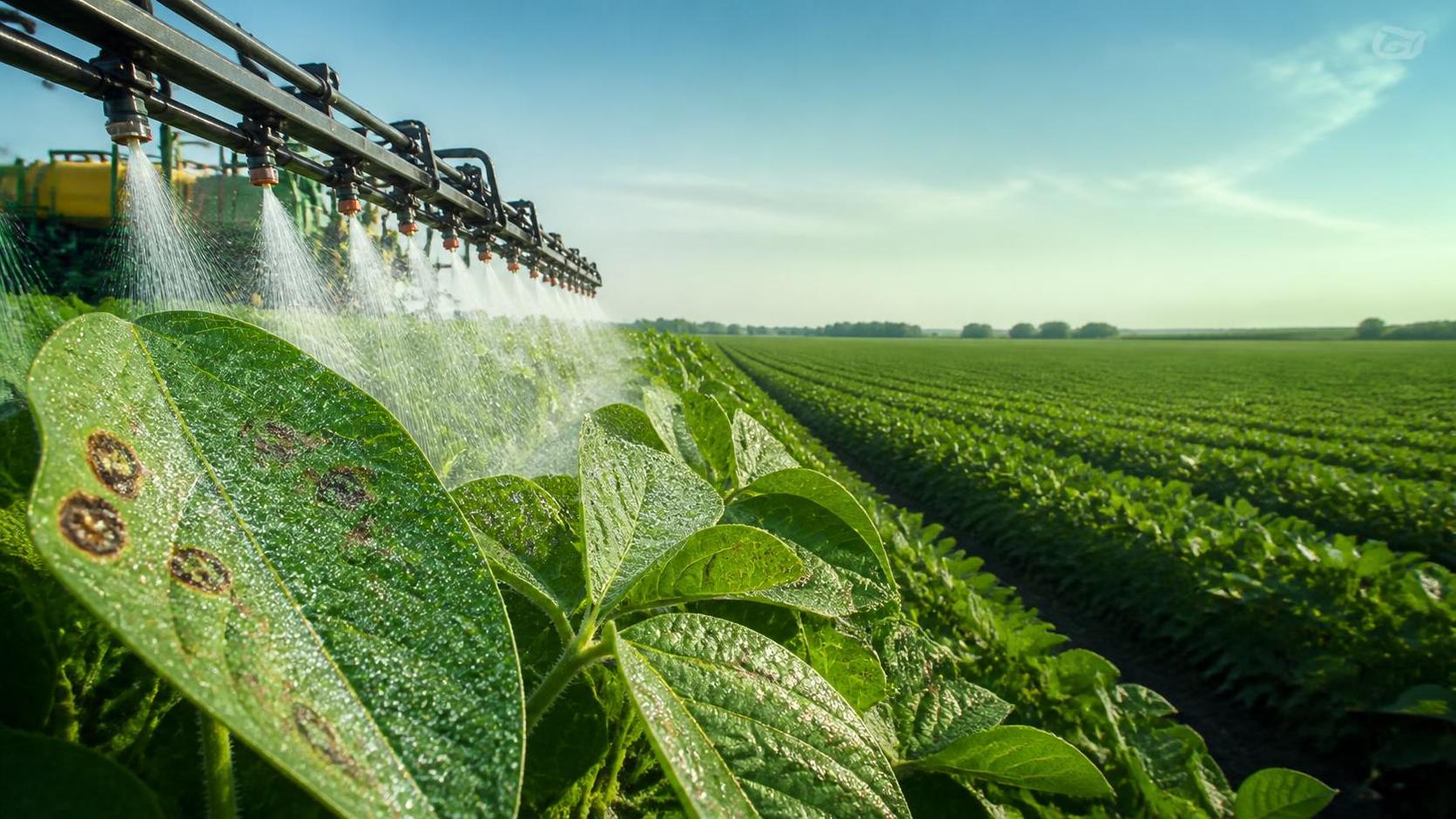
A fungicide spray can feel like a decisive intervention: the field has been treated, the work is done, and the expectation is that disease development will stop. When lesions continue to spread a few days later, however, growers face a difficult question: how to deal with crop disease control failure after fungicide application?
The instinct to spray again immediately—or to increase the dose—is understandable, but it can make the situation worse. A failed treatment may result from an incorrect diagnosis, late application, poor coverage, resistance, unfavorable weather, unsuitable water quality, or a problem with the product itself. The right response is a disciplined investigation followed by a targeted correction, not a blind repeat application.
For farms, distributors, and crop-protection procurement teams, this matters beyond a single field. Repeated ineffective treatments raise costs, create residue-management concerns, and can accelerate fungicide resistance. The following FAQ explains what to check, what to avoid, and how to build a more dependable disease-control program.
Is it really a fungicide failure?
Before concluding that a fungicide did not work, confirm what happened in the crop. Fungicides generally protect healthy tissue and suppress susceptible fungal or oomycete pathogens. They do not repair tissue already destroyed by disease, reverse physiological damage, or control every organism that causes spots, wilts, rots, and blights.
In many cases, growers judge performance by old lesions. Those lesions may remain visible after a successful application. A more useful measure is whether new lesions appear, whether the disease front is advancing, and whether new leaves, stems, fruit, or heads remain protected. Mark a few affected plants or rows before treatment and inspect fresh growth several days later. This simple comparison often separates active disease from old damage.
Also consider non-fungal causes that can look like infection. Nutrient deficiencies, herbicide injury, heat stress, salt damage, insect feeding, bacterial disease, viruses, and poor drainage may produce symptoms that resemble fungal leaf spots or root diseases. A fungicide cannot solve the wrong problem.
What should be checked immediately after poor disease control?
Start with evidence while details are still available. Collect photos from several parts of the field, note crop growth stage, record the date and time of application, and compare disease severity in treated and untreated areas if possible. Review the spray log rather than relying on memory.
- Identify the crop and disease accurately. Look at lesion shape, color, distribution, presence of spores, root condition, and where symptoms began. When the stakes are high, submit samples to a qualified agronomist, plant clinic, or laboratory.
- Check product fit. Was the active ingredient registered and recommended for that crop-disease combination in the target market? “Broad-spectrum” does not mean effective against every disease.
- Review application timing. Was the product applied preventively, at first symptoms, or only after the epidemic was well established? Curative activity is often limited and time-sensitive.
- Inspect the spray operation. Confirm rate, water volume, nozzle selection, pressure, travel speed, boom height, agitation, and calibration records.
- Examine weather conditions. Rain shortly after spraying, strong wind, extreme heat, low humidity, or prolonged leaf wetness can all affect performance.
- Audit tank-mix practice. Incompatible pesticides, fertilizers, adjuvants, or incorrect mixing order can reduce efficacy or cause crop injury.
Do not discard empty containers, labels, batch information, invoices, or unopened material from the same lot. If product quality is under question, these records are important for traceability and supplier review.
Could the disease diagnosis be wrong?
Yes—and this is one of the most common reasons for apparent fungicide failure. For example, a bacterial leaf spot may continue spreading after a conventional fungicide application. Viral symptoms may become more visible as plants grow. Root rot caused by poor soil oxygen can be mistaken for a soilborne pathogen problem, while a true pathogen may be only part of the stress complex.
Diagnosis should include the field pattern, not just a single leaf. Is damage concentrated in low-lying, wet areas? Is it moving in the direction of prevailing winds? Does it begin at field edges, near irrigation lines, or in compacted zones? Are symptoms limited to older leaves or appearing in new growth? These clues reveal whether the field is dealing with an infectious disease, an environmental issue, or both.
When laboratory confirmation is available, it is especially valuable for diseases with similar visual symptoms and for high-value crops. A precise diagnosis prevents growers from spending another application on the same ineffective mode of action.
Why timing often matters more than a higher dose
Many foliar fungicides perform best before infection or at the earliest stage of disease establishment. Once a pathogen has colonized leaf tissue, fruit, stems, or roots, it may be difficult to stop. Dense canopies and humid conditions can allow disease to advance faster than a spray program can catch up.
This is why a late rescue spray may appear ineffective even when the product was genuine, correctly mixed, and applied at the labeled rate. The application may have protected some new tissue while existing infections kept expressing symptoms.
Base future applications on disease forecasting, crop growth stage, local weather, irrigation practice, and field history. In crops with predictable disease windows, preventive protection is usually more reliable than emergency treatment. For diseases driven by long periods of leaf wetness, inspect fields closely after rainfall, overhead irrigation, fog, or extended dew events.
Never exceed the label rate or shorten the prescribed pre-harvest interval in an attempt to “catch up.” Higher dosage does not automatically improve control. It can increase phytotoxicity risk, leave unacceptable residues, raise input costs, and place unnecessary selection pressure on pathogen populations.
How do application errors reduce fungicide performance?
A suitable fungicide can still underperform if insufficient active ingredient reaches the infection site. Coverage is especially important for contact and protectant products, but systemic products also require sound application practice. A few common operational gaps deserve attention.
Inadequate canopy penetration
In a thick crop canopy, droplets may remain on upper leaves while disease develops below. Water volume, nozzle type, droplet spectrum, air assistance, and sprayer setup should be matched to crop architecture. Applications made when foliage is dry and conditions are relatively calm generally provide more consistent deposition.
Incorrect calibration
Worn nozzles, blocked filters, uneven pressure, inaccurate ground speed, and poor agitation can change the delivered rate across a field. Calibration should not be treated as a once-a-season task. Verify output whenever equipment, nozzles, travel speed, or target crop changes.
Rainfastness and wash-off
Rain soon after application can reduce deposits before the fungicide has dried or been absorbed. Check the product label for rainfastness guidance. If rainfall occurred shortly after spraying, do not assume a reapplication is necessary; assess the label instructions, weather record, disease risk, and crop stage with a local crop adviser.
Water quality and tank chemistry
Hard water, alkaline water, sediment, and unsuitable pH can affect the stability or mixing behavior of certain formulations. Follow label directions for water conditioning and mixing order. Conduct a jar test before combining unfamiliar products, especially where fertilizers, micronutrients, insecticides, and adjuvants are involved.
Is fungicide resistance the likely cause?
Resistance is a serious possibility when a disease has been exposed repeatedly to the same fungicide group, particularly where disease pressure is high and applications rely on a single-site mode of action. Pathogen populations can gradually become less sensitive, turning a previously dependable treatment into an inconsistent one.
Warning signs include repeated poor performance from the same fungicide group despite correct timing and application, while a fungicide with a different mode of action performs better under comparable conditions. Still, resistance should not be assumed without ruling out diagnosis, coverage, and weather-related causes.
A resistance-management program should rotate Fungicide Resistance Action Committee (FRAC) groups rather than merely changing brand names. Two products may have different trade names but share the same active ingredient or mode of action. Where permitted by local labels, use mixtures containing effective, complementary modes of action and avoid repeated back-to-back use of the same group. Multi-site protectant fungicides can also play an important role in resistance programs when they are appropriate for the crop and disease.
Equally important, use fungicides as one part of integrated disease management. Resistant varieties, clean seed or planting material, crop rotation, residue management, balanced nutrition, airflow, drainage improvement, irrigation scheduling, and sanitation reduce the disease pressure that drives repeated spraying.
What if the product itself may be the problem?
Product quality should be investigated carefully, but it should not be the first assumption. Check whether the product was purchased through an accountable supply channel, stored according to label requirements, transported under suitable conditions, and used before its expiry date. Extreme heat, freezing, moisture exposure, damaged packaging, or long storage can affect some formulations.
Inspect the container for an intact seal, readable label, batch or lot number, manufacturing and expiry information, and registration details required in the destination country. Watch for obvious physical abnormalities such as unexplained separation, sediment that will not redisperse after recommended agitation, leakage, or damaged packaging. These observations do not prove a quality defect, but they support a proper investigation.
For importers and distributors, reliable sourcing is part of agronomic risk management. A chemical export partner should be able to provide consistent batch traceability, product documentation, compliant packaging, and responsive communication when technical questions arise. In international trade, regulatory requirements vary by market, so product selection must align with local registration, labeling, transport, and stewardship obligations.
Shandong Huafeng Chemical Co., Ltd. supports overseas customers with a broad chemical export portfolio and foreign-trade coordination designed around supply-chain continuity and compliance needs. For crop-protection procurement, the practical value lies in clear product specifications, documentation review, packaging coordination, and traceable commercial processes—not in substituting supplier claims for field-level diagnosis. Growers should always follow the approved local label and consult qualified advisers for crop-specific use decisions.
Should you spray again right away?
Not automatically. A second application is justified only when the diagnosis is credible, the disease remains active, the crop is within the labeled treatment window, and the selected product is appropriate. The reapplication decision should account for maximum seasonal use limits, re-entry requirements, pre-harvest intervals, resistance-management rules, and residue requirements for the intended market.
If the first application failed because of poor coverage or wash-off, correcting the application method may be more important than changing chemistry. If failure resulted from an incorrect diagnosis, further fungicide use may be unnecessary. If resistance is suspected, select an effective alternative FRAC group in line with local recommendations rather than repeating the same active ingredient.
A useful rule is this: do not repeat an application until you can clearly state what failed, why it failed, and what will be different the next time.
A field-ready response plan
- Pause and document. Record symptoms, field locations, weather, product details, batch number, rate, water volume, and application conditions.
- Assess new disease activity. Separate old lesions from new infections and compare treated versus untreated areas.
- Confirm the cause. Seek agronomic or diagnostic support when symptoms are uncertain or crop value justifies testing.
- Review the application chain. Check label fit, timing, sprayer calibration, coverage, water quality, tank mix, and weather.
- Consider resistance. Review prior fungicide use by active ingredient and FRAC group, not brand name alone.
- Choose a compliant corrective action. Use only locally registered products at label rates and intervals, with attention to residue and harvest requirements.
- Reduce future pressure. Adjust cultural practices and establish a preventive, rotation-based disease-management plan.
Frequently asked questions about crop disease control failure
How long should I wait before judging fungicide performance?
It depends on the crop, pathogen, product type, and disease pressure. Rather than judging by disappearance of existing lesions, inspect whether new symptoms continue appearing on untreated tissue. Follow label guidance and seek local agronomic advice where disease development is rapid.
Can I mix two fungicides to solve a control failure?
Only if the combination is legal, label-supported, physically compatible, and agronomically justified. Mixing products without checking compatibility or active ingredients can cause crop injury, reduced performance, unnecessary residues, or ineffective duplication of the same mode of action.
Does changing brands prevent resistance?
No. Resistance management depends on active ingredients and FRAC groups. Different brands may contain the same mode of action. Always compare the active ingredient information on the label.
Can a fungicide control bacterial disease?
Many conventional fungicides are intended for fungal or oomycete pathogens and may not control bacterial diseases. Product use must follow the approved label for the specific crop and target organism.
The practical lesson
When fungicide application fails to control crop disease, the most valuable next step is not more chemical—it is better information. Accurate diagnosis, timely intervention, good spray coverage, resistance-aware product selection, and traceable supply all influence the final result. A field under disease pressure needs calm, evidence-based decisions. That approach protects the crop today and preserves effective disease-control options for the seasons ahead.
Send Us Your Inquiry Today
