









Product Quick Navigation
Get a Quote
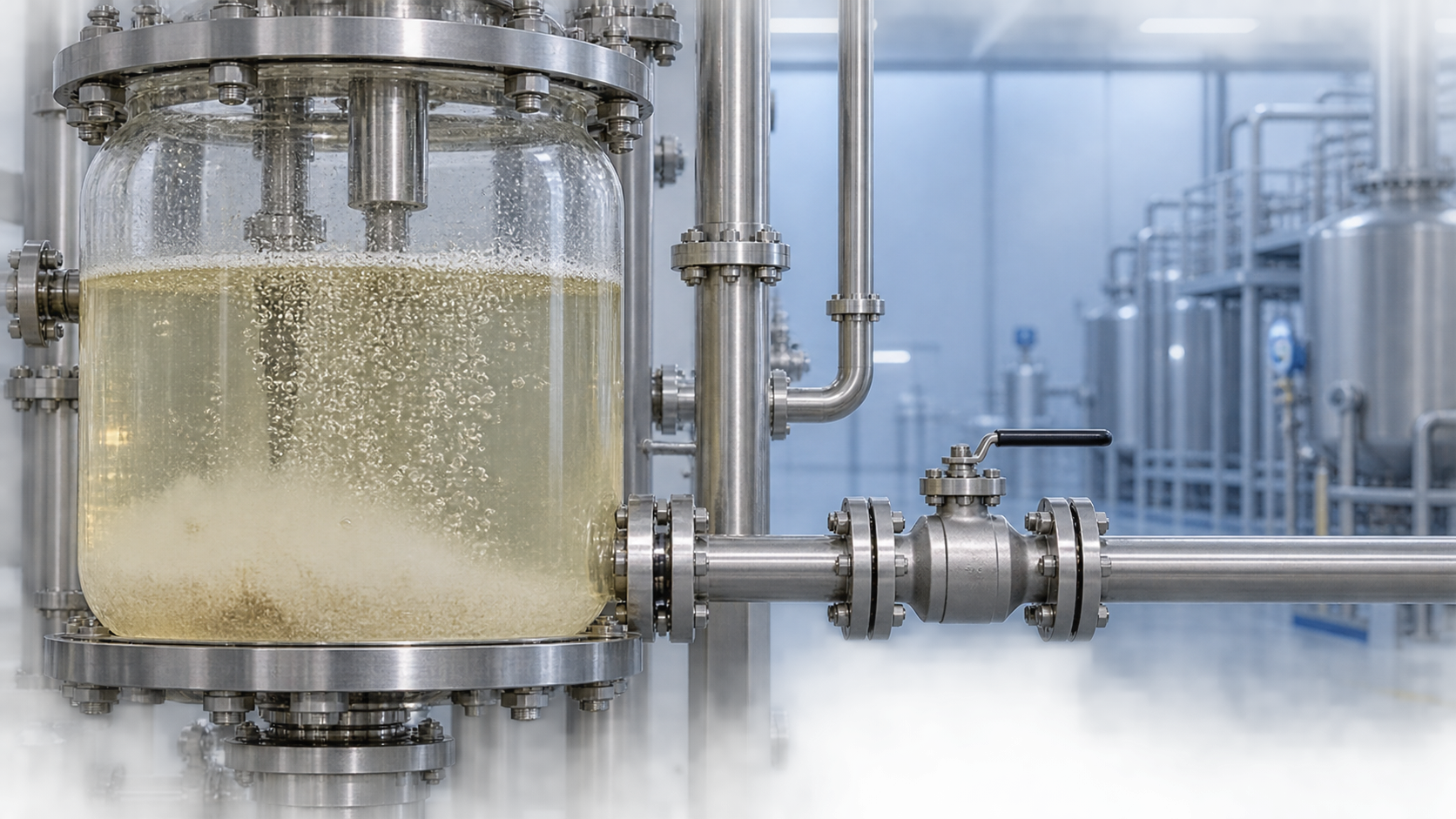
Moisture contamination changes isocyanate reactivity immediately because water is not an inert impurity in an isocyanate system. It consumes available NCO groups, releases carbon dioxide, creates amines that react further to form ureas, and can shift a formulation away from its intended stoichiometry before the material reaches the mixing head, mold, coating line, or application surface.
For an operator, the practical conclusion is straightforward: a moisture event may be small in volume but large in consequence. The first visible sign may be rising viscosity, bubbles, pressure in a closed package, poor foam structure, shortened pot life, surface defects, or a batch that no longer responds predictably to normal processing settings. By the time those symptoms are obvious, part of the isocyanate functionality has already been lost.
Why water changes the reaction path
Isocyanates are designed to react with compounds containing active hydrogen, especially polyols, to form polyurethane structures. Water also contains active hydrogen. When water contacts an isocyanate group, the initial reaction forms an unstable carbamic acid. That intermediate decomposes into an amine and carbon dioxide. The newly formed amine is highly reactive toward remaining isocyanate groups and tends to form urea linkages.
In simplified form, the sequence is:
- Isocyanate + water produces an unstable carbamic acid.
- The carbamic acid breaks down into an amine and carbon dioxide gas.
- The amine reacts with additional isocyanate to form urea-containing material.
This reaction pathway explains why water contamination is more than a matter of dilution. It changes both the chemical composition and the physical behavior of the system. The available NCO content falls, carbon dioxide may create gas pockets or package pressure, and urea formation can raise viscosity or generate insoluble particles. In some systems, the reaction accelerates enough to produce local gelation.
The severity depends on the isocyanate type, concentration, temperature, catalyst package, agitation, and how uniformly the moisture is distributed. A trace of moisture dispersed through a large bulk volume may first appear as a gradual quality drift. Free water entering a drum, transfer line, or reactor can produce a localized reaction with much faster heat and gas generation.
The process symptoms operators should take seriously
Moisture contamination does not always produce an immediate dramatic reaction. In many operations, it first appears as a loss of consistency. The material may look acceptable at receipt but behave differently after storage or recirculation. Operators should treat several changes as possible moisture indicators, particularly when more than one appears at the same time.
- Unexpected viscosity increase: urea formation and partial prepolymerization can make the material thicker, less pumpable, or harder to meter accurately.
- Gas formation: carbon dioxide can cause bubbling, foaming, container swelling, venting activity, or unstable pressure during transfer.
- Reduced NCO availability: an isocyanate may no longer provide the intended stoichiometric balance with the polyol or other reactive component.
- Particles, haze, or sediment: localized reaction products may appear as suspended solids or deposits, especially after poor storage or repeated exposure to humid air.
- Application defects: coatings can show pinholes, blisters, craters, poor leveling, or reduced film integrity. Foams may show density variation, collapse, irregular cells, or poor mechanical performance.
- Shortened processing window: the material may thicken more quickly than expected after mixing, even where catalyst dosage and temperature settings have not changed.
These symptoms are not unique to water. Incorrect catalyst addition, temperature excursions, raw-material variability, incompatible residues, or poor mixing can create similar results. The useful operational question is whether the change coincides with a newly opened container, humid weather, an equipment washdown, a filter replacement, a hose change, an extended production stop, or use of a different additive lot. Those events often identify where moisture entered the system.
Moisture can enter before the batch is mixed
Many moisture problems begin outside the reactor or application area. Isocyanate drums and intermediate bulk containers can take in humid air when repeatedly opened. Partial containers are particularly exposed because the headspace is replenished with atmospheric moisture each time product is withdrawn. A container left open during sampling or transfer may not show an obvious change that day, yet its usable life can be reduced.
Transfer equipment is another common entry point. Hoses, pumps, filters, valves, sight glasses, and sampling devices can retain moisture after cleaning or maintenance. Water may remain in a low point of a line, behind a valve seat, or inside a filter housing. When isocyanate flow restarts, that small trapped volume encounters fresh product at full concentration. Local carbon dioxide generation and solid urea deposits can then restrict the equipment as well as damage the material.
Moisture also arrives through the other formulation components. Polyols, pigments, fillers, solvents, chain extenders, and additives can contain absorbed water, residual process water, or water introduced during storage. Hygroscopic powders deserve particular attention. A dry-looking powder may still carry enough moisture to alter the NCO balance, particularly when it is added late in the process and has limited time to disperse.
Waterborne materials require an even clearer boundary. A water-containing dispersion, thickener solution, or aqueous colorant cannot be treated as interchangeable with a dry additive in a conventional isocyanate stream. In coating production, for example, a cellulose thickener such as Hydroxyethyl Cellulose CAS#9004-62-0 may be suitable for water-based formulations, but its use must be evaluated within the complete waterborne system. It should not be introduced casually into a moisture-sensitive isocyanate component intended to remain dry. The formulation design, mixing sequence, and curing chemistry determine whether the water is deliberately managed or a destructive contaminant.
Why the same amount of water does not always cause the same failure
Operators often look for a single permissible moisture number. In practice, a limit that works for one system may be unsuitable for another. A moisture-curing adhesive intentionally uses ambient water to cure after application. A two-component polyurethane system may tolerate only tightly controlled water levels in the polyol side because excess moisture changes foam formation and crosslink density. An isocyanate stored as a moisture-sensitive raw material generally requires much stricter exclusion of water before use.
Several conditions determine the outcome:
For this reason, a batch should not be judged only by its appearance. A clear liquid can still have reduced NCO content. Conversely, a small amount of haze may be an early warning of a broader reaction problem. Where process control requires it, NCO testing, moisture testing of incoming components, and comparison with approved batch specifications provide a more reliable basis for release than visual inspection alone.
Containing a suspected moisture event
When moisture contamination is suspected, continuing to pump, blend, or apply the material in order to “use it up” can turn a manageable material issue into a production and safety problem. The first response should be to isolate the affected container, line, or batch from normal use and prevent further additions until the condition is understood.
Pay attention to pressure. Carbon dioxide generation in a sealed or restricted system can create pressure even when the product initially appears calm. Operators should follow the site procedure and the product safety documentation for handling, venting, sampling, protective equipment, and emergency response. A swollen package, blocked line, or vessel showing unexpected pressure should not be opened or dismantled as a routine maintenance task.
Next, establish whether the event is limited to one package, one transfer path, or the wider process. Useful checks include reviewing the receiving and storage history, identifying recent equipment cleaning or maintenance, inspecting desiccant and inert-gas arrangements where used, checking whether a container was opened for an extended period, and comparing the affected lot with retained or unopened material. Test results should be interpreted against the formulation's own acceptance criteria, particularly NCO content, viscosity, appearance, and processing behavior.
A common mistake is adding extra isocyanate to compensate for presumed NCO loss without confirming the cause or the actual extent of reaction. That may restore one calculated ratio while leaving gas-producing residues, altered molecular structure, incompatible solids, or an uncontrolled catalyst response in the batch. Corrective formulation adjustments belong within an approved technical process, not as an operator-level guess during production.
Preventing recurrence at the handling points
Effective moisture control is usually built from routine discipline rather than a single specialized device. Keep containers closed except during necessary transfer or sampling. Use dry, compatible equipment dedicated to isocyanate service where possible. Verify that cleaned lines are dry before reconnecting them. Protect exposed transfer points from rain, condensation, and washdown water. For partial containers, minimize humid headspace exposure in accordance with the material supplier's storage guidance and site procedures.
Incoming raw materials need the same level of attention as the isocyanate itself. A change in filler grade, pigment treatment, solvent source, additive packaging, or storage duration can change the moisture burden without changing the purchase description. Qualification should consider moisture-sensitive behavior in the intended formulation, especially for powders and materials that are stored in humid conditions or opened repeatedly.
It also helps to separate deliberate water chemistry from accidental water entry in operating instructions. If a process is designed to use water for blowing, curing, dispersion, or viscosity development, specify where and when water is allowed into the sequence. Every other point in the isocyanate handling path should be treated as a dry-control zone. That distinction makes troubleshooting faster and reduces the chance that an intended aqueous component is handled as though it were compatible with every reactive stream.
Moisture contamination changes isocyanate reactivity by consuming the groups needed for the intended cure and replacing a controlled reaction with gas generation and urea formation. Stable results come from identifying water as a reactant, controlling where it can enter, and stopping the process early when viscosity, pressure, appearance, or application behavior begins to shift.
Send Us Your Inquiry Today
