









Product Quick Navigation
Get a Quote
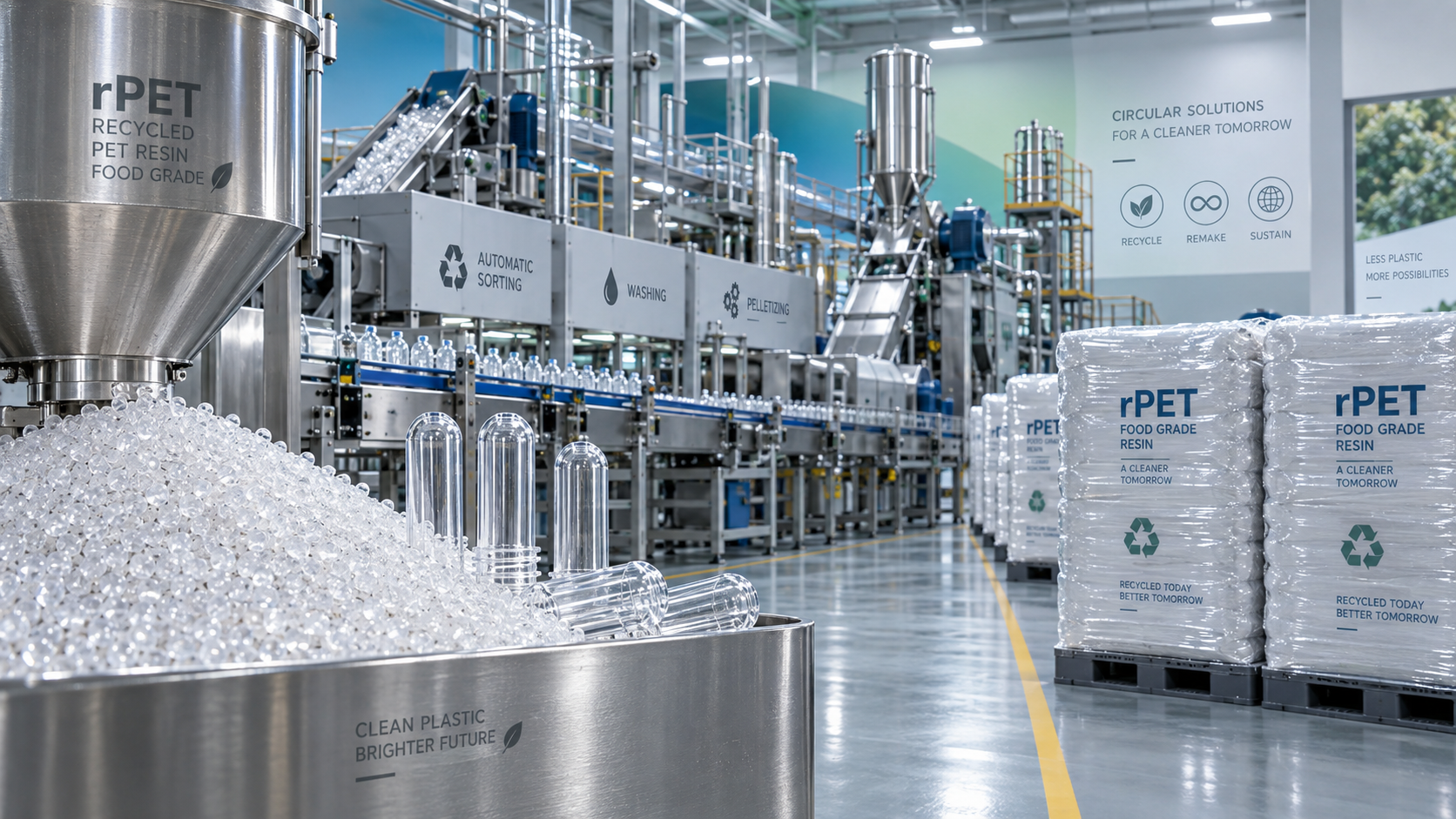
Introduction: Recycled content mandates are reshaping PET Resin demand across packaging, beverage, and consumer goods markets. Business evaluators must now assess availability, compliance, pricing, and supplier resilience together.
The central procurement conclusion is clear: recycled-content rules do not simply replace virgin resin demand. They divide demand into compliance-sensitive grades, increase competition for verified rPET, and raise sourcing complexity.
For buyers, the relevant question is no longer whether recycled PET will matter. It is whether current suppliers can provide compliant material reliably, economically, and with documentation accepted in destination markets.
What Business Evaluators Are Really Trying to Determine
Searchers evaluating PET Resin under new recycled-content requirements usually need a commercial answer, not a broad sustainability explanation. They want to understand cost exposure, supply security, and practical compliance risk.
They also need to distinguish between regulatory targets, voluntary brand commitments, and customer specifications. Each can influence resin demand differently, even when all are described as recycled-content requirements.
Packaging converters need assurance that resin choices will support production consistency. Brand owners need credible environmental claims. Importers need evidence that products satisfy local material, food-contact, and reporting requirements.
Business evaluators are therefore comparing more than quoted resin prices. They are measuring the cost of noncompliance, delayed approvals, limited feedstock, rejected shipments, and sudden contract renegotiations.
The strongest procurement decisions treat recycled content as a supply-chain qualification issue. Resin selection must connect regulatory interpretation, technical performance, certification records, logistics capability, and long-term commercial planning.
Why Recycled Content Mandates Change PET Resin Demand Patterns
Mandatory recycled-content thresholds create protected demand for recycled PET, particularly in beverage bottles, food containers, personal-care packaging, and selected consumer-product applications.
When regulations set minimum percentages, buyers cannot respond only by purchasing whichever PET Resin is cheapest. They must secure sufficient recycled content before production schedules and market commitments are finalized.
This changes demand from being primarily volume-driven to being specification-driven. A bottle-grade recycled resin with accepted traceability can command stronger demand than generic recycled flakes or non-certified material.
Virgin PET demand remains important because recyclate supply cannot always meet quality, color, food-contact, processing, or volume requirements. Many converters must use blends to balance compliance and performance.
As recycled-content targets rise, demand for virgin PET may shift toward high-performance blending grades, specialty packaging applications, and markets where recycled content is not yet technically or legally required.
The result is a more segmented market. Buyers increasingly source virgin resin, food-grade rPET, non-food rPET, flakes, pellets, and additive packages through separate qualification and contracting processes.
Demand also becomes less predictable around implementation deadlines. Customers often build inventories before new requirements take effect, while suppliers allocate certified material toward strategic accounts with longer commitments.
Feedstock Availability Is the First Constraint on rPET Growth
Recycled PET supply begins with collection, sorting, bale quality, contamination control, washing, and processing capacity. A regulatory target does not automatically create enough suitable feedstock.
Post-consumer bottles are especially valuable because they can support bottle-to-bottle recycling when collection systems, sorting technology, and decontamination processes meet appropriate standards.
However, collected material competes across applications. Textile, sheet, strapping, fiberfill, and packaging producers may all seek the same clear PET feedstock, particularly when collection rates remain limited.
Colorless bottle-grade feedstock generally attracts the strongest demand because it offers greater flexibility. Colored, mixed, or contaminated streams may be commercially useful, but often serve narrower end uses.
Evaluators should ask suppliers where feedstock originates, how it is sorted, whether collection is domestic or imported, and how seasonal changes affect volume and quality.
These questions matter because physical availability can differ sharply from nominal recycling capacity. A recycler may have substantial output capacity but limited access to consistently clean input material.
Supply risk is particularly relevant in regions where recycled-content mandates expand faster than collection infrastructure. In those markets, rPET premiums may remain elevated even when virgin PET prices decline.
Price Volatility Requires a Different PET Resin Cost Model
Historically, virgin PET pricing was strongly linked to energy markets, paraxylene, purified terephthalic acid, monoethylene glycol, operating rates, and regional trade balances.
Recycled PET pricing follows additional drivers. These include bale availability, collection incentives, sorting losses, food-grade processing costs, certification expenses, and competition from mandated end markets.
Consequently, rPET can trade at a premium to virgin PET even when recycled material is perceived as environmentally preferable. The premium reflects scarcity and qualification value, not merely production cost.
Business evaluators should avoid using a single benchmark to forecast total packaging-resin costs. Separate indices or supplier formulas are needed for virgin PET, recycled flakes, food-grade pellets, and logistics.
A useful model evaluates the delivered cost of compliant packaging. This includes resin price, blend ratio, yield loss, additives, quality testing, certification administration, freight, inventory, and possible compliance penalties.
Long-term contracts can reduce exposure, but only when they define acceptable quality ranges, allocation rules, adjustment mechanisms, documentation obligations, and remedies for missed recycled-content specifications.
Short-term buying may appear flexible, yet it can be risky during regulatory transitions. Spot material may lack the required certification, food-contact status, or stable physical properties.
Compliance Depends on Evidence, Not Only Resin Composition
Recycled content is increasingly a documentation issue as well as a formulation issue. Buyers need records that establish material origin, recycled-content calculation methods, and chain-of-custody controls.
Requirements differ by jurisdiction and product category. Some rules focus on packaging placed on the market, while others address food-contact authorization, labeling, producer responsibility, or reporting requirements.
Business evaluators should confirm whether a claimed recycled percentage refers to post-consumer material, post-industrial material, total recycled material, or a mass-balance allocation approach.
Those definitions can materially affect sourcing decisions. Material that satisfies one customer’s sustainability target may not meet another customer’s regulatory standard or independently audited claim requirements.
For food and beverage packaging, compliance review should extend beyond the resin’s recycled content. It should include relevant food-contact approvals, migration considerations, process controls, and destination-market acceptance.
Supplier documentation should be reviewed before commercial commitments are made. Certificates provided after shipment may be incomplete, inconsistent, expired, or unsuitable for the buyer’s reporting framework.
A practical qualification package includes certificates of analysis, recycled-content declarations, traceability information, quality specifications, regulatory statements, audit availability, and clear procedures for handling material deviations.
Technical Performance Still Determines Whether a Resin Is Usable
Meeting a recycled-content threshold has limited value if resin performance causes defects, excessive scrap, poor appearance, or lower line efficiency. Processing suitability remains commercially decisive.
Key properties may include intrinsic viscosity, moisture content, acetaldehyde levels, color, black-speck control, contamination limits, bulk density, pellet consistency, and thermal stability.
The required properties depend on application. Carbonated beverage bottles, thermoformed trays, extrusion sheet, fiber, and non-food containers each place different demands on PET Resin.
Blending virgin and recycled material can help converters manage variation. Yet blend design should be supported by trial data, not assumed to work across all molds, additives, wall thicknesses, or lines.
Buyers should request representative samples and perform controlled production trials. Trial criteria should include throughput, drying behavior, melt stability, haze, color consistency, rejection rate, and final-package performance.
Technical risk also includes supply consistency over time. A successful sample from one batch does not guarantee equivalent results when feedstock sources or recycling process conditions change.
For businesses sourcing multiple chemicals, qualification systems should remain product-specific. For example, handling requirements for N,N-Dimethylformamide CAS#68-12-2 differ substantially from those for polymer resin procurement.
How to Evaluate Supplier Reliability in a Tightening Market
Supplier selection should begin with operational capability rather than a recycled-content claim. Evaluators need to understand production location, feedstock access, annual capacity, available grades, and export experience.
A supplier with stable collection partnerships may offer better continuity than one relying heavily on opportunistic spot purchases. Feedstock contracts can be as important as recycling equipment.
Ask whether the supplier can reserve monthly or quarterly volumes. Allocation terms should specify priorities during shortages, notification periods, substitution rules, and alternatives when certified material is constrained.
Quality-management capability matters equally. Reliable suppliers define critical properties, retain batch records, investigate complaints promptly, and maintain traceability from feedstock intake through outbound shipment.
International buyers should also evaluate trade execution. This includes packaging options, container loading practices, lead times, hazardous or non-hazardous classification where relevant, customs documentation, and destination support.
For chemical import programs, broader supplier coordination can reduce administrative burden. Huafeng Chemical’s export-service model is relevant where buyers need product portfolio access alongside responsive trade documentation and logistics support.
Nevertheless, commercial convenience should not replace due diligence. Buyers should verify manufacturing identity, test reports, certification scope, export references, contractual responsibilities, and applicable local registration obligations.
A Procurement Framework for Managing the Transition
Start by mapping every packaging application affected by a recycled-content rule or customer commitment. Record annual resin use, required recycled percentage, approval status, and technical limitations.
Next, separate demand into categories: mandatory compliance volume, voluntary sustainability volume, technically constrained volume, and applications where virgin PET remains the appropriate option.
Then identify the minimum qualified supplier base for each category. Avoid assuming that one rPET source can serve every product, region, food-contact requirement, and color specification.
Develop a landed-cost scenario using several market conditions. Compare normal supply, moderate rPET shortages, severe feedstock disruption, and changes in virgin PET pricing or freight availability.
Contracts should establish measurable requirements. Define grade, recycled-content percentage, evidence standards, test methods, delivery windows, quality claims, price formulas, and escalation contacts for nonconforming shipments.
Internal teams should coordinate procurement, regulatory, quality, packaging engineering, finance, and sales. A recycled-content decision made by one function can create costs or risks elsewhere in the business.
Finally, review the strategy at regular intervals. Regulations, brand commitments, recycling capacity, customer specifications, and regional price relationships can change faster than standard annual sourcing cycles.
Conclusion: Compliance-Ready PET Resin Sourcing Is a Competitive Capability
Recycled content requirements are changing PET Resin demand by making verified, application-appropriate, and traceable rPET a strategic procurement category rather than a secondary material option.
For business evaluators, the winning approach is not simply maximizing recycled content. It is securing the right compliance level while protecting quality, production reliability, commercial flexibility, and total delivered cost.
Organizations that assess feedstock security, technical performance, documentation quality, supplier capability, and contract structure together will be better positioned to manage volatility and meet evolving market expectations.
The practical decision is therefore to build a diversified, evidence-based PET sourcing program. That program should combine qualified recycled material, appropriate virgin resin, tested formulations, and dependable international supply execution.
Send Us Your Inquiry Today
