









Product Quick Navigation
Get a Quote
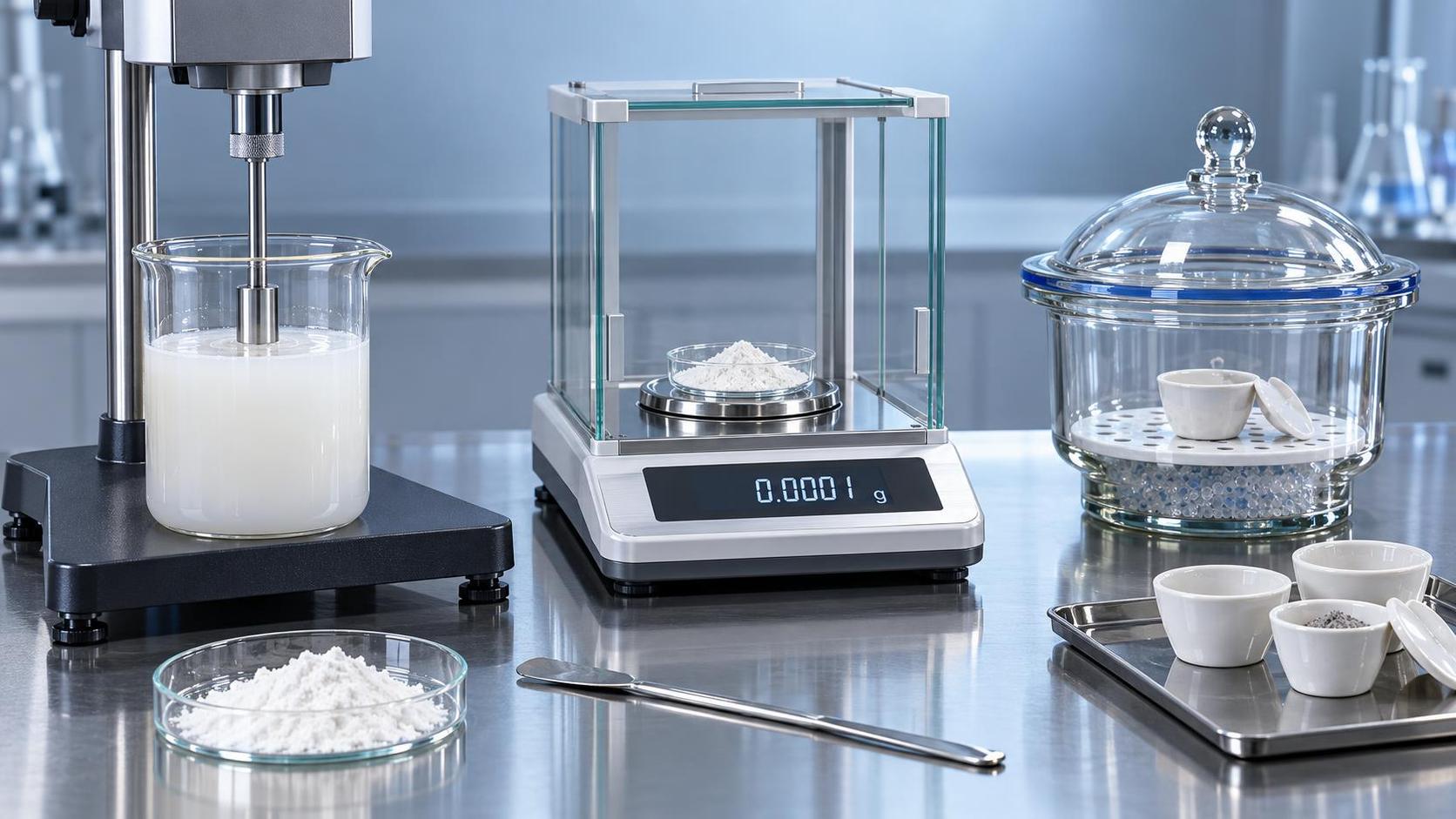
Before releasing payment for modified starch shipments, procurement professionals must know what should I check in modified starch quality report before payment—especially key parameters like viscosity, moisture content, ash level, and heavy metal limits. These metrics directly impact compliance, processing performance, and contractual obligations. For global buyers partnering with trusted exporters like Shandong Huafeng Chemical Co., Ltd., verifying these values against agreed specifications isn’t just due diligence—it’s a critical risk-mitigation step in today’s tightly regulated chemical supply chain.
Core Parameters That Trigger Payment Hold or Release
Payment release hinges on objective, testable parameters—not subjective impressions or supplier assurances. When reviewing a modified starch quality report, focus first on four non-negotiable metrics: viscosity (at specified temperature and shear rate), moisture content (% w/w), ash content (% dry basis), and heavy metal limits (Pb, As, Cd, Hg, expressed in ppm). Deviation beyond ±0.5% of the contract-specified tolerance for any of these—unless formally waived in writing—constitutes grounds for withholding payment until corrective action is verified.
Viscosity determines functional performance in applications such as food thickening, paper coating, or textile sizing. A 10% deviation from target may cause batch rejection during downstream processing. Moisture content affects storage stability and microbial risk; values above 14% accelerate degradation and increase caking potential during transit. Ash content reflects mineral impurity load—elevated levels signal incomplete purification or raw material contamination, impacting suitability for food-grade or pharmaceutical use. Heavy metals are strictly regulated under EU REACH, US FDA 21 CFR, and China GB standards; exceeding permitted thresholds invalidates compliance documentation and triggers mandatory recall protocols.
How Specification Alignment Is Verified
Verification isn’t about comparing raw numbers—it’s about confirming analytical method alignment, sampling protocol, and unit consistency. First, cross-check the test method cited in the report (e.g., ISO 6493 for viscosity, AOAC 925.10 for moisture) against the method stipulated in your purchase agreement. A report citing ASTM D1234 instead of ISO 11885 for heavy metals is not acceptable—even if the result appears within range.
Second, confirm sample origin: the report must state “Tested on lot #XXX, sampled per ISO 2859-1 Level II, single sampling plan, AQL 0.65.” Absence of this statement—or use of “representative sample” without reference to an accepted standard—invalidates the report’s evidentiary value. Third, verify units: moisture reported as “% wet basis” instead of “% dry basis” creates a systematic error of up to 2.3 percentage points for a 12% moisture sample. Always recalculate using the correct denominator before acceptance.
When to Escalate Beyond the Report
A compliant quality report doesn’t guarantee shipment integrity. If viscosity is within spec but the material exhibits visible clumping, off-color tint, or inconsistent particle dispersion in preliminary reconstitution tests, request supplementary testing: particle size distribution (laser diffraction, D50 ≤ 25 µm), pH (must fall within 5.8–6.5 for most food applications), and microbial plate count (total aerobic count ≤ 1,000 CFU/g). These are not routinely included in standard certificates but are enforceable under Incoterms® 2020 Clause A9 (inspection at buyer’s premises).
Also scrutinize the certificate’s signatory authority. Reports signed only by “Quality Manager” without accreditation body reference (e.g., CNAS, UKAS, or A2LA logo) lack third-party validation. For high-risk destinations (EU, Japan, Canada), insist on reports issued by laboratories accredited to ISO/IEC 17025:2017—with scope explicitly covering modified starch testing. Without this, the document serves only as internal supplier data—not contractual evidence.
Role of Supporting Documentation
The quality report is one component of a tripartite verification system. It must be accompanied by: (1) a Certificate of Analysis (CoA) bearing the same lot number and test date; (2) a Certificate of Conformance (CoC) signed by authorized technical personnel affirming adherence to agreed specifications; and (3) batch-specific manufacturing records showing process parameters (e.g., reaction temperature, residence time, neutralization pH) that influence final starch functionality. Discrepancies between these documents—such as a CoA listing viscosity of 420 mPa·s while manufacturing logs show reaction temperature 8°C below nominal—require immediate clarification before payment release.
Strategic Integration with Broader Procurement Context
While modified starch quality checks are discrete, they intersect with other procurement decisions where multi-parameter verification matters. For example, when sourcing Diammonium Phosphate CAS#7783-28-0 for fertilizer blending, parallel attention must be paid to P2O5 content (≥46%), N content (≥18%), water-solubility (>95%), and heavy metal thresholds—each carrying equal weight in release authorization. The rigor applied to starch reporting sets precedent: consistent methodology, traceable sampling, and accredited validation are transferable disciplines across chemical commodity procurement.
Procurement teams managing multiple chemical inputs benefit from standardized evaluation templates that map each product’s critical quality attributes (CQAs) to payment gateways. This prevents ad hoc judgment and ensures auditable decision trails—especially important under SOX compliance or customs valuation audits where payment timing directly impacts duty assessment.
Final Verification Checklist
- ✔ All four core parameters (viscosity, moisture, ash, heavy metals) fall within contract tolerances—and deviations are formally waived if present.
- ✔ Test methods match those specified in the purchase order; no unapproved substitutions.
- ✔ Sampling procedure is documented per ISO 2859-1 or equivalent; lot traceability is unambiguous.
- ✔ Units and calculation bases (wet/dry basis, ppm vs. mg/kg) are consistent and correctly applied.
- ✔ Report bears ISO/IEC 17025 accreditation mark for relevant test methods—or justification for alternative validation is provided.
- ✔ CoA, CoC, and manufacturing records align on lot number, test date, and critical process parameters.
No single parameter operates in isolation. A moisture reading of 13.2% may pass specification—but if ash is 0.8% (vs. max 0.6%) and viscosity is at the lower limit of range, it signals potential over-drying or thermal degradation. Payment release requires holistic interpretation, not checklist compliance. For buyers working with suppliers like Huafeng Chemical, this discipline ensures supply continuity, regulatory safety, and cost control—without compromising on technical accountability.
Send Us Your Inquiry Today
