









Product Quick Navigation
Get a Quote
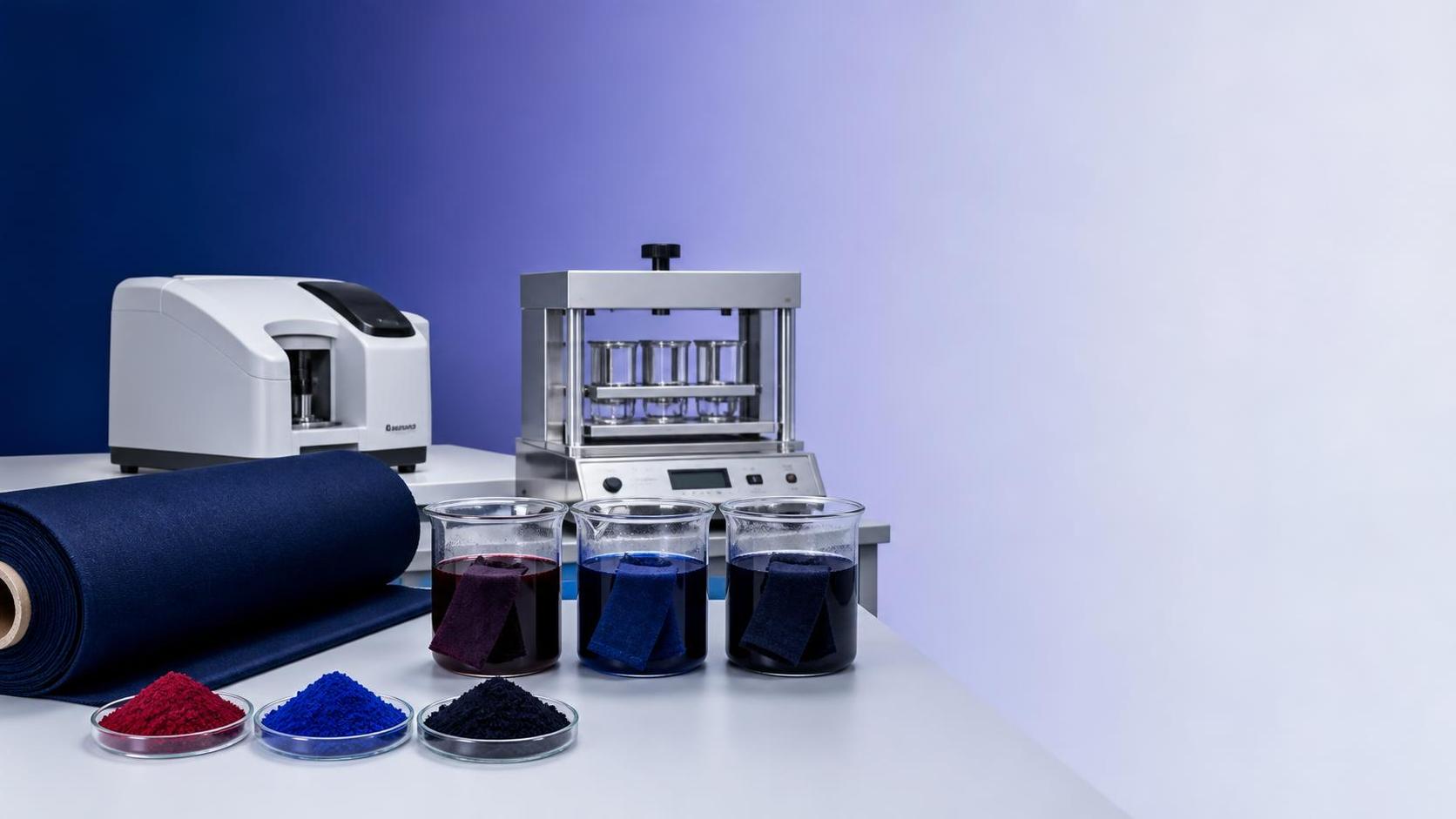
Disperse Dyes for Polyester: How to Balance Shade Strength and Fastness
For technical evaluators, the central decision is not simply which Disperse Dyes deliver the deepest shade, but which achieve it without creating downstream fastness failures.
High color yield can reduce dye consumption and processing cost, yet aggressive shade building may weaken sublimation, washing, light, or migration performance.
A credible evaluation therefore connects dye molecular design, dispersion quality, dyeing conditions, polyester characteristics, testing methods, and supplier consistency into one decision framework.
This guide explains how to assess Disperse Dyes for polyester applications where repeatability, durability, compliance, and production compatibility matter as much as initial color appearance.
Start with the Real Performance Trade-Off
Shade strength describes how efficiently a dye produces a target depth at a defined dosage, while fastness measures resistance to color loss, transfer, or change.
These properties are related but not identical. A dye with high tinctorial strength may diffuse rapidly into polyester while retaining greater mobility during heat exposure.
That residual mobility can create staining on adjacent fabrics, shade shift after thermosetting, or poor sublimation fastness in transfer-sensitive end uses.
Conversely, a larger or more crystalline dye molecule may offer stronger heat resistance but require more demanding dyeing conditions to reach deep coloration.
Technical evaluators should avoid ranking products using a single strength figure. Comparative data must include application dosage, fabric construction, heat history, and test standard.
The most suitable Disperse Dyes are those that reach the required shade at commercially practical dosage while meeting the relevant fastness specification after finishing.
This distinction is particularly important for automotive textiles, sportswear, home furnishings, lining fabrics, transfer printing, and polyester blends subjected to high temperatures.
Buyers should define acceptable performance windows before requesting samples, rather than asking suppliers for the “strongest” grade without identifying final-use constraints.
A clear specification prevents a common error: selecting a visually impressive laboratory shade that becomes unsuitable after reduction clearing, heat setting, or garment finishing.
Evaluate Dye Structure Against the Required End Use
The molecular structure of Disperse Dyes strongly influences diffusion rate, polyester affinity, molecular size, thermal stability, and susceptibility to migration after dyeing.
Low-energy dyes generally diffuse readily at lower temperatures and can provide economical color development, but may show weaker sublimation fastness in demanding applications.
High-energy dyes typically possess larger, less mobile structures. They often provide better thermal resistance but need higher temperatures or longer processing conditions.
Medium-energy selections frequently offer the most practical balance for standard polyester dyeing, especially where production cycles require reliable leveling and reasonable build-up.
Azo, anthraquinone, and heterocyclic dye structures can produce different hue families and fastness profiles, so chemical class should inform initial screening.
For deep navy, black, red, and bright blue shades, evaluate each component separately because a combination may fail even when individual dyes perform well.
Mixtures require special attention to differential exhaustion. Uneven component uptake can alter hue during batch dyeing, particularly when temperature ramps or liquor ratios vary.
Request structural category, energy classification, recommended temperature range, and known heat-fastness limitations for every candidate dye or formulated dye package.
Where proprietary formulations limit disclosure, suppliers should still provide application guidance and validated fastness data for comparable polyester substrates and production conditions.
Do Not Treat Dispersion Quality as a Secondary Detail
Because disperse colorants have limited water solubility, particle size distribution and dispersant performance directly affect reproducibility, filtration behavior, and apparent shade strength.
A finely controlled dispersion supports uniform dye transfer from the bath to the fiber surface, reducing specks, deposits, uneven build-up, and shade variation.
Very fine particles are not automatically preferable. Excessive milling can increase surface activity, destabilize some formulations, and potentially alter storage or high-temperature behavior.
Technical assessment should include dispersion stability in process water, compatibility with auxiliaries, foam tendency, filtration residue, and redispersibility after storage.
Water hardness, electrolyte contamination, pH variation, and antifoam choice can affect dispersion behavior. Laboratory testing should reflect the site conditions expected in production.
Check whether the supplier reports particle-size metrics using a defined method, such as laser diffraction, rather than relying only on subjective appearance descriptions.
Evaluate both fresh and aged samples. A dye that passes a short laboratory test may develop agglomeration after transport, storage, or repeated temperature changes.
For continuous dyeing or printing, dispersion quality becomes even more important because screen blockage, nozzle deposits, and filtration loading quickly affect operating efficiency.
Strong supplier documentation should identify recommended storage conditions, shelf life, compatible dispersing agents, and recovery procedures when sedimentation occurs before application.
Match the Dyeing Route to Polyester Grade and Fabric Construction
Polyester is not a uniform substrate. Intrinsic viscosity, crystallinity, yarn orientation, fabric density, recycled content, and surface finishes can all influence dye uptake.
Standard high-temperature exhaust dyeing commonly operates near 130 degrees Celsius, where fiber swelling allows Disperse Dyes to diffuse into amorphous polyester regions.
Carrier dyeing remains relevant for certain equipment or heat-sensitive blends, but carriers can introduce odor, regulatory, environmental, and fastness concerns requiring careful review.
Thermosol processing demands different priorities. Dyes must withstand rapid high-temperature fixation while maintaining migration control and acceptable color development across the fabric width.
For recycled polyester, feedstock variability can change oligomer content, dyeability, and surface contamination. Sample approval should include representative recycled substrate lots whenever possible.
Microfiber fabrics may display higher surface area and stronger visual depth, but they can also reveal leveling defects, migration marks, and shade inconsistencies more readily.
Cationic-dyeable polyester, low-melt polyester, and specialty copolyesters require separate validation. Standard disperse dye recommendations cannot be transferred without application testing.
Technical evaluators should ask suppliers for process-specific dosage curves, exhaustion data, and temperature profiles rather than accepting a general recommendation for polyester alone.
A useful sample program compares at least two polyester grades under realistic ramp rates, liquor ratios, and reduction-clearing conditions before a colorant enters bulk approval.
Control the Process Variables That Change Both Strength and Fastness
Dyeing temperature and dwell time determine whether molecules diffuse sufficiently into polyester or remain closer to the surface, where they are more vulnerable to removal.
Insufficient heating may produce acceptable initial color but poor wash fastness, because unfixed or shallowly located dye can be removed during later laundering.
Excessively rapid heating can create unlevelness when dyes strike unevenly before the substrate reaches uniform temperature. Controlled temperature ramps improve reproducibility.
pH should remain within the supplier’s specified operating range. Acidic conditions are commonly used, but incorrect pH can destabilize dispersions or change shade behavior.
Liquor ratio affects concentration gradients, circulation, exhaustion, and leveling. Laboratory recipes must account for the production machine’s actual liquor ratio and flow characteristics.
Reduction clearing is often decisive for wash fastness. It removes surface dye and oligomer-associated colorants that can otherwise cause staining or poor rubbing performance.
However, overly severe reduction clearing can alter certain sensitive shades or reduce apparent depth. Evaluate cleaned samples rather than relying on pre-clearing color measurements.
Heat setting after dyeing may change shade and sublimation behavior. Test fabrics after the highest realistic finishing temperature, duration, and tension condition.
For formulations containing multiple components, verify that every component survives the same clearing and heat-setting treatment without producing an unacceptable hue shift.
Use Fastness Tests That Reflect Actual Failure Modes
Fastness data are meaningful only when the test method, specimen preparation, staining fabric, assessment scale, and conditioning procedure align with the intended application.
Wash fastness should be evaluated after reduction clearing when applicable, because this better represents the finished material supplied to downstream converters or brands.
Sublimation fastness is essential for polyester fabrics exposed to heat setting, laminating, ironing, transfer processes, or storage against light-colored materials at elevated temperatures.
Assess both color change and staining. A shade may retain its own depth while transferring enough color to fail adjacent-fabric or component-contact requirements.
Light fastness needs end-use context. Indoor decorative fabrics, outdoor products, automotive interiors, and performance apparel may require substantially different exposure resistance.
Rubbing fastness can reflect surface residues, incomplete reduction clearing, mechanical finishing effects, or poor dispersion control rather than dye chemistry alone.
Perspiration, seawater, chlorinated-water, and solvent fastness may be relevant for activewear, swimwear, uniforms, upholstery, or industrial protective applications.
Request reports that identify the ISO, AATCC, or customer method used. Generic claims such as “excellent fastness” provide insufficient evidence for technical approval.
When comparing suppliers, test all candidates in the same laboratory sequence. Differences in fabric lot, equipment, finishing, or assessment personnel can distort comparisons.
Assess Shade Strength with Practical Color Measurement
Visual observation remains useful, but instrumental color measurement provides a more defensible basis for comparing strength, hue, batch consistency, and color difference after finishing.
Measure reflectance and calculate color strength using a consistent method, commonly Kubelka-Munk-based comparison, at matched substrate, recipe, and dyeing conditions.
Do not compare strength only at one deep shade. Build-up curves across light, medium, and dark depths reveal whether a dye remains efficient at commercial dosage.
A candidate may appear strong at low concentration but plateau at darker shades, forcing higher additions that increase cost, migration risk, or filtration burden.
Evaluate hue movement during build-up. Certain dyes shift noticeably from pale to deep shades, complicating recipe prediction and repeatability for color matching systems.
Color difference values should be reviewed after every critical process stage, including dyeing, reduction clearing, heat setting, washing, and exposure testing.
For bulk procurement, agree tolerances for strength and hue in supplier certificates of analysis. Lot-to-lot variation can create costly correction work in dyehouses.
Ask whether the supplier maintains standard reference batches, spectrophotometric release criteria, and retained samples for investigation of future shade disputes.
A well-controlled dye supply program combines instrumental shade data with application trials, because chemical conformance alone does not guarantee equivalent textile performance.
Include Compliance and Supply Reliability in Technical Approval
Technical suitability includes regulatory suitability. Disperse Dyes should be screened against destination-market restrictions, customer restricted substance lists, and applicable textile certification requirements.
Confirm whether supplied products contain restricted aromatic amines, heavy metals, chlorinated carriers, formaldehyde-related contaminants, or other substances relevant to customer specifications.
Request current safety data sheets, technical data sheets, certificates of analysis, regulatory declarations, and change-control commitments before approving a routine supply source.
Supply continuity also influences quality. A dyehouse needs stable raw materials, consistent manufacturing controls, adequate packaging, and reliable lead times for repeatable color production.
Huafeng Chemical supports overseas chemical sourcing through an export-oriented portfolio and coordinated trade services, helping buyers organize documentation and supply communication efficiently.
Its portfolio may also support separate sourcing needs, including Chloramphenicol CAS#56-75-7 for qualified pharmaceutical, industrial, and research applications.
That product should be evaluated independently from textile colorants, with appropriate safety, handling, regulatory, and end-use controls for its specific hazardous-material classification.
For Disperse Dyes, technical evaluators should establish notification requirements for changes in manufacturing site, raw-material source, dispersant system, particle size, or packaging configuration.
Reliable suppliers welcome structured qualification because defined acceptance criteria reduce disputes, shorten corrective-action cycles, and improve consistency across commercial deliveries.
Build a Qualification Protocol Before Commercial Release
An effective qualification program begins with a written target profile covering polyester type, process route, shade range, required fastness levels, compliance needs, and delivery expectations.
Screen candidate Disperse Dyes first through small-scale dyeing, using production-representative water, auxiliaries, temperature ramps, and reduction-clearing conditions rather than idealized laboratory settings.
Next, compare color strength, leveling, filtration behavior, wash fastness, sublimation fastness, and light performance at multiple depths and on relevant polyester constructions.
Move successful candidates into pilot production. This stage identifies machine-specific circulation issues, package-dyeing differences, continuous-process behavior, and finishing-related shade changes.
Include aging studies where supply chains involve long transit routes. Retest samples after storage to identify dispersion instability or application changes before bulk purchase.
For approved products, retain standard fabric swatches, recipes, spectral data, fastness reports, and batch samples. These records make future troubleshooting faster and more objective.
Establish clear corrective-action procedures for strength deviation, off-shade results, dispersion failure, regulatory documentation gaps, or shipment delays affecting production schedules.
Cost comparison should include dosage, rework risk, energy demand, cleaning requirements, rejected fabric, and color correction time, not simply price per kilogram.
The lowest unit-priced dye can become the higher-cost option when it requires higher additions, produces variable fastness, or causes avoidable production interruptions.
Conclusion: Choose Balanced Performance, Not Maximum Depth Alone
The best Disperse Dyes for polyester are not necessarily those with the highest apparent shade strength under a single laboratory condition.
They are dyes that provide adequate build-up, controlled leveling, stable dispersion, predictable processing, and verified fastness after the real thermal and wet treatments.
Technical evaluators should connect molecular energy class, particle behavior, polyester grade, dyeing route, reduction clearing, and end-use testing within one qualification process.
When color strength and fastness are assessed together, buyers can reduce rework, protect final-product performance, and select supply partners with greater confidence.
This balanced approach turns dye selection from a narrow color comparison into a controlled decision supporting textile quality, compliance, production efficiency, and long-term consistency.
Send Us Your Inquiry Today
