









Product Quick Navigation
Get a Quote
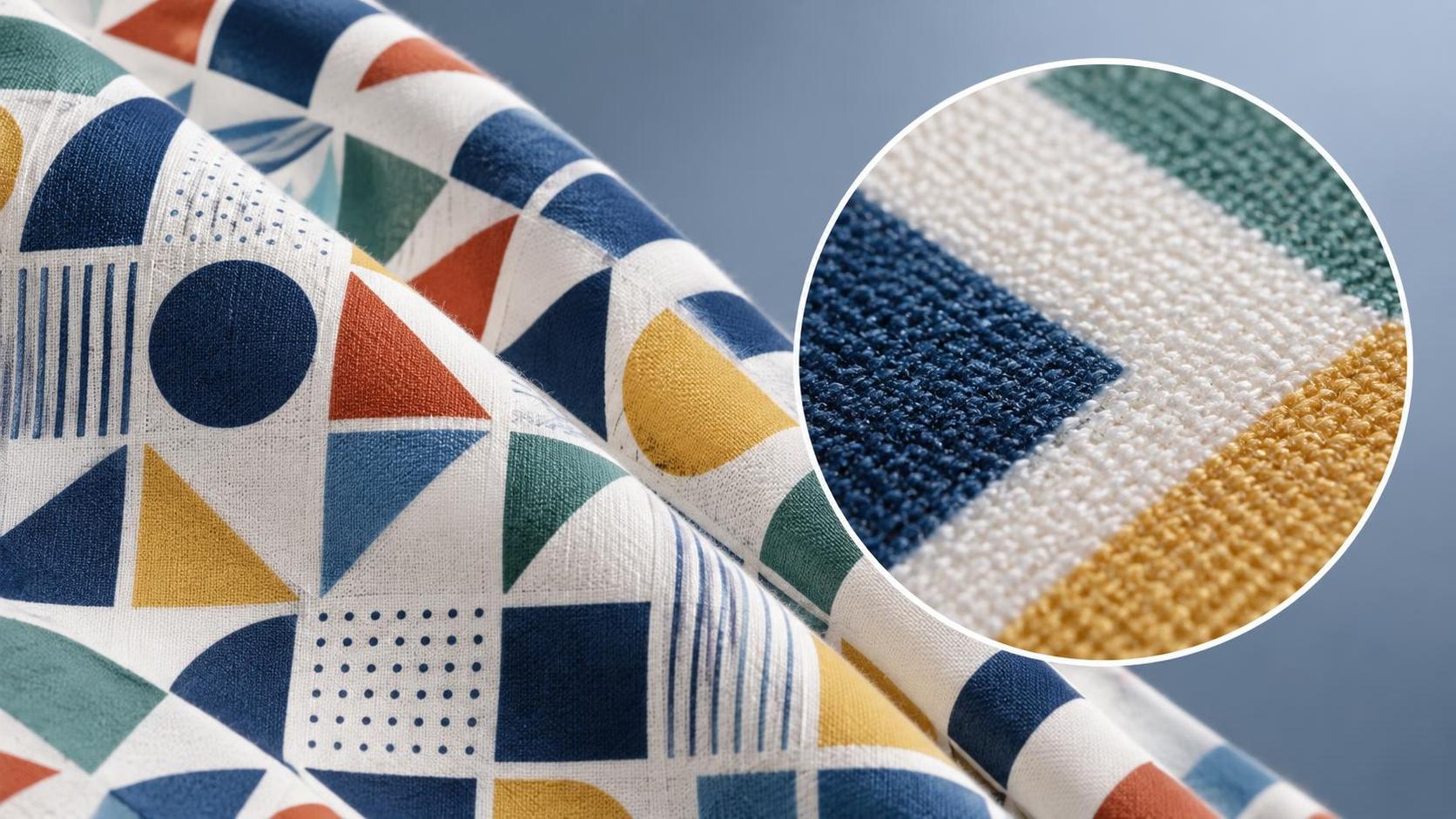
Achieving sharp, high-fidelity prints on reactive-dyed cotton fabrics isn’t just about ink formulation or screen tension—it hinges critically on how the print paste behaves *during and immediately after application*. Operators routinely face blurred edges, back-trap bleeding into adjacent colors, and inconsistent dye fixation—especially in fine-line motifs or halftone work. When these issues arise, many assume the culprit is dye migration or steam curing parameters. But in practice, the root often lies upstream: in the rheology and film-forming behavior of the thickener system. Low-viscosity textile starch directly addresses this—by design—not as a general-purpose thickener, but as a precision rheology modifier calibrated for reactive printing on cotton.
Why “low viscosity” matters—not just “starch”
Standard oxidized or enzyme-thinned starches used in pigment or disperse printing often fail in reactive systems because they retain too much residual polymer chain entanglement. Even at moderate concentrations (4–6%), they yield pastes with high low-shear viscosity—leading to poor screen release, edge feathering, and excessive paste squeeze-through during squeegee travel. More critically, their gel network persists too long post-printing, trapping moisture and delaying the initial dye–fiber reaction. This delay creates a narrow window where unreacted dye migrates laterally under capillary action—blurring definition before fixation begins.
Low-viscosity textile starch avoids this by delivering controlled, shear-thinning behavior with rapid structural collapse after shear ceases. Its molecular weight distribution is intentionally narrowed; its branching is minimized; and its dextrinization or enzymatic cleavage is precisely terminated to yield a solution that flows cleanly through 80–120 mesh screens yet forms a thin, uniform film that dries quickly without skinning. The result? Less paste mass per unit area, faster surface drying, and reduced water retention beneath the printed motif—cutting lateral dye movement by up to 40% in comparative trials on 100% combed cotton poplin (washed, desized, scoured).
Where it delivers—and where it doesn’t
This isn’t a universal replacement. Low-viscosity starch excels in high-definition reactive screen and rotary printing—particularly for spot colors, geometric patterns, and small-type text—but it’s less effective in deep-pile or napped cottons where paste penetration depth matters more than surface definition. It also performs poorly when substituted directly into recipes formulated for high-viscosity guar or synthetic thickeners without re-optimizing total solids and crosslinker dosage. Crucially, it requires consistent pH control: below pH 6.5, its film integrity weakens; above pH 7.2, alkaline hydrolysis accelerates, shortening pot life.
Operators should treat it as a *system component*, not an additive. That means verifying compatibility with common reactive dyes (especially monochlorotriazine and vinyl sulfone types), checking for interaction with urea or sodium bicarbonate in the print paste, and confirming no adverse effect on steaming time or temperature profile. In one production audit across three Southeast Asian mills, inconsistent print clarity traced to low-viscosity starch was resolved not by changing the starch, but by standardizing pre-steaming fabric moisture content to ±2%—highlighting that its performance is tightly coupled to process stability, not just chemistry.
Risk points operators overlook
Two practical risks recur. First: over-reliance on viscosity readings alone. A Brookfield reading at 6 rpm may show 1,200 cP—within spec—but if the same paste reads only 300 cP at 60 rpm, the shear-thinning ratio is excessive, risking poor screen fill and uneven deposition. Always measure at both low and high shear rates, and correlate with actual screen test results—not lab numbers.
Second: assuming “low viscosity” means “low concentration.” Some users reduce starch dosage to compensate for lower viscosity, inadvertently dropping total solids below the threshold needed for effective dye immobilization. The optimal range is typically 3.5–5.0% w/w—lower than conventional starches, yes, but not arbitrarily low. Dropping below 3.2% consistently increases back-trap on multi-color runs, especially when printing yellow over cyan or magenta.
Not all low-viscosity starches behave the same
Differences emerge in thermal stability, salt tolerance, and biodegradability—factors that affect both print consistency and wastewater treatment. Starches modified via mild acid hydrolysis tend to offer sharper rheology control but lower resistance to electrolytes in hard water; those treated with controlled enzymatic digestion show better salt tolerance but narrower shelf-life in humid conditions. For mills using recycled process water with >300 ppm total dissolved solids, enzymatically modified variants often deliver more repeatable results—even if their initial viscosity is slightly higher.
Also worth noting: some pharmaceutical-grade compounds share unexpected functional parallels in controlled-release behavior. For instance, Carbamazepine CAS#298-46-4, though unrelated to textiles, demonstrates how precise molecular architecture—here, a tricyclic structure with balanced lipophilicity (LogP 2.45) and crystalline lattice stability—enables predictable dissolution kinetics under variable pH and ionic conditions. That principle echoes in starch design: minor adjustments in glycosidic linkage distribution or substitution pattern profoundly alter hydration rate, film elasticity, and dye diffusion barrier properties.
When to consider switching—and what to verify first
Switching makes sense when you’re seeing consistent edge blurring despite optimized squeegee pressure, screen tension, and steaming profiles—or when back-trap forces you to widen color separations, sacrificing design fidelity. Before trialing, confirm three things: your fabric’s absorbency profile (Cobb test at 60 sec), your water’s hardness and pH, and your existing paste’s total solids and alkali reserve. If Cobb values exceed 120 g/m² or water hardness exceeds 250 ppm CaCO₃, pre-treatment adjustment may be more impactful than thickener change alone.
Finally, don’t chase “lowest viscosity.” Target viscosity must match your screen count, squeegee speed, and fabric type—not a datasheet number. A 4.5% solution at 800 cP (6 rpm) may outperform a 3.0% solution at 500 cP on 100-mesh rotary printing, simply because the higher solids provide better dye confinement during the critical first 90 seconds post-printing. Clarity isn’t achieved by thinning—it’s achieved by controlling *when* and *how fast* the paste releases water and yields to fiber swelling.
Send Us Your Inquiry Today
