









Product Quick Navigation
Get a Quote
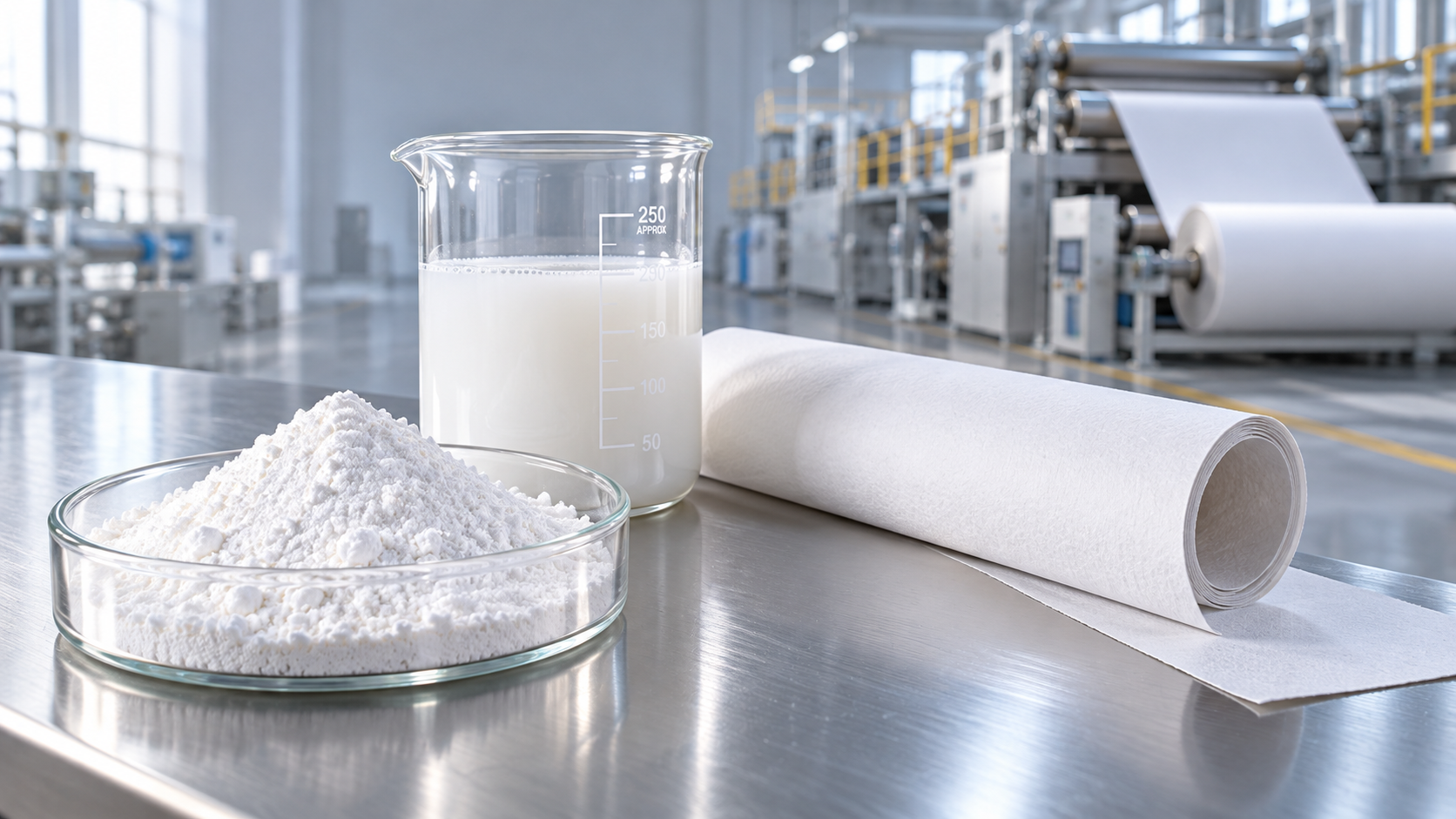
Industrial modified starch is a versatile material used to improve performance across manufacturing processes. By changing the properties of native starch, producers can tailor how it thickens, binds, forms films, or behaves in water. A paper mill may need a starch that strengthens a sheet without slowing production; an adhesive formulator may be more concerned with tack and storage stability. Understanding the main types of modified starch makes it easier to see why one material can serve such different purposes—and why the right grade depends on the application.
What makes industrial modified starch different from native starch?
Native starch is a carbohydrate extracted from crops such as corn, potato, wheat, and tapioca. Its main components, amylose and amylopectin, influence how it behaves when heated with water. As starch granules absorb water and swell, they can form a paste that thickens a formulation or binds other materials together.
That natural behavior is useful, but it can also be difficult to control. Depending on its source and processing conditions, native starch may produce a paste that is too thick, break down under prolonged heating or mechanical shear, or lose consistency during storage. Modification changes selected properties so that the starch performs more predictably under specific conditions.
Modified does not necessarily mean synthetic. The starting material remains starch, although its physical structure or chemical characteristics have been altered. Nor does every modified starch serve the same purpose: a grade designed for rapid dispersion in construction materials may be unsuitable for a paper coating that requires a carefully controlled viscosity.
How starch is modified for industrial use
Manufacturers generally use physical, chemical, enzymatic, or combined treatments. Each route offers different ways to adjust performance.
- Physical modification changes starch behavior through processing rather than introducing new chemical groups. Pregelatinization, for example, involves cooking and drying starch so that an appropriate grade can develop viscosity in cold water.
- Chemical modification uses controlled reactions to alter starch molecules. Oxidation, cross-linking, esterification, and etherification can change viscosity, stability, adhesion, or compatibility with other ingredients.
- Enzymatic modification uses enzymes to break selected molecular bonds. This can reduce molecular size and alter viscosity or film-forming behavior.
Processing method alone does not tell the whole story. Botanical source, degree of modification, particle size, moisture content, and preparation conditions all affect the finished material. Two products carrying the same general type name may therefore behave differently in the same manufacturing line.
Common types of industrial modified starch
The categories below provide a practical starting point. Some commercial grades combine more than one modification to achieve a particular balance of properties.
Oxidized starch
Oxidation typically reduces starch molecular size and introduces functional groups that change paste behavior. Oxidized starches are often selected when a relatively low-viscosity paste is needed at a useful solids concentration. They can also form films and support binding.
In papermaking, these characteristics make certain oxidized grades useful in surface sizing and coating formulations. The objective may be to improve surface strength or hold pigments together without creating a mixture too thick for the equipment. Actual results depend on the formulation, coating method, and starch preparation.
Cross-linked starch
Cross-linking creates bonds between starch molecules, restricting swelling and helping the granules retain their structure. Depending on the grade, this can improve resistance to heat, acidity, or mechanical shear—conditions that can cause an untreated starch paste to lose viscosity.
Cross-linked starch is relevant where a formulation must remain consistent during demanding processing. It is not automatically the best choice for every application: increased resistance to swelling may be less useful when rapid viscosity development or easy film formation is the priority.
Starch ethers and esters
Etherification and esterification attach chemical groups to starch molecules. The type and degree of substitution influence water affinity, paste properties, stability, and compatibility with other formulation components.
Starch ethers are used in some dry-mix construction products to help adjust workability and water retention. Other derivatives can be selected for adhesives, textile processing, or paper applications. The important distinction is that “starch ether” or “starch ester” describes a family, not a single performance profile; the technical data for the individual grade remains essential.
Pregelatinized starch
Pregelatinized starch has been cooked and dried during manufacture. Many grades can disperse or develop viscosity in cold water, reducing the need for a separate cooking step at the point of use.
This can be valuable in dry-blended products or processes where heating equipment is impractical. However, cold-water performance varies: some products are designed for quick thickening, while others emphasize dispersibility or binding. Adding powder too quickly can still create lumps, so mixing technique matters.
Acid-thinned and enzyme-converted starch
Acid or enzyme treatment can reduce starch molecular size and produce a lower-viscosity material. Such grades can be useful where a manufacturer needs to work with higher starch solids while maintaining manageable flow.
They are found in applications including paper, textiles, and adhesives, depending on the grade. Lower viscosity does not mean lower performance; in a coating or size formulation, it may allow the desired amount of starch to be applied more consistently.
Where modified starch fits into manufacturing
Industrial starch is rarely added simply because a formula needs “a thickener.” Its job is usually tied to a process problem: keeping particles together, controlling water, protecting a surface, or making a product easier to apply.
Paper and paperboard
Paper production is one of the most established industrial uses. Starch can be added to the wet end, applied to the sheet surface, or used as a binder in coatings. Depending on the grade and application point, it may contribute to sheet strength, surface integrity, printability, or pigment retention.
For a paper mill, the right choice depends on more than the strength of the finished sheet. Paste viscosity, cooking requirements, compatibility with other wet-end chemicals, and how the material runs on existing equipment all affect whether a grade is practical.
Adhesives and corrugated packaging
Starch-based adhesives are widely used in paper packaging, including corrugated board manufacture. A formulation must develop adequate bonding while moving through fast production equipment and interacting with paper substrates of varying absorbency.
Modified starch may help formulators adjust viscosity, tack, or film formation. The finished adhesive also depends on preparation, solids content, additives, application temperature, and drying conditions. A change in starch grade should therefore be assessed on the production line as well as in a laboratory beaker.
Textiles
In textile processing, starch derivatives can be used in warp sizing: a temporary coating is applied to yarn to help it withstand the stresses of weaving. The size must provide suitable film formation and adhesion while remaining compatible with the yarn and the mill’s processing conditions.
Removal after weaving is another consideration. A size that protects yarn well but is difficult to remove during subsequent processing may create extra work or affect the finished fabric. The balance between protection and removability matters more than any single property.
Construction materials
Some starch ethers are incorporated into dry-mix products such as tile adhesives, renders, and mortars. At suitable use levels, they can influence consistency, sag resistance, water retention, and workability. Their effect depends on the surrounding formulation, including cement, fillers, and other additives.
Water retention should not be confused with water resistance. A material that helps a fresh mortar retain water during application does not necessarily make the cured material waterproof. Those are separate performance requirements that must be evaluated in the complete system.
Coatings and composite formulations
Starch derivatives can act as binders, rheology modifiers, or film-forming components in selected water-based coatings and other formulations. They may also be used alongside fibers or fillers in composite materials. Compatibility and moisture sensitivity deserve attention: starch is generally hydrophilic, and the final product’s response to humidity depends on the formulation and any additional treatments.
Other ingredients in the same manufacturing environment may perform very different jobs. For example, ZINC STANNATE CAS#12036-37-2 is an inorganic additive used as a flame retardant and smoke suppressant in certain polymers, textiles, and coatings. It is not a modified starch or a substitute for one; any use alongside starch-containing components requires formulation-specific compatibility and fire-performance testing.
How to choose a grade for a specific process
A useful selection begins with the conditions the starch will encounter, rather than a broad product label. Before comparing grades, identify what the material must do during preparation, application, and use.
- Define the main function. Is the priority binding, thickening, surface strength, film formation, water retention, or a combination?
- Describe the processing conditions. Record water temperature, pH, mixing intensity, solids content, holding time, and whether heating is available.
- Check viscosity under relevant conditions. Viscosity figures are meaningful only when the test method, concentration, and temperature are understood.
- Assess the complete formulation. Salts, pigments, polymers, cement, and other ingredients can change how a starch performs.
- Test application and finished-product properties. A stable paste is useful, but bond strength, drying, surface quality, moisture response, or removability may ultimately determine suitability.
Start with supplier documentation and a small-scale trial, then move to equipment that reflects actual production conditions. Changes in water quality, order of addition, or mixing speed can alter results, so recording those details makes comparisons more reliable.
Supply, storage, and regulatory questions
For overseas buyers, consistent supply is part of technical performance. A grade that works well in a trial is less useful if future batches vary beyond the process’s tolerance. Ask for the specification sheet, recommended preparation method, relevant safety documentation, and batch-quality information. Confirm packaging, storage conditions, shelf-life guidance, and the documentation needed for the destination market.
Industrial use does not eliminate regulatory obligations. Requirements depend on the destination, the precise chemical modification, and the end use; materials used in packaging or applications involving contact with food may face additional rules. A supplier’s general product description is not a substitute for checking the applicable requirements.
Huafeng Chemical, based in Shandong Province, provides chemical export services and offers a broad product portfolio for overseas customers. When sourcing through an export supplier, sharing the intended application and required documentation early helps establish whether a proposed material and supply arrangement fit the project.
Is modified starch the right material?
Modified starch is worth investigating when a manufacturing process needs a starch-based binder, film former, or rheology modifier with behavior that native starch cannot reliably provide. Its limitations matter too: moisture sensitivity, preparation requirements, and compatibility can influence the result just as much as the modification itself.
The most productive question is not simply which type is “best,” but which properties must remain stable in the conditions of use. Once those conditions are clear, the differences between oxidized, cross-linked, pregelatinized, and substituted grades become practical tools for narrowing the choice.
Send Us Your Inquiry Today
