









Product Quick Navigation
Get a Quote
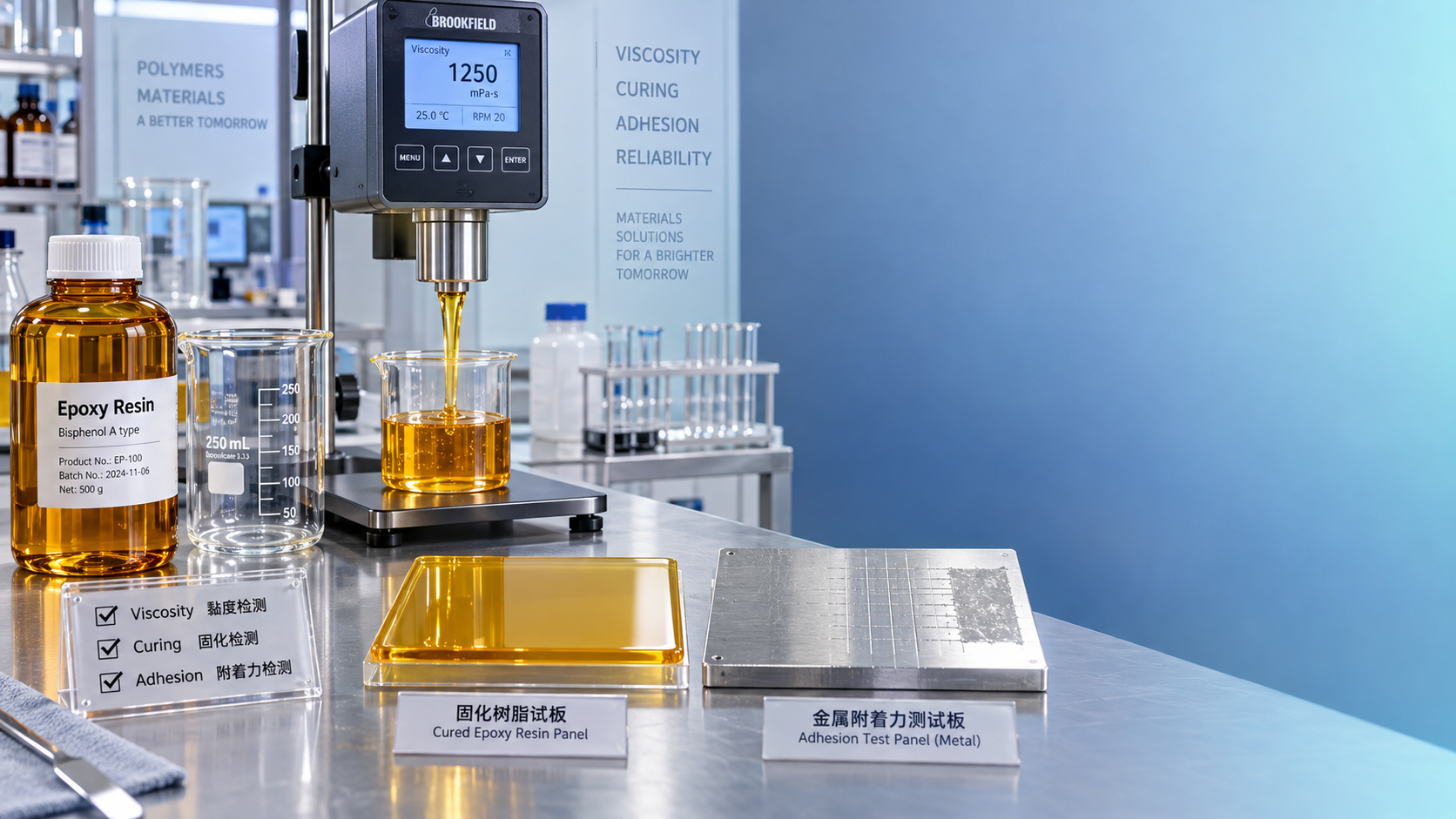
Sample approval for epoxy resin should answer one practical question: will this material perform the same way in normal production as it did in a small supplier sample? A clear-looking resin is not automatically a suitable resin. Viscosity, epoxy value, color, moisture, curing response, compatibility, and adhesion can all change processing behavior and final product quality.
The phrase “Why does polycarboxylate superplasticizer lose slump retention?” reflects a familiar chemical sourcing problem: a product may appear acceptable at first, but its performance changes under real application conditions. Epoxy resin approval needs the same discipline. Instead of approving a sample based on appearance or a single laboratory test, buyers should examine the properties that control repeatability.
Start with the intended epoxy system, not the supplier specification sheet
An epoxy resin cannot be approved in isolation. The acceptable range for a floor coating binder is different from the range needed for an electrical encapsulation compound, composite laminate, adhesive, tooling system, or corrosion-resistant coating.
Before testing the sample, define the working formula and process conditions. Confirm the curing agent type, diluent or solvent, fillers, pigments, accelerator, mixing equipment, application temperature, film thickness, and cure schedule. A resin that works well with one amine hardener may cure too quickly, remain tacky, or show poor appearance with another. Similarly, a higher-viscosity grade may be manageable in a heated mixing tank but unsuitable for a room-temperature manual coating process.
The supplier's certificate of analysis is useful, but it should be treated as a starting point. Sample approval should compare the delivered resin against the properties needed by the actual formulation and production line.
Check viscosity under a controlled temperature
Viscosity is often the first property buyers review because it influences pumping, mixing, wetting, flow, filler loading, air release, coating thickness, and application feel. However, the reported viscosity is meaningful only when the test temperature and method are known. Epoxy resin becomes noticeably thinner when warm and thicker when cool, so a value measured under different conditions cannot be compared directly.
For sample approval, record the resin's viscosity at the temperature closest to normal receiving and processing conditions. Then check whether it remains consistent after the sample has rested, been mixed, and, where relevant, been exposed to the expected storage environment. A resin that initially pours well but thickens unusually during storage can create later problems with metering or dispersion.
Do not assume that lower viscosity is always better. Lower viscosity can improve penetration and flow, but it may also affect sag resistance, film build, solvent balance, cure shrinkage, or the amount of diluent required. The useful question is whether the viscosity supports the required process without forcing changes to the established formulation.
Verify epoxy value or epoxy equivalent weight
Epoxy value is one of the most important chemical identity and reactivity checks. It indicates the amount of epoxy functionality available for reaction with the curing agent. In practical terms, it affects stoichiometric calculations, crosslink density, cure response, heat resistance, chemical resistance, and mechanical behavior.
A resin with an epoxy value outside the expected range may still look normal and may even form a solid film, but the cured material can be under-crosslinked or overly brittle. If the formulation uses a fixed hardener ratio, a change in epoxy value can leave excess amine or unreacted epoxy groups in the system. This may lead to surface tack, reduced water resistance, color change, odor, or unstable long-term properties.
For approval, compare the supplier result with an independent or internal verification when the application is sensitive. More importantly, use the measured value to calculate the hardener demand and make a trial batch at the intended mix ratio. A nominal resin grade name is not enough for approving a material that will be used in a controlled two-component system.
Color is not merely an appearance issue
Color should be checked both in the neat resin and in the finished formulation. Clear or lightly colored epoxy is especially relevant for transparent coatings, light-colored paints, decorative flooring, casting, electrical applications, and products where visual consistency matters.
A higher initial color may be acceptable in a dark-pigmented coating, but it can become a serious issue in clear systems or pale finishes. It may also indicate variation in raw material quality, oxidation, excessive heat exposure, or storage history. The concern is not that every darker sample will fail, but that a color shift may signal a change that also affects cure behavior or aging stability.
Inspect the resin against the approved reference under consistent lighting. Then prepare a cured plaque or small application panel. Some differences only become visible after curing, especially when the hardener, accelerator, or elevated temperature contributes to yellowing.
Measure moisture and look for signs of contamination
Moisture is easy to underestimate because epoxy resin itself may appear dry and uniform. Yet moisture can interfere with certain curing systems, contribute to bubbles, reduce electrical performance, affect adhesion, and react with moisture-sensitive ingredients used later in the formulation.
This check becomes more important when the resin will be combined with isocyanate-containing materials, used in electrical insulation, formulated for low-defect casting, or applied in humid environments. Water may enter through raw materials, packaging, poor storage, or repeated opening of containers.
Also inspect for haze, sediment, gel particles, skin formation, unusual odor, or visible foreign matter. These are not minor cosmetic defects. Gel particles can block filters and spray equipment, while insoluble material can create surface defects and weak points in thin coatings. A sample should be mixed according to the supplier's handling guidance before visual inspection; otherwise, settled material may be mistaken for contamination or a real defect may be overlooked.
Test curing behavior in the real formulation
A resin sample should not be approved solely on its uncured properties. The most useful evaluation is a controlled trial using the intended curing agent, additives, filler level, and application method.
Monitor pot life, mixing behavior, exotherm, gel time, tack-free time, and through-cure condition. These properties are connected, but they are not interchangeable. A batch may remain workable for an acceptable time yet cure too slowly for the production schedule. Another may gel rapidly because of higher ambient temperature or an interaction with an accelerator, making it impractical for large-volume mixing.
Pay attention to how the resin wets fillers and pigments. Poor wetting can increase mixing time, trap air, reduce gloss, and create uneven mechanical performance. In filled systems, a minor change in resin viscosity or polarity can alter the maximum filler loading that remains processable. This is why testing only a clear resin-hardener blend may not reveal a production problem.
For ambient-cure systems, test at realistic room conditions rather than only in an ideal laboratory environment. For heat-cure systems, use the proposed cure cycle and assess whether the sample reaches a stable, fully cured state. A short surface-dry check cannot confirm full cure through the whole film or casting.
Assess adhesion on the actual substrate
Adhesion is a system property. It depends on the epoxy resin, hardener, substrate, surface preparation, coating thickness, cure conditions, and exposure environment. A resin that adheres strongly to prepared steel may not perform the same way on concrete, aluminum, glass, plastic, wood, or a previously coated surface.
Use representative substrates and preparation methods. If the final application involves blasting, sanding, solvent wiping, primer application, or moisture control, reproduce those conditions in the trial. Otherwise, the test may approve the resin but fail to evaluate the application process that determines the final bond.
After initial adhesion testing, examine the panel after relevant exposure such as water contact, thermal cycling, chemical contact, or humidity. The exact exposure should reflect the service environment. A decorative indoor coating does not require the same evaluation as a lining exposed to chemicals, and an electrical encapsulant has different risks from a structural adhesive.
Evaluate the cured material, not just the application stage
Once cured, the resin system should be examined for the properties that matter in service. Depending on the application, this can include hardness, flexibility, impact resistance, compressive strength, tensile behavior, chemical resistance, water resistance, dielectric behavior, heat performance, or surface appearance.
Do not turn every approval into a broad research project. The purpose is to identify the few failure modes that would be costly in the planned application. A clear casting resin may need close attention to bubbles, yellowing, and electrical performance. A heavy-duty coating resin may need stronger focus on substrate adhesion, cure response, and chemical resistance. An adhesive system may require more emphasis on bond strength, flexibility, and working time.
Use retained samples to judge consistency, not one-off performance
A common approval mistake is treating one successful sample as proof of future supply consistency. The sample can confirm that a supplier is capable of making a suitable product, but it does not by itself establish a reliable acceptance standard.
Keep a retained approved sample, its test records, the formulation used, and the key test conditions. Set practical incoming checks for future deliveries, such as appearance, viscosity, epoxy value, color, and cure response. The acceptance range should be based on what the process can tolerate, not simply copied from the broadest supplier specification.
When sourcing internationally, stable communication around these controls matters as much as the initial sample. Documentation, packaging condition, batch traceability, response to specification questions, and the ability to provide consistent export support all reduce avoidable variation. Chemical export providers such as Huafeng Chemical can be evaluated on these operational points alongside the resin itself, particularly when supply continuity and cross-border coordination are part of the purchasing decision.
Approve the sample only after the risks are connected to a decision
A useful approval decision does not read “sample passed” without context. It should state which resin grade was tested, which formulation and hardener were used, the processing conditions, the properties checked, and the acceptable limits for routine deliveries. It should also identify any condition that could change the result, such as a different curing agent, higher filler loading, lower application temperature, or a new substrate.
This approach prevents two costly errors: rejecting a resin because it differs slightly from an arbitrary reference when it performs properly, and approving a resin because it looks acceptable before its curing or adhesion weaknesses become visible. The best sample approval process is not the longest one. It is the one that links resin properties to the way the finished product will actually be made and used.
Send Us Your Inquiry Today
