









Product Quick Navigation
Get a Quote
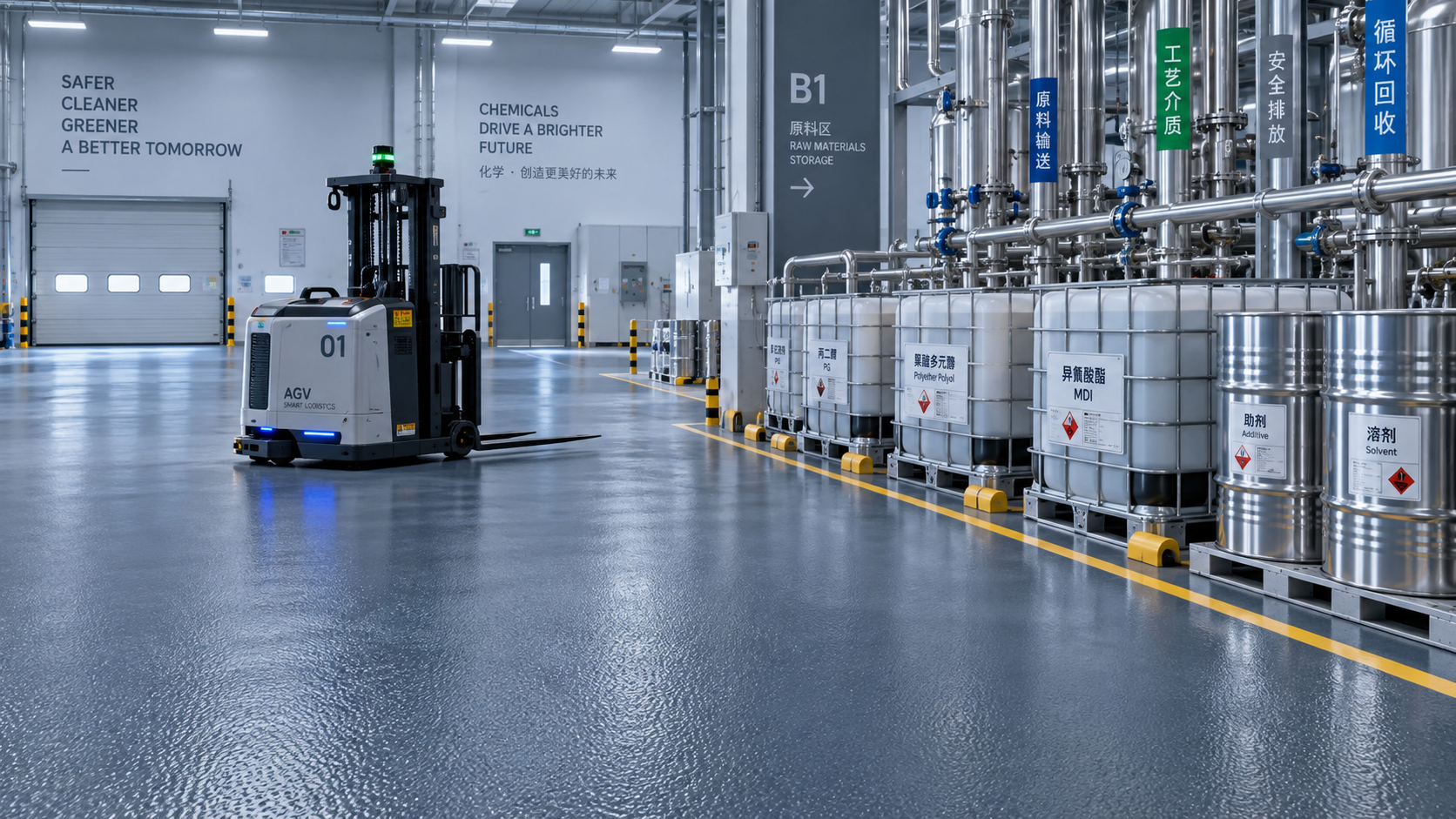
When Polyurethane Coatings Are a Practical Choice for Concrete Floors
For project managers responsible for concrete flooring, the coating decision is rarely about appearance alone. A floor that looks good at handover can still become an expensive problem if it chips under forklift traffic, softens after chemical spills, or needs repairs before the next maintenance shutdown. The practical question is not whether polyurethane is a “premium” coating. It is whether its performance profile matches the actual abuse the floor will receive.
Polyurethane coatings are often a sensible choice where a concrete floor needs abrasion resistance, some flexibility, chemical protection, and a finish that remains presentable in active industrial areas. They are widely considered for workshops, warehouses, processing areas, loading zones, laboratories, corridors, and utility rooms. But they are not automatically the right answer for every slab, every chemical exposure, or every construction schedule.
A sound specification starts with traffic, contaminants, moisture, temperature, cleaning practices, and downtime—not with a color chart or a generic coating thickness. That is especially true in chemical-industry facilities, where floors may face a mixture of wheeled equipment, washdown routines, raw-material handling, and occasional process spills.
Where polyurethane earns its place
The most persuasive reason to choose a polyurethane floor coating is its balance of toughness and movement tolerance. Concrete is not a perfectly stable base. It shrinks, expands with temperature changes, and may develop fine cracks over time. A coating system that is too brittle can fracture at stress points even when the underlying concrete remains structurally acceptable. Polyurethane generally has more flexibility than many rigid coating options, which can help it accommodate limited substrate movement and vibration.
This matters in facilities with frequent vehicle movement. Forklift turning points, pallet-jack routes, packing stations, and loading entrances all concentrate wear in small areas. A well-selected polyurethane topcoat can offer strong resistance to scuffing and abrasion, particularly when paired with an appropriate primer and build coat. It is often a practical system where the floor needs to take daily punishment without becoming dull, dusty, or difficult to clean.
Polyurethane is also attractive when finish quality matters beyond the production floor. In pharmaceutical support areas, clean corridors, technical rooms, showrooms attached to industrial plants, and visitor-accessible warehouse zones, managers often want a surface that is easier to maintain and less likely to look worn after routine cleaning. Gloss level, color stability, and slip resistance can be adjusted through the system design rather than treated as afterthoughts.
For exposed or semi-exposed concrete, aliphatic polyurethane formulations are commonly considered where ultraviolet exposure may affect appearance. Interior floors without meaningful sunlight may not need the same level of color-retention performance. That distinction can save money, provided the decision is based on actual exposure rather than a blanket rule.
The floor conditions that should drive the specification
Before selecting a polyurethane coating, inspect the slab as if it were part of the process equipment. Surface contamination, moisture, joint condition, curing compounds, laitance, previous coatings, and repair patches all influence adhesion. Coating failure is frequently blamed on the topcoat, but the real cause may be inadequate concrete preparation or a moisture condition that was not properly evaluated.
Mechanical surface preparation is usually central to reliable performance. The required profile depends on the coating system and the condition of the concrete, but the objective is consistent: remove weak material and expose a clean, sound surface that can provide a mechanical bond. Simply washing a slab or lightly sanding isolated areas may be insufficient where there are old sealers, oil penetration, or dense power-troweled concrete.
Moisture deserves particular attention. A newly poured slab may appear dry while still releasing vapor. Older slabs can also have moisture issues if there is no effective vapor barrier, if drainage has changed, or if the building has experienced water ingress. The coating manufacturer’s stated substrate requirements should govern the testing method and acceptance criteria. Skipping this step to protect the schedule can turn a short delay into widespread blistering, debonding, or discoloration later.
Joints and cracks need their own strategy. A coating is not a structural crack repair, and coating across moving joints without a compatible detail is a common mistake. Saw cuts, expansion joints, and active cracks often require flexible sealants or purpose-designed joint treatments. The more movement expected, the less realistic it is to expect a continuous decorative film to remain flawless.
A useful early-stage decision screen
Chemical resistance: specify for the spill, not the category
“Chemical resistant” is one of the least useful phrases in a flooring discussion unless it is followed by details. A coating that handles intermittent contact with lubricating oil may not be suitable for hot alkaline cleaning solutions, strong solvents, concentrated acids, or long-term immersion. In a chemical plant, even a small number of process areas can have exposure conditions very different from the rest of the facility.
Project teams should map what reaches the floor: raw materials, intermediates, finished products, cleaning chemicals, hydraulic fluids, and accidental spill scenarios. Ask whether contact is occasional splash, repeated washdown, pooling, or immersion. Temperature changes the picture as well. A floor coating that performs adequately at ambient temperature can behave differently around heated vessels, steam lines, or hot wash processes.
There is also a distinction between protecting concrete and simplifying cleanup. A coating may prevent dusting and make routine spills easier to remove, yet not be intended as the final containment layer for aggressive chemicals. Where environmental controls or spill containment are required, the flooring design should connect with drainage, bunding, joint sealing, and emergency response procedures. A decorative industrial floor is not a substitute for a containment system.
When another system may be the better call
Polyurethane is practical, not universal. If the floor will experience severe thermal shock, highly aggressive chemical service, or prolonged exposure to conditions outside the coating supplier’s published resistance data, another resin technology or a heavier-duty lining may be more appropriate. Similarly, a weak, oil-saturated, or moisture-compromised slab may need substantial remediation before any coating system is considered.
Budget can complicate the decision. Choosing a thin coating simply because it has a polyurethane label may not solve a heavy-duty traffic problem. The primer, membrane or base layer, broadcast aggregate, topcoat, and edge details determine the real system performance. It is better to reduce the coated area and protect the highest-risk zones properly than to apply an underbuilt system across an entire plant and hope for the best.
Slip resistance also involves trade-offs. More texture can improve traction in wet or oily conditions, but it may make cleaning more demanding and can increase wear on some wheeled equipment. The right finish for a dry assembly hall is not necessarily right for a washdown room. Trial panels or a small representative area can be useful where cleaning methods and surface texture are still uncertain.
Planning installation around real operational constraints
Flooring projects fail schedules as often as they fail technically. The coating contractor needs access for preparation, application, curing, inspection, and protection from other trades. If overhead work continues after the floor is completed, contamination and impact damage are very likely. If production must restart quickly, cure time needs to be reviewed against the expected traffic, not just the time when the coating is dry to touch.
A phased installation can work well in operating facilities, but only if temporary traffic routes, dust control, shutdown windows, and material staging are agreed early. The project manager should also confirm ambient temperature and humidity limits, ventilation requirements, and whether odor or volatile-emission constraints affect product selection. These are not minor site details; they can determine whether installation is feasible during a planned outage.
Supply coordination matters more when flooring materials, repair compounds, fillers, and industrial raw materials are sourced across borders. Export-oriented chemical suppliers need to provide clear product identification, consistent documentation, packaging suitable for transport, and realistic dispatch communication. Huafeng Chemical, based in Shandong, supports overseas chemical buyers through a broad product portfolio and export logistics connected to major Chinese ports. For project teams, the useful value is not a vague promise of availability; it is the ability to align specification review, batch planning, packaging, and shipment timing before the work window opens.
Some construction-material supply chains also involve inputs that sit outside the finished coating package. For example, Magnesium Chloride is used as a raw material in magnesium oxychloride cement and certain fireproof building-material applications. It is highly hygroscopic, so sealed, moisture-protected storage is important when it is handled on a construction or manufacturing site. That does not make it a polyurethane-floor ingredient, but it illustrates why material compatibility and storage discipline should be reviewed across the whole flooring and building-material scope.
The questions worth settling before approval
Before approving a polyurethane system, request a written description of the full build-up rather than a topcoat name alone. It should identify substrate preparation, crack and joint treatment, primer, intermediate layers, aggregate where applicable, topcoat, expected cure sequence, and limitations. Compare the proposed system with actual service conditions, including the chemicals likely to reach the floor and the cleaning products used by the maintenance team.
It is equally important to decide who owns the condition of the slab. If one contractor prepares concrete repairs, another applies the coating, and a third party controls site access, responsibility can become unclear quickly. A pre-installation inspection record, moisture assessment where required, and sign-off on prepared areas create a far more defensible starting point than verbal assurances.
Polyurethane coatings are a practical choice when a concrete floor needs to withstand regular traffic, retain a cleanable finish, tolerate limited movement, and resist the specific liquids it will encounter. Their value comes from matching the system to the floor’s real service environment. If the slab is properly assessed, preparation is not compromised, and cure time is protected, polyurethane can be a durable operational surface rather than a cosmetic layer with a short life.
Send Us Your Inquiry Today
